
Caudacaecilia larutensis
Asia·Malaysia and Thailand
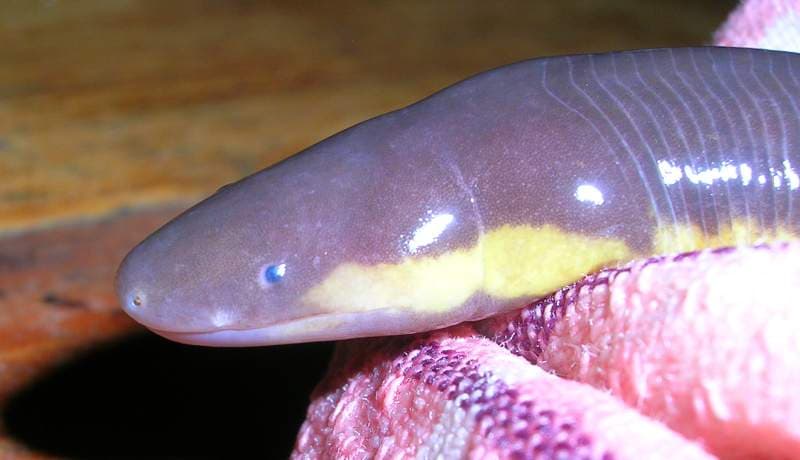
Caudacaecilia larutensis, also known as the Larut Hills caecilian, is a species of amphibian native to Malaysia and Thailand. It inhabits a variety of forest types, as well as rivers and agricultural lands. This caecilian is distinguished by its specific geographic distribution within Southeast Asia.
Key Facts
- ›Found in Malaysia and Thailand.
- ›Inhabits subtropical or tropical moist lowland and montane forests.
- ›Also found in rivers, intermittent rivers, and various agricultural landscapes.
- ›Includes heavily degraded former forest and irrigated land in its habitat.
- ›Belongs to the Ichthyophiidae family of caecilians.

Subtropical Or Tropical Moist Lowland Forests, Subtropical Or Tropical Moist Montane Forests, Rivers, Intermittent Rivers, Plantations, Rural Gardens, Heavily Degraded Former Forest, Irrigated Land, Seasonally Flooded Agricultural Land
Larut Hills Caecilian
About Caudacaecilia larutensis
Caudacaecilia larutensis, commonly known as the Larut Hills caecilian, is a species of amphibian found across parts of Southeast Asia, specifically in Malaysia and Thailand. This species is a member of the Ichthyophiidae family, a group of limbless amphibians that often resemble earthworms or snakes.
Habitat and Distribution
The natural habitats of Caudacaecilia larutensis are remarkably diverse, reflecting its adaptability to various environments. It is known to inhabit subtropical and tropical moist forests, both in lowland and montane regions. Beyond forests, this caecilian is also found in aquatic and semi-aquatic settings, including rivers and intermittent streams. Its range extends to human-modified landscapes such as plantations, rural gardens, heavily degraded former forest areas, irrigated land, and seasonally flooded agricultural fields. This broad habitat preference suggests resilience to environmental changes, though specific population dynamics and threats are not detailed.
Taxonomy and Identification
As a member of the Ichthyophiidae family, Caudacaecilia larutensis shares characteristics with other caecilians, though its specific physical traits are not elaborated upon in the provided information. The scientific name itself, Caudacaecilia larutensis, points to its origin in the Larut Hills region, a geographical indicator of its primary distribution.
Source: Wikipedia ↗
Frequently Asked Questions
Where does the Larut Hills caecilian live?
The Larut Hills caecilian is found in Malaysia and Thailand. Its natural habitats include subtropical or tropical moist lowland and montane forests, as well as rivers and agricultural areas.
What kind of environments does this caecilian prefer?
This species thrives in a diverse range of environments. These include moist lowland and montane forests, both subtropical and tropical. It also occupies habitats such as rivers, intermittent streams, plantations, rural gardens, heavily degraded forests, and seasonally flooded agricultural land.
What family does the Larut Hills caecilian belong to?
Caudacaecilia larutensis belongs to the amphibian family Ichthyophiidae. This family comprises many of the known species of caecilians.
Related Caecilian species

Banna caecilian
The Banna caecilian (Ichthyophis kohtaoensis), also known as the Koh Tao Island caecilian, is an amphibian species found across Southeast Asia and southern China. This species inhabits a wide range of moist tropical and subtropical environments, from lowland forests to urban gardens and agricultural lands. It is primarily threatened by the loss of its diverse natural habitats.
Ichthyophiidae
The Ichthyophiidae, also known as Asiatic tailed caecilians or fish caecilians, are a primitive family of caecilians found across South and Southeast Asia and in southernmost China. They are distinguished by their tails, numerous body scales, and mouths that are not recessed, setting them apart from more derived caecilian families. Ichthyophiidae reproduce by laying eggs in moist soil, with larvae that develop in water before metamorphosing into terrestrial adults, and females may exhibit parental care.
Ichthyophis
Ichthyophis, meaning "fish snake," is a genus of caecilians native to Southeast Asia, the southern Philippines, and the western Indo-Australian Archipelago. These amphibians are characterized by their elongated, limbless bodies and smooth, moist skin, often resembling earthworms or snakes. Several species are found in Sri Lanka, with some preferring moist habitats and others showing specific altitude preferences.