
Flaming Gorge
Flaming Gorge National Recreation Area is a protected area spanning parts of Wyoming and Utah, centered around the expansive Flaming Gorge Reservoir. Named for its striking red sandstone cliffs, the area was established in 1968 following the construction of the Flaming Gorge Dam on the Green River. It serves as a significant site for hydroelectric power generation and a popular destination for a wide range of outdoor recreational activities.
Key Facts
- ›The Flaming Gorge Reservoir is 91 miles (146 km) long.
- ›The area was named 'Flaming Gorge' by John Wesley Powell in 1869.
- ›Flaming Gorge Dam generates hydroelectric power with three turbines.
- ›The National Recreation Area was established on October 1, 1968.
- ›Activities include boating, fishing, hiking, camping, and rafting.
- ›The reservoir was created by the construction of the Flaming Gorge Dam in 1964.

River Erosion
Red Sandstone Cliffs, Flaming Gorge Reservoir, Flaming Gorge Dam
About Flaming Gorge
Flaming Gorge National Recreation Area
Flaming Gorge National Recreation Area is a designated federal area in the United States that spans portions of both Wyoming and Utah. Its central feature is the extensive Flaming Gorge Reservoir, which stretches for 91 miles (146 km). The area's identity is deeply tied to its dramatic geological landscape, particularly the striking red sandstone cliffs that inspired its name.
Naming and Establishment
The name "Flaming Gorge" was bestowed upon this part of the Green River by explorer John Wesley Powell during his pioneering expedition in 1869. He was captivated by the vivid hues of the surrounding sandstone formations. The creation of the Flaming Gorge Reservoir was a direct result of the construction of the Flaming Gorge Dam, completed in 1964. Recognizing the area's recreational potential and natural beauty, Congress officially established it as a National Recreation Area on October 1, 1968. Administration of the area falls under the purview of the Ashley National Forest.
Uses and Recreation
The Flaming Gorge Dam serves a dual purpose, not only creating the reservoir but also functioning as a hydroelectric power generation facility. Its three turbines and generators collectively possess the capacity to produce substantial amounts of electrical power. Beyond its industrial function, Flaming Gorge National Recreation Area is a significant hub for outdoor activities. Visitors engage in a variety of pursuits, including camping, biking, rock climbing, paddling, and hiking. The reservoir itself is popular for boating and fishing, while the stretch of the Green River downstream from the dam offers opportunities for rafting.
Source: Wikipedia ↗
Frequently Asked Questions
What is Flaming Gorge named after?
Flaming Gorge was named by John Wesley Powell during his 1869 expedition down the Green River. He was struck by the spectacular, gorgeous red sandstone cliffs that surround this section of the river.
How was Flaming Gorge Reservoir formed?
The Flaming Gorge Reservoir was created by the construction of the Flaming Gorge Dam across the Green River. The dam was completed in 1964, leading to the formation of the reservoir.
What activities can be enjoyed at Flaming Gorge National Recreation Area?
The recreation area offers numerous activities, including camping, biking, rock climbing, paddling, hiking, and boating on the Flaming Gorge Reservoir. Visitors can also enjoy rafting on the Green River downstream from the dam.
What geological features are prominent at Flaming Gorge?
The area is characterized by spectacular, gorgeous red sandstone cliffs, which are the reason for its name. These formations are a significant part of the landscape surrounding the Green River and the reservoir.
When was Flaming Gorge established as a National Recreation Area?
Flaming Gorge was established as a National Recreation Area by an act of Congress on October 1, 1968.
Does Flaming Gorge generate power?
Yes, the Flaming Gorge Dam is utilized to generate hydroelectric power. It features three turbines and generators capable of producing significant electrical power.
Related Canyons

Desolation Canyon
Desolation Canyon is a vast and remote canyon carved by the Green River in eastern Utah, United States. It is renowned for its dramatic geological features, abundant ancient Native American rock art, and its historical significance as a route explored by John Wesley Powell. The canyon is a popular destination for river rafting, offering a challenging yet accessible experience for boaters.

Gates of Lodore
The Gates of Lodore is a scenic canyon on the Green River in northwestern Colorado, United States, located within Dinosaur National Monument. The name is often used interchangeably with the Canyon of Lodore itself, which stretches eighteen miles from Browns Park to Echo Park, the confluence of the Green and Yampa Rivers. It was named by the Powell Expedition after the English poem 'Cataract of Lodore'.
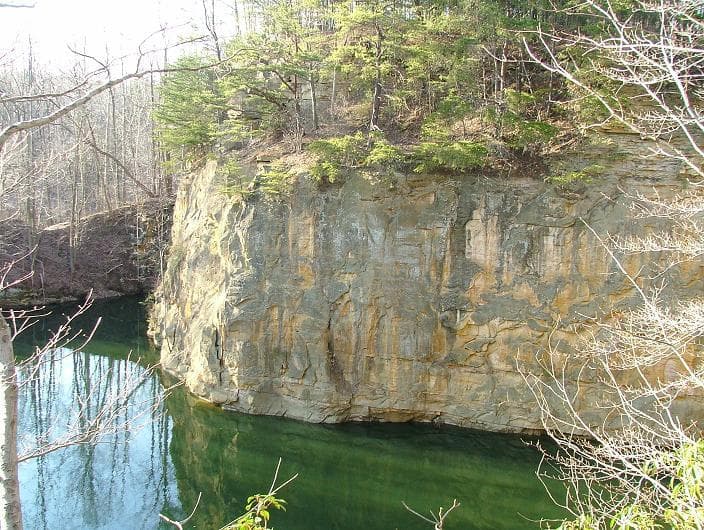
Blackhand Gorge
Blackhand Gorge is a 4-mile-long sandstone formation in Licking County, Ohio, carved by the Licking River. Named for a prehistoric petroglyph of a black hand, the gorge has served as a vital transportation corridor for centuries, hosting canal boats, railroads, interurban cars, and automobiles. Designated an Ohio Nature Preserve in 1975, it preserves a unique geological and historical landscape.