
Furlo Pass
The Furlo Pass is a significant gorge in the Marche region of Italy, carved by the Candigliano river between the Pietralata and Paganuccio mountains. This natural formation, also known as Gola del Furlo, was historically crucial as a passage on the ancient Roman road, the Via Flaminia, featuring Roman and Etruscan-era tunnels. It is now recognized as a State Natural Reserve and marketed as the "Grand Canyon of Italy."
Key Facts
- ›Carved by the Candigliano river between the Pietralata and Paganuccio mountains.
- ›Features a Roman-era tunnel built by Emperor Vespasian and an earlier Etruscan tunnel.
- ›Historically a vital passage on the ancient Roman road, Via Flaminia.
- ›Fortified during the Gothic Wars and later by the Lombards.
- ›Included in a State Natural Reserve since 2001.
- ›Marketed to tourists as the "Grand Canyon of Italy."

Gola del Furlo, Passo del Furlo
River Erosion
Roman Tunnel, Etruscan Tunnel, Via Flaminia Passage, Pietralata Mountain, Paganuccio Mountain
About Furlo Pass
What is the Furlo Pass?
The Furlo Pass, known in Italian as Gola del Furlo or Passo del Furlo, is a dramatic gorge situated in the Marche region of central Italy. This natural formation was carved by the Candigliano river as it flowed between the peaks of Pietralata and Paganuccio mountains. The gorge's strategic location made it a vital passage on the ancient Roman road, the Via Flaminia, a role that has shaped its history and development.
Geological Formation and Features
The gorge itself is a product of relentless river erosion. The Candigliano river once flowed powerfully through this district until its course was altered by a dam constructed in 1922. A defining historical feature of the Furlo Pass is the Roman tunnel, commissioned by Emperor Vespasian, which facilitated passage on the Via Flaminia at the most constricted point of the gorge. Adjacent to this Roman engineering marvel is an even older, smaller tunnel dating back to Etruscan times. The Roman tunnel measures 38.30 meters in length and stands 5.95 meters high.
Historical Significance and Usage
Beyond its natural beauty, the Furlo Pass has witnessed centuries of human activity and conflict. During the Gothic Wars in the 6th century, the Ostrogoth King Totila fortified the pass, though his defenses were later overcome by the Roman general Belisarius. The Lombards subsequently conquered the pass and dismantled the fortifications. The Via Flaminia continued to be a route for significant journeys, with figures like Lucrezia Borgia and Julius II traversing it in the 15th and 16th centuries. The pass remained difficult and dangerous until the tunnel and road were re-opened in 1776. In the 19th century, the pass was the site of a skirmish between soldiers of the Roman Republic and the Austrian army. In the 1930s, a profile of Benito Mussolini was sculpted on Mount Pietralata, a work later destroyed by partisans during World War II. The latter half of the 20th century saw quarrying activities that affected the landscape, leading to the creation of modern highway tunnels in the 1980s to bypass the historic route.
Modern Recognition and Tourism
Since 2001, the Furlo Pass and its surrounding area have been protected as a State Natural Reserve. The area is actively promoted to tourists, often marketed with the evocative title, the "Grand Canyon of Italy," highlighting its scenic grandeur and historical depth.
Source: Wikipedia ↗
Frequently Asked Questions
How was the Furlo Pass formed?
The Furlo Pass was formed by the Candigliano river, which carved a gorge between the Pietralata and Paganuccio mountains. The river flowed with considerable force through the area until it was dammed in 1922.
What is the historical significance of the Furlo Pass?
The pass is historically significant as a passage on the ancient Roman road, the Via Flaminia. Emperor Vespasian commissioned a tunnel here to ease travel, and the area also saw military activity during the Gothic Wars and by the Roman Republic against the Austrian army.
What are the notable features of the Furlo Pass?
Key features include the Roman and Etruscan tunnels, the natural gorge itself, and the surrounding mountains. A profile of Benito Mussolini was also sculpted on Mount Pietralata in the 1930s, though it was later destroyed.
Is the Furlo Pass accessible for tourism?
Yes, the Furlo Pass is marketed to tourists as the "Grand Canyon of Italy" and is part of a State Natural Reserve. Modern highway tunnels were also constructed to bypass the original tunnel and road.
Related Canyons

Bletterbach
The Bletterbach is a stream located in South Tyrol, Italy, known for the canyon it has carved through diverse geological strata. This canyon exposes rock formations ranging from the Lower Permian to the Upper Anisian periods, offering a significant window into geological history. Its geological significance is further highlighted by the presence of fossil footprints within the Val Gardena Sandstone.

Bad Branch Gorge
Bad Branch Gorge is a deep and narrow forested gorge in Letcher County, Kentucky, carved into the face of Pine Mountain. It is renowned for its significant biodiversity, protecting one of the largest concentrations of rare flora and fauna in the state, including unique species adapted to its shaded, moist conditions. The gorge features a 60-foot waterfall and is a protected nature preserve managed through collaborative efforts.
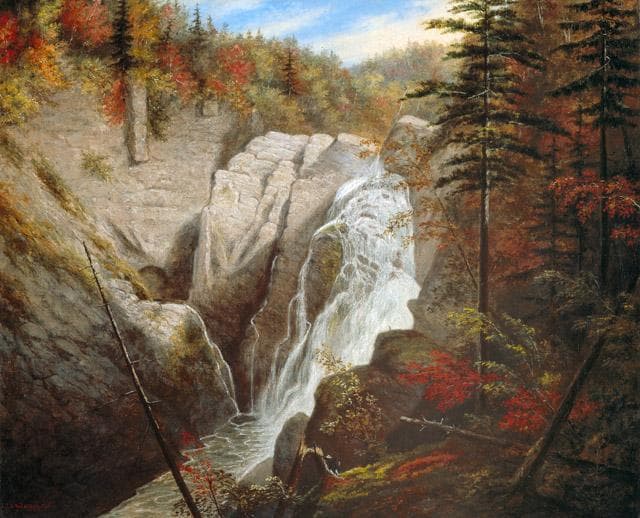
Canyon Sainte-Anne
Canyon Sainte-Anne is a steep-sided gorge located east of Beaupré, Quebec, Canada, carved by the Sainte-Anne-du-Nord River. The canyon features a prominent 74-meter waterfall and is situated within the ancient geological formations of the Canadian Shield. It has been a site of natural and cultural interest, drawing visitors for its scenic beauty and recreational activities.