
Guartelá Canyon
River Canyon·Brazil·Iapó River
The Guartelá Canyon is a significant geological feature located in the Paraná state of Brazil, carved by the Iapó River. It is a protected area, encompassed within the Guartelá State Park, established in 1992 to preserve its natural beauty and ecological importance.
Key Facts
- ›Located in Tibagi and Castro, Paraná, Brazil.
- ›Formed by the erosion of the Iapó River.
- ›Protected within the 799-hectare Guartelá State Park.
- ›The park was established in 1992.
- ›It is a prominent natural landmark in the region.

Cânion Guartelá
River Erosion
About Guartelá Canyon
The Guartelá Canyon is a prominent natural wonder situated in the state of Paraná, Brazil, spanning the municipalities of Tibagi and Castro. This impressive canyon was sculpted over time by the erosive forces of the Iapó River, which continues to flow through its depths.
Recognizing its ecological and scenic value, the Guartelá Canyon is safeguarded within the Guartelá State Park. This protected area, established in 1992, encompasses approximately 799 hectares (1,970 acres) and serves to preserve the canyon's unique geological formations and the surrounding natural environment for future generations.
Source: Wikipedia ↗
Frequently Asked Questions
Where is the Guartelá Canyon located?
The Guartelá Canyon is situated in the municipalities of Tibagi and Castro, within the state of Paraná, Brazil. It is a protected natural area within the Guartelá State Park.
What river carved the Guartelá Canyon?
The canyon was formed by the erosive power of the Iapó River. The river's course through the landscape has sculpted the distinctive geological formations of the canyon.
Is the Guartelá Canyon a protected area?
Yes, the Guartelá Canyon is protected by the Guartelá State Park. This park was created in 1992 and covers an area of approximately 799 hectares.
What is the significance of the Guartelá Canyon?
The Guartelá Canyon is a significant natural landmark in Paraná, Brazil. Its protection within a state park underscores its ecological and scenic importance.
Related Canyons
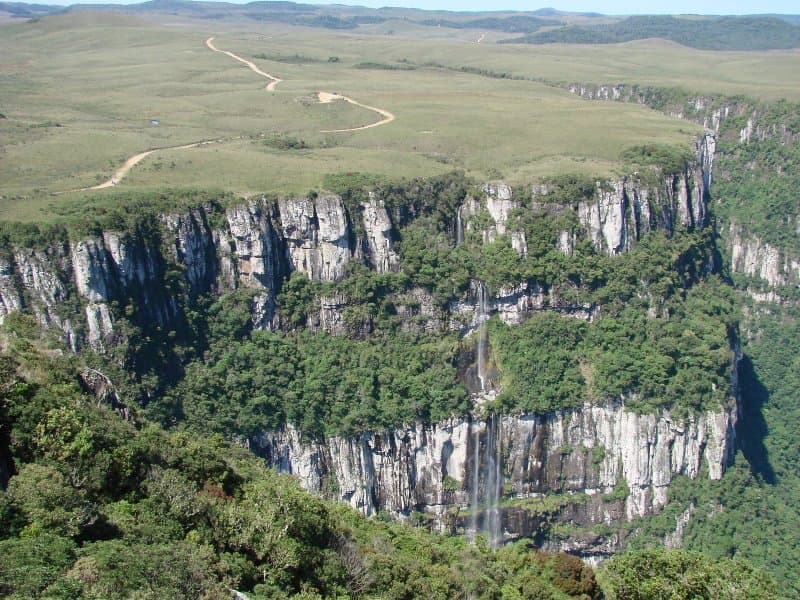
Fortaleza Canyon
Fortaleza Canyon is a significant natural formation situated within Serra Geral National Park in Cambará do Sul, Rio Grande do Sul, Brazil. It is a notable example of a river canyon carved by geological processes over time, contributing to the unique landscape of the region.

Aare Gorge
The Aare Gorge is a dramatic canyon carved through a limestone ridge near Meiringen, Switzerland, by the Aare River. Formed approximately 10,000 years ago by glacial meltwater erosion at the end of the Ice Age, this narrow passage features sheer cliffs and is a significant tourist attraction, partly due to its proximity to the famous Reichenbach Falls.

Agawa Canyon
Agawa Canyon is a shallow canyon in Ontario, Canada, formed approximately 1.2 billion years ago by faulting and later carved by the Agawa River. It is now a popular tourist destination within the Agawa Canyon Wilderness Park, accessible by train or hiking trail, and is renowned for its natural beauty, waterfalls, and seasonal foliage.