
Liechtensteinklamm
Liechtensteinklamm, also known as Liechtenstein Gorge, is a dramatic canyon near St. Johann im Pongau in the Austrian Alps. Formed over millennia by the erosive power of the Großarler Ache mountain stream, it features towering walls up to 300 meters high and is approximately 4 kilometers long. The gorge gained accessibility and its current name thanks to the patronage of Prince Johann II of Liechtenstein in the late 19th century.
Key Facts
- ›The gorge is approximately 4 km long, with 1 km accessible to visitors.
- ›Walls of the gorge reach heights of up to 300 meters.
- ›It is named after Prince Johann II of Liechtenstein, who funded walkway installations.
- ›The Großarler Ache, a mountain stream, is responsible for its formation.
- ›A waterfall is situated at the end of the accessible section.
- ›It attracts around 100,000 visitors annually.

Liechtenstein Gorge
River Erosion
Waterfalls, Wooden Walkways
About Liechtensteinklamm
Liechtensteinklamm, often referred to as Liechtenstein Gorge, is a remarkable natural formation located near St. Johann im Pongau in the Austrian Alps, approximately 50 kilometers south of Salzburg. This impressive gorge is characterized by its towering walls, which can reach heights of up to 300 meters, and its considerable length of around 4 kilometers. The dramatic landscape carved by the Großarler Ache, a mountain stream, over thousands of years makes it a significant natural attraction.
Formation and Accessibility
The gorge's striking features are the result of persistent erosion by the Großarler Ache, which has sculpted the rock over millennia. While the full length of the gorge is approximately 4 kilometers, only about 1 kilometer is made accessible to visitors during the summer months through a system of wooden walkways. These walkways, some of which are quite narrow and built into the gorge walls, allow visitors to experience the grandeur of the canyon up close. At the end of the accessible path, a picturesque waterfall adds to the natural beauty of the site.
Historical Naming and Patronage
The gorge's current name, Liechtensteinklamm, is derived from Prince Johann II of Liechtenstein. In 1875, work began by members of the Pongau Alpine Club to make the gorge accessible, but funding issues arose. Prince Johann II, who owned a hunting lodge in the nearby Großarl valley, generously donated 600 guilders to ensure the completion of the walkways and improvements. In recognition of his significant contribution, the gorge was renamed in his honor in 1876. Today, Liechtensteinklamm is a popular destination, attracting approximately 100,000 visitors annually who come to marvel at its geological formations and natural splendor.
Source: Wikipedia ↗
Frequently Asked Questions
How was Liechtensteinklamm formed?
Liechtensteinklamm was formed over thousands of years by the erosive action of the Großarler Ache, a mountain stream. The persistent flow of water carved through the rock, gradually deepening and widening the gorge.
What are the main attractions within Liechtensteinklamm?
The primary attractions are the dramatic, high gorge walls, the wooden walkways that allow visitors to traverse its length, and a waterfall located at the very end of the accessible path. The narrowness and sheer scale of the gorge are impressive.
Who is Liechtensteinklamm named after and why?
The gorge is named after Prince Johann II of Liechtenstein. He donated 600 guilders in 1875 to help fund the installation of walkways, enabling public access, and the gorge was renamed in his honor upon completion of the work in 1876.
What is the approximate length and depth of Liechtensteinklamm?
The gorge is around 4 kilometers in total length, but only about 1 kilometer is made accessible to visitors via wooden walkways during the summer months. Its walls can reach a depth of up to 300 meters.
Is Liechtensteinklamm easily accessible for visitors?
Yes, for a portion of its length. Wooden walkways were installed in the late 19th century, making approximately 1 kilometer of the gorge accessible to visitors during the summer months. It is located near St. Johann im Pongau.
What kind of geological features are found in Liechtensteinklamm?
Liechtensteinklamm is characterized by its very high gorge walls, some reaching up to 300 meters. In certain sections, the gorge narrows to only a few meters wide, creating a dramatic and imposing environment carved by water erosion.
Related Canyons

Rappenloch Gorge
The Rappenloch Gorge is one of Central Europe's largest and most scenic gorges, carved by the Dornbirner Ach river in Vorarlberg, Austria. It is situated downstream from the Alploch Gorge, separated by the Staufensee reservoir. The gorge is a significant natural landmark within the Alpine Rhine Valley.

Bad Branch Gorge
Bad Branch Gorge is a deep and narrow forested gorge in Letcher County, Kentucky, carved into the face of Pine Mountain. It is renowned for its significant biodiversity, protecting one of the largest concentrations of rare flora and fauna in the state, including unique species adapted to its shaded, moist conditions. The gorge features a 60-foot waterfall and is a protected nature preserve managed through collaborative efforts.
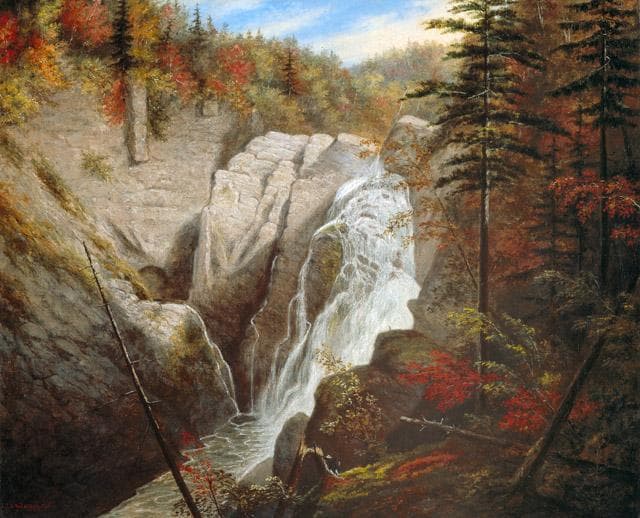
Canyon Sainte-Anne
Canyon Sainte-Anne is a steep-sided gorge located east of Beaupré, Quebec, Canada, carved by the Sainte-Anne-du-Nord River. The canyon features a prominent 74-meter waterfall and is situated within the ancient geological formations of the Canadian Shield. It has been a site of natural and cultural interest, drawing visitors for its scenic beauty and recreational activities.