
Loch Ard Gorge
Loch Ard Gorge is a significant coastal feature located within Port Campbell National Park in Victoria, Australia. It is renowned for its dramatic geological formations and its poignant history as the site of the 1878 shipwreck of the clipper Loch Ard, which resulted in the loss of most passengers and crew but yielded two remarkable survivors. The gorge serves as a memorial and a popular tourist destination along the Great Ocean Road.
Key Facts
- ›Located in Port Campbell National Park, Victoria, Australia.
- ›Named after the clipper ship Loch Ard, which wrecked nearby in 1878.
- ›Site of the sole survival of the Loch Ard shipwreck, involving Thomas Pearce and Eva Carmichael.
- ›Features a beach accessible via stairs (currently closed due to geological instability).
- ›A pathway provides access to the eastern side of the gorge.
- ›Home to plaques, a museum, and a cemetery detailing the shipwreck's history.

Coastal Erosion
Island Archway, Shipwreck Site of the Loch Ard, Memorials and Plaques, Small Museum, Cemetery
Rufous Bristlebird
About Loch Ard Gorge
Loch Ard Gorge is a prominent coastal feature situated within Port Campbell National Park in Victoria, Australia, approximately a three-minute drive west of the iconic Twelve Apostles. This dramatic gorge is renowned for its striking geological formations and its deep historical connection to a significant maritime tragedy.
History and Significance
The gorge derives its name from the clipper ship Loch Ard, which met its end on nearby reefs on June 1, 1878, after a three-month voyage from England. The wreck claimed the lives of 52 of the 54 passengers and crew. Remarkably, two survivors emerged: Thomas Pearce, a ship's apprentice, and Eva Carmichael, a young Irish emigrant. Pearce is credited with rescuing Carmichael from the water and subsequently seeking help from local pastoralists. Both were 19 years old at the time. Carmichael, having lost seven family members in the disaster, returned to Ireland. Pearce was lauded as a hero and received the first Gold Medal from the Victorian Humane Society. Several passengers from the Loch Ard are buried in a nearby cemetery, serving as a poignant reminder of the wreck.
Geological Features and Access
The gorge itself is a stunning example of coastal erosion. A notable geological event occurred in June 2009 when the arch of the nearby Island Archway collapsed, leaving two separate rock pillars that have been named Tom and Eva in honor of the shipwreck survivors. Visitors can access the area via the Great Ocean Road. While stairs typically provide access to the beach within the gorge, they are currently closed due to geological instability, with remediation works planned. A pathway allows access to the eastern side of the gorge, and informational plaques and a small museum further detail the site's history.
Source: Wikipedia ↗
Frequently Asked Questions
What is the historical significance of Loch Ard Gorge?
Loch Ard Gorge is historically significant as the site where the clipper Loch Ard ran aground on June 1, 1878. Of the 54 people on board, only two survived: 19-year-old apprentice Thomas Pearce and Irish emigrant Eva Carmichael. The event led to the naming of the gorge and is commemorated with memorials at the site.
How can I access Loch Ard Gorge?
Loch Ard Gorge is accessible via the Great Ocean Road, a short drive west of The Twelve Apostles. While stairs typically lead to the beach, they are currently closed due to geological instability. Access to the eastern side of the gorge is available via a pathway, and there are also plaques and a museum detailing the site's history.
What are the notable geological features of Loch Ard Gorge?
The gorge itself is a dramatic coastal indentation. Nearby, the Island Archway, a notable rock formation, collapsed in June 2009, leaving behind two unconnected rock pillars officially named Tom and Eva in honor of the Loch Ard survivors. The area is characterized by its rugged cliffs and sea stacks.
Is Loch Ard Gorge a good place for wildlife viewing?
Yes, Loch Ard Gorge is known as a habitat for wildlife. The uncommon rufous bristlebird (Dasyornis broadbenti) is frequently observed in the vicinity of the gorge, indicating a healthy local ecosystem.
Has Loch Ard Gorge been featured in any films or television shows?
Loch Ard Gorge has served as a filming location for various productions. Scenes from the 1982 film 'The Pirate Movie' and the 1999 TV series 'Journey to the Center of the Earth' were shot here. It also hosted the final task for the third series of 'The Amazing Race Australia'.
Related Canyons

Barron Gorge
Barron Gorge is a dramatic gorge located in Queensland, Australia, carved by the Barron River as it descends the eastern escarpment of the Atherton Tablelands. Renowned for its spectacular waterfalls, particularly the Barron Falls which cascade 265 meters, the gorge is a significant natural landmark within the Wet Tropics World Heritage Area. Historically important for Indigenous peoples and later for hydroelectric power generation, it is now a protected national park and a popular tourist destination.

Capertee Valley
Capertee Valley, located in New South Wales, Australia, is recognized as the world's widest canyon, surpassing even the Grand Canyon in its breadth. Carved by the Capertee River over millions of years through Permian and Triassic sedimentary rocks, the valley features dramatic sandstone cliffs and limestone formations. It holds significant ecological importance as a prime breeding site for endangered bird species and is a popular destination for birdwatching and bushwalking.
Carnarvon Gorge
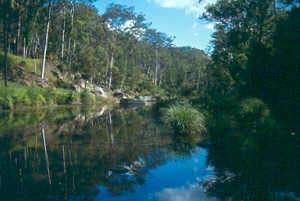
Carnarvon Gorge, located in Central Queensland, Australia, is a significant natural attraction carved primarily by water erosion. Stretching approximately 30 kilometers in length and reaching depths of up to 600 meters, it is renowned for its diverse ecosystems, Indigenous cultural sites, and dramatic sandstone landscapes. As the most visited feature within Carnarvon National Park, it draws over 70,000 visitors annually, offering a unique oasis in a semi-arid region.