
Mossman Gorge
River Canyon·Australia·Mossman River
Mossman Gorge is a significant natural landmark and rural locality in Queensland, Australia, carved by the Mossman River through the Daintree National Park. It is a vital part of the traditional homeland of the Kuku Yalanji people and has become a popular tourist destination, offering rainforest walks and access to its unique geological and ecological features. The area's history is deeply intertwined with Indigenous heritage and the impacts of European settlement, including gold rushes and land clearing.
Key Facts
- ›Located in the Shire of Douglas, Queensland, Australia, approximately 78.8 km from Cairns.
- ›Part of the traditional homeland of the indigenous Kuku Yalanji people.
- ›Features a 2.4-kilometer loop walk through the rainforest of Daintree National Park.
- ›The Mossman Gorge Centre serves as the gateway and a tourist attraction.
- ›Home to over 500 species of Australian native plants and diverse fauna, including numerous bird and reptile species.
- ›The area has a history of European settlement driven by gold rushes and cedar harvesting.

Jinkalmu
River Erosion
Rainforest, Mossman River, Suspension Bridge, Loop Walk
Australian Brushturkey, Orange-Footed Scrubfowl, Ulysses Butterfly, Boyd's Forest Dragon, Buff-Breasted Paradise Kingfisher, Jungle Perch, Spotted Flagtail
Lowland Tropical Rainforest, Trees, Shrubs, Vines, Epiphytes, Ferns
Jinkalmu
About Mossman Gorge
Mossman Gorge: A Natural and Cultural Gem
Mossman Gorge, known to the Kuku Yalanji people as Jinkalmu, is a significant natural landmark and a rural locality situated in the Shire of Douglas, Queensland, Australia. Carved by the Mossman River as it flows through the verdant Daintree National Park, the gorge is a crucial part of the traditional homeland of the indigenous Kuku Yalanji people. It has evolved into a prominent tourist attraction, offering visitors a gateway to a rich rainforest ecosystem.
Geography and Access
The gorge is located approximately 78.8 kilometers north of Cairns, accessible via the Captain Cook Highway. The Mossman Gorge Centre serves as the primary entry point, providing facilities and information for visitors. From the centre, a suspension bridge grants access to a 2.4-kilometer loop walk that meanders through the dense tropical rainforest, allowing for an immersive experience of the park's natural beauty.
Biodiversity
Mossman Gorge is a sanctuary of biodiversity, hosting over 500 species of Australian native plants within its lowland tropical rainforest environment. The flora includes a wide array of trees, shrubs, vines, epiphytes, and ferns, with notable species such as the chain fruit and wait-a-while vines. The area's fauna is equally rich, with commonly observed wildlife including the Australian brushturkey, orange-footed scrubfowl, the vibrant Ulysses butterfly, and Boyd's forest dragon. More than 430 species of birds have been recorded in the gorge, along with numerous reptiles, amphibians, and fish species.
Historical Significance
The human history of Mossman Gorge is deeply rooted in the millennia-long occupation by the Eastern Kuku Yalanji people. European settlement in the region commenced in the 1870s, spurred by gold discoveries on nearby rivers. This era saw extensive cedar harvesting along the Mossman River and the subsequent clearing of rainforest for sugar cane cultivation. The period was characterized by frontier violence and displacement of Indigenous populations, exacerbated by government policies such as the Aboriginal Protection and Restriction of the Sale of Opium Act 1897, which facilitated the removal of Indigenous people to reserves.
An Aboriginal reserve was gazetted at Mossman Gorge in 1916, and a mission was established, serving as a focal point for the Kuku Yalanji people who remained in the area. Over the following decades, the mission was managed by various religious organizations, with children eventually attending local state schools. Today, Mossman Gorge stands as a testament to the enduring cultural heritage of the Kuku Yalanji people and a celebrated natural destination within Queensland.
Source: Wikipedia ↗
Frequently Asked Questions
What is the traditional name for Mossman Gorge?
The traditional name for Mossman Gorge, used by the Kuku Yalanji people, is Jinkalmu. This name signifies its deep cultural importance to the Indigenous inhabitants of the region.
What are the main activities available at Mossman Gorge?
Visitors can explore the gorge via a 2.4-kilometer loop walk through the rainforest, accessible via a suspension bridge. The Mossman Gorge Centre acts as the primary gateway for tourists to experience the natural beauty of the area.
What kind of flora and fauna can be found in Mossman Gorge?
Mossman Gorge boasts over 500 species of native plants, including various trees, vines, and epiphytes like the bird's nest fern and strangler figs. Common fauna includes the Australian brushturkey, Ulysses butterfly, and Boyd's forest dragon, with over 430 bird species recorded.
What is the geological significance of Mossman Gorge?
Mossman Gorge was formed by the erosion of the Mossman River through the ancient rainforests of the Daintree National Park. The gorge showcases the geological processes that have shaped this rich tropical landscape over millennia.
What is the history of human settlement in Mossman Gorge?
The Kuku Yalanji people have occupied the area for thousands of years. European settlement began with gold rushes in the 1870s, followed by cedar harvesting and land clearing for agriculture, leading to significant historical interactions and impacts on the Indigenous population.
Is Mossman Gorge part of a national park?
Yes, Mossman Gorge is situated within the Daintree National Park, a protected area in Queensland, Australia. This designation helps preserve its natural beauty and ecological significance.
Related Canyons

Barron Gorge
Barron Gorge is a dramatic gorge located in Queensland, Australia, carved by the Barron River as it descends the eastern escarpment of the Atherton Tablelands. Renowned for its spectacular waterfalls, particularly the Barron Falls which cascade 265 meters, the gorge is a significant natural landmark within the Wet Tropics World Heritage Area. Historically important for Indigenous peoples and later for hydroelectric power generation, it is now a protected national park and a popular tourist destination.

Capertee Valley
Capertee Valley, located in New South Wales, Australia, is recognized as the world's widest canyon, surpassing even the Grand Canyon in its breadth. Carved by the Capertee River over millions of years through Permian and Triassic sedimentary rocks, the valley features dramatic sandstone cliffs and limestone formations. It holds significant ecological importance as a prime breeding site for endangered bird species and is a popular destination for birdwatching and bushwalking.
Carnarvon Gorge
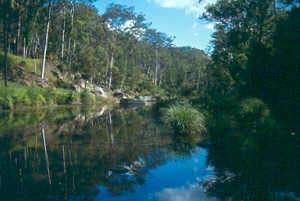
Carnarvon Gorge, located in Central Queensland, Australia, is a significant natural attraction carved primarily by water erosion. Stretching approximately 30 kilometers in length and reaching depths of up to 600 meters, it is renowned for its diverse ecosystems, Indigenous cultural sites, and dramatic sandstone landscapes. As the most visited feature within Carnarvon National Park, it draws over 70,000 visitors annually, offering a unique oasis in a semi-arid region.