
Murchison River Gorge
River Canyon·Australia·Ordovician·Murchison River
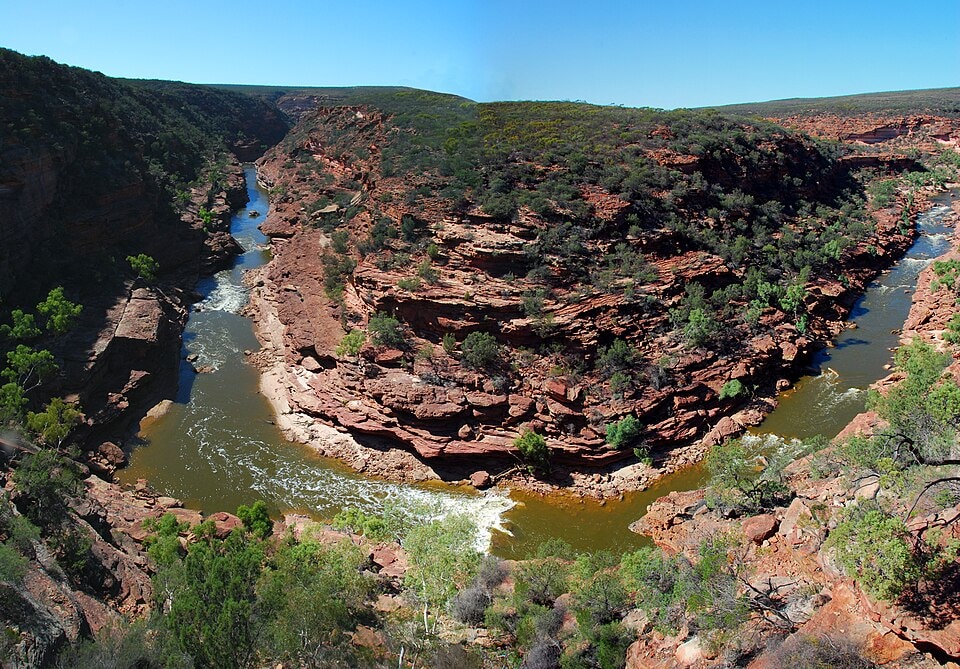
Murchison River Gorge is a significant riverine gorge located in the Mid West region of Western Australia, carved by the lower reaches of the Murchison River. Extending over 80 kilometers and reaching depths of up to 129 meters, it is renowned for its natural beauty and geological importance. The gorge is a major tourist attraction and contains important paleontological evidence of early land animals.
Key Facts
- ›The gorge is over 80 kilometers (50 miles) in length.
- ›It reaches a maximum depth of 129 meters (423 feet).
- ›Exposures of Tumblagooda sandstone, dating to the Ordovician period, are found within the gorge.
- ›Fossils of eurypterids, early land animals, and tracks of other arthropods are present.
- ›The gorge is almost entirely located within Kalbarri National Park.
- ›It is a major tourist attraction with points of interest like the Z Bend lookout.
River Erosion
Tumblagooda Sandstone Exposures, Eurypterid Fossils and Tracks, Arthropod Tracks, Z Bend Lookout, the Loop Walking Trail
About Murchison River Gorge
Murchison River Gorge is a significant riverine canyon located in the Mid West region of Western Australia. Carved by the meandering lower reaches of the Murchison River, this natural wonder stretches for over 80 kilometers and plunges to depths of up to 129 meters, creating a landscape of outstanding natural beauty.
Geological Significance
The gorge holds considerable interest for geologists, featuring prominent exposures of Tumblagooda sandstone. This Ordovician-era redbed formation is a treasure trove of paleontological discoveries, yielding fossils of eurypterids, which represent some of the earliest known evidence of land animals. Fossilized tracks of these ancient arthropods are frequently found in the vicinity, alongside tracks of other arthropods, possibly including trilobites.
Natural Beauty and Tourism
Recognized as a major tourist attraction, Murchison River Gorge offers visitors breathtaking vistas and opportunities for exploration. Notable points of interest include the Z Bend lookout, providing panoramic views of the dramatic gorge, and The Loop walking trail, which allows for an immersive experience within its scenic confines. The gorge is considered to be in excellent condition, largely due to its preservation within Kalbarri National Park.
Conservation and Recognition
The importance of Murchison River Gorge extends to its conservation status. It lies almost entirely within the boundaries of Kalbarri National Park, ensuring its protection. In recognition of its geological value, the gorge was nominated in 1991 as a geological monument for the Register of the National Estate.
Source: Wikipedia ↗
Frequently Asked Questions
How was Murchison River Gorge formed?
Murchison River Gorge was carved by the meandering lower reaches of the Murchison River. This process of river erosion over time has shaped the dramatic landscape of the gorge.
What is geologically significant about Murchison River Gorge?
The gorge is of significant interest to geologists due to its exposures of Tumblagooda sandstone, an Ordovician redbed formation. This sandstone contains fossils of eurypterids, which are among the earliest known fossil evidence of land animals, as well as tracks of other arthropods.
What are the main tourist attractions in Murchison River Gorge?
Key points of interest for visitors include the Z Bend lookout, offering panoramic views of the gorge, and The Loop walking trail, which allows for immersive exploration of the area. The natural beauty of the gorge itself is a primary draw.
Is Murchison River Gorge a protected area?
Yes, Murchison River Gorge is considered to be in excellent condition and lies almost entirely within Kalbarri National Park. It was also nominated in 1991 as a geological monument for the Register of the National Estate.
What kind of fossils can be found in Murchison River Gorge?
The gorge is notable for containing fossils of eurypterids, which represent some of the earliest fossil evidence of land animals. Fossilized tracks of these eurypterids are common, as are tracks of other arthropods, possibly including trilobites.
Related Canyons

Capertee Valley
Capertee Valley, located in New South Wales, Australia, is recognized as the world's widest canyon, surpassing even the Grand Canyon in its breadth. Carved by the Capertee River over millions of years through Permian and Triassic sedimentary rocks, the valley features dramatic sandstone cliffs and limestone formations. It holds significant ecological importance as a prime breeding site for endangered bird species and is a popular destination for birdwatching and bushwalking.
Carnarvon Gorge
Carnarvon Gorge, located in Central Queensland, Australia, is a significant natural attraction carved primarily by water erosion. Stretching approximately 30 kilometers in length and reaching depths of up to 600 meters, it is renowned for its diverse ecosystems, Indigenous cultural sites, and dramatic sandstone landscapes. As the most visited feature within Carnarvon National Park, it draws over 70,000 visitors annually, offering a unique oasis in a semi-arid region.

Porcupine Gorge
Porcupine Gorge is a sandstone gorge located in North West Queensland, Australia, carved by Galah Creek. It is a protected area within Porcupine Gorge National Park, known for its dramatic incised landscape and geological formations. The gorge is a significant natural attraction, hosting an annual race and diverse birdlife.