
Pinturas River Canyon
River Canyon·Argentina·Jurassic·Pinturas River
The Pinturas River Canyon, also known as Cañadón Río Pinturas, is a significant geological formation in Santa Cruz, Argentina, carved by the Pinturas River. Its walls are composed of Jurassic-era volcanic rocks, primarily ignimbrite from the Chon Aike Formation, and the canyon is renowned for its ancient rock art, most notably at the Cueva de las Manos, which attracts considerable tourism.
Key Facts
- ›Located 160 km from Perito Moreno, Santa Cruz, Argentina.
- ›Formed by the erosion of the Chon Aike Formation by the Pinturas River.
- ›Canyon walls are primarily composed of ignimbrite and other Jurassic volcanic rocks.
- ›The river flows through the canyon at 240 meters above sea level.
- ›The canyon reaches a depth of 270 meters and a width of 480 meters.
- ›Features significant prehistoric rock art, including the Cueva de las Manos, dating back up to 13,000 years.
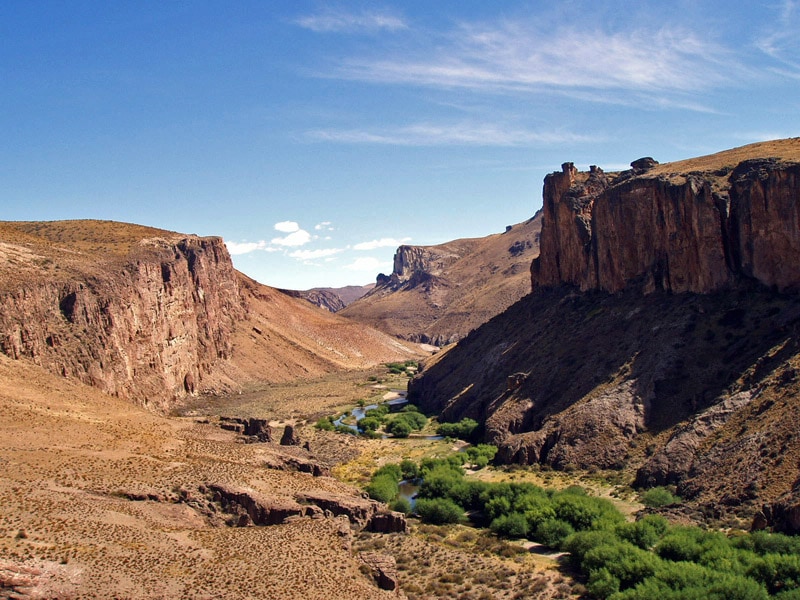
Cañadón Río Pinturas
River Erosion
Cueva De Las Manos, Rock Art, Nearly Vertical Canyon Walls
Guanacos
Grasslands, Schinus Molle, Rush Root, Berberis Plant
About Pinturas River Canyon
The Pinturas River Canyon, also known by its Spanish name Cañadón Río Pinturas, is a prominent geological feature located in the Santa Cruz province of Argentina, approximately 160 kilometers from the town of Perito Moreno. This canyon was sculpted over millennia by the erosive power of the Pinturas River, which carved its path through the Chon Aike Formation, a geological layer predominantly composed of volcanic rocks, including ignimbrite, dating back to the Jurassic period. The canyon's walls are characterized by their near-vertical nature, interspersed with slopes formed from landslide debris and sand, and reach depths of up to 270 meters with a width of 480 meters. The Pinturas River flows through the canyon floor at an elevation of 240 meters above sea level.
Geology and Formation
The canyon's distinctive geology is a direct result of the Pinturas River's persistent erosion into the Chon Aike Formation. This formation consists largely of ignimbrite, a type of volcanic rock, and other volcanic materials from the Jurassic era. The river's action over vast periods has shaped the landscape, creating the deep gorge with its dramatic vertical walls and varied reliefs.
Climate and Paleo-Indian Habitation
During the late Pleistocene and early Holocene periods, the region surrounding the canyon, specifically at elevations between 400 and 500 meters above sea level, supported a microclimate conducive to grasslands. This environment was vital for sustaining herds of guanacos, animals that were a crucial resource for the Paleo-Indian populations who inhabited the area. These early inhabitants utilized the land for hunting and also benefited from local flora, such as the Schinus molle plant, valued for its resins, adhesives, and firewood, as well as edible tubers and fruits. The current climate in the vicinity of the Cueva de las Manos is arid, with very low humidity and minimal annual precipitation. However, the canyon's topography offers some protection from the strong regional winds, resulting in milder winters.
Ancient Rock Art and Tourism
The Pinturas River Canyon is globally recognized for its rich legacy of prehistoric rock art, a testament to its long history of human settlement. The most celebrated site within the canyon is the Cueva de las Manos (Cave of Hands), an archaeological treasure trove featuring intricate hand stencils and other figures created by ancient peoples. The creation of this art is believed to date back as far as 13,000 years ago, making it one of the oldest examples of symbolic expression in the Americas. This exceptional cultural heritage, particularly the art at Cueva de las Manos, draws a significant number of tourists to the region, highlighting the canyon's importance as both a natural wonder and a site of profound historical and cultural significance.
Source: Wikipedia ↗
Frequently Asked Questions
What geological processes formed the Pinturas River Canyon?
The canyon was formed through the erosive action of the Pinturas River. The river cut into the Chon Aike Formation, which is composed of volcanic rocks from the Jurassic period, to create the deep gorge.
What are the dimensions of the Pinturas River Canyon?
The canyon is approximately 270 meters deep and 480 meters wide. The Pinturas River flows through it at an elevation of 240 meters above sea level.
What is the significance of the Cueva de las Manos within the canyon?
Cueva de las Manos is a famous cave site located within the Pinturas River Canyon. It is renowned for its ancient rock art, with creations dating back as far as 13,000 years ago, and is a major draw for tourism.
What was the climate like in the Pinturas River Canyon during ancient times?
During the Paleo-Indian period, an estimated microclimate existed between 400 and 500 meters above sea level, supporting grasslands hospitable to animals like guanacos. This past environment also featured useful plants such as Schinus molle and edible vegetables.
What is the current climate of the Pinturas River Canyon area?
The current climate near Cueva de las Manos is cold and dry, with very low humidity and less than 20 millimeters of annual precipitation. The canyon's topography helps to mitigate the region's strong westward winds, making winters less severe.
Related Canyons

Atuel Canyon
The Atuel Canyon is a significant geological feature carved by the Atuel River in the Mendoza province of Argentina. Formed by river erosion, it is characterized by a deep gorge and rapids that make it a popular destination for water sports and tourism. The canyon plays a crucial role in hydroelectric power generation through a series of dams and reservoirs.

Danube Gorge
The Danube Gorge, also known as the Weltenburg Narrows, is a significant geological feature in Bavaria, Germany, carved by the Danube River. This protected nature reserve showcases impressive limestone cliffs and unique rock formations, formed during the Upper Jurassic period.

Aare Gorge
The Aare Gorge is a dramatic canyon carved through a limestone ridge near Meiringen, Switzerland, by the Aare River. Formed approximately 10,000 years ago by glacial meltwater erosion at the end of the Ice Age, this narrow passage features sheer cliffs and is a significant tourist attraction, partly due to its proximity to the famous Reichenbach Falls.