
Red Stone Gorge
Red Stone Gorge, also known as Hóngshíxiá, is a significant gorge located in Yulin, Shaanxi, China. It is renowned for its extensive collection of sandstone cliff inscriptions and rock-cut grottos that once housed Buddhist clay statues. The inscriptions date from 1587 to 1949, with most of the original statues having been destroyed during the Four Olds Destruction movement, and currently displayed figures are largely reconstructed models.
Key Facts
- ›Features 200 sandstone cliff inscriptions dating from 1587 to 1949.
- ›Contains 34 rock-cut grottos that historically held Buddhist clay statues.
- ›Most original Buddhist statues were destroyed during the four Olds Destruction movement (1966-1976).
- ›Currently displayed statues are primarily reconstructed models.
- ›Inscriptions are predominantly in Classical Chinese, with one exception in Manchu.

Hóngshíxiá, 紅石峽
Erosion
Sandstone Cliff Inscriptions, Rock-Cut Grottos, Reconstructed Buddhist Clay Statues
About Red Stone Gorge
Red Stone Gorge, known in Mandarin Chinese as Hóngshíxiá (紅石峽), is a notable gorge located in Yulin, Shaanxi province, China. This geographical feature is distinguished by its significant cultural and historical artifacts, primarily consisting of 200 sandstone cliff inscriptions and 34 rock-cut grottos.
Historical Significance and Features
The inscriptions found on the sandstone cliffs span a considerable period, dating from 1587 to 1949. These writings offer insights into the historical and cultural landscape of the region over several centuries. The vast majority of these inscriptions are rendered in Classical Chinese, with one unique inscription identified in Manchu.
Within the gorge are also 34 rock-cut grottos, which historically housed Buddhist clay statues. These statues were an integral part of the site's religious and artistic heritage. However, the historical record indicates that most of these original Buddhist statues were destroyed during the Four Olds Destruction movement, a period of significant social upheaval in China from 1966 to 1976.
Present Day
Today, Red Stone Gorge continues to attract visitors interested in its historical remnants. The Buddhist clay statues that are currently displayed at the site are largely reconstructed models. These reconstructions serve as a testament to the site's past and the efforts made to preserve its cultural significance for future generations. The gorge's sandstone formations and the surviving inscriptions make it a valuable attraction for those interested in Chinese history, art, and religion.
Source: Wikipedia ↗
Frequently Asked Questions
What is Red Stone Gorge famous for?
Red Stone Gorge is famous for its 200 sandstone cliff inscriptions and 34 rock-cut grottos. These grottos once housed Buddhist clay statues, though most were destroyed and have since been reconstructed.
What is the historical significance of the inscriptions at Red Stone Gorge?
The inscriptions at Red Stone Gorge date from 1587 to 1949 and are primarily written in Classical Chinese, with one inscription in Manchu. They offer a historical record spanning several centuries of activity in the region.
What happened to the Buddhist statues in Red Stone Gorge?
The majority of the original Buddhist clay statues within the grottos were destroyed during the Four Olds Destruction movement, which took place from 1966 to 1976. The statues visible today are largely reconstructed models.
Where is Red Stone Gorge located?
Red Stone Gorge is located in Yulin, Shaanxi province, China.
Related Canyons

Taihangshan Gorge
Taihangshan Gorge, also known as Taihangshan Da Xiagu, is a renowned scenic destination located in the Shanxi province of China. Recognized as one of the top ten gorges in the country, it is an integral part of the Taihangshan Valley National Forest Park. The gorge is characterized by its dramatic cliffs, extensive forests, and historical temples, making it a significant natural and cultural landmark.

Huguan Taihang Grand Canyon
Huguan Taihang Grand Canyon is a significant geographical feature and popular tourist destination located in Shanxi, China. Formed by the uplift of the Taihang Mountains and subsequent river erosion, it features a complex network of deep gorges and steep slopes. The area is recognized for its geological importance, with deep gorges cutting through ancient carbonate rocks, and is a major attraction drawing millions of visitors annually.
Longtan Grand Canyon
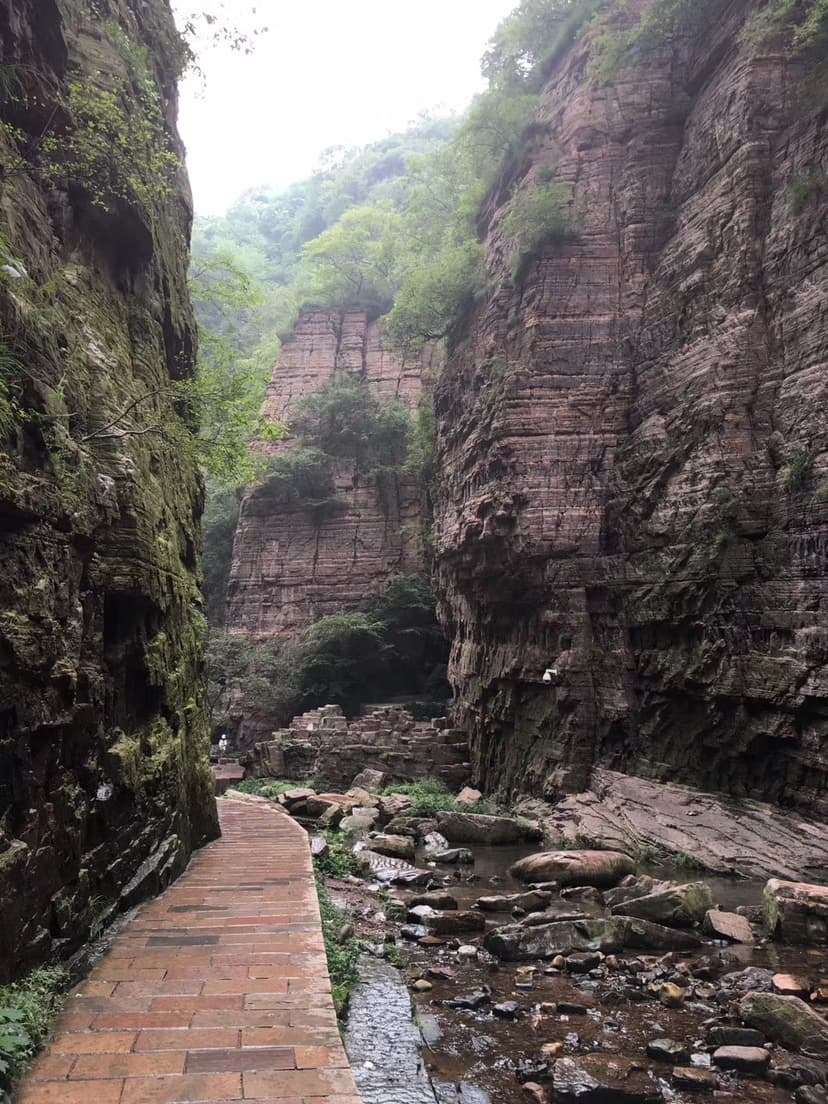
Longtan Grand Canyon is a prominent tourist attraction located in Xin'an County, Luoyang, Henan, China. This U-shaped valley, stretching 12 kilometers, is celebrated for its majestic mountains, serene valleys, cascading waterfalls, and distinctive purplish-red quartz sandstone shaped by centuries of water erosion. It is recognized as a significant part of the Wangwushan-Daimeishan UNESCO Global Geopark and has been lauded as the "First Gorge of Chinese Valleys."