
Rofla Gorge
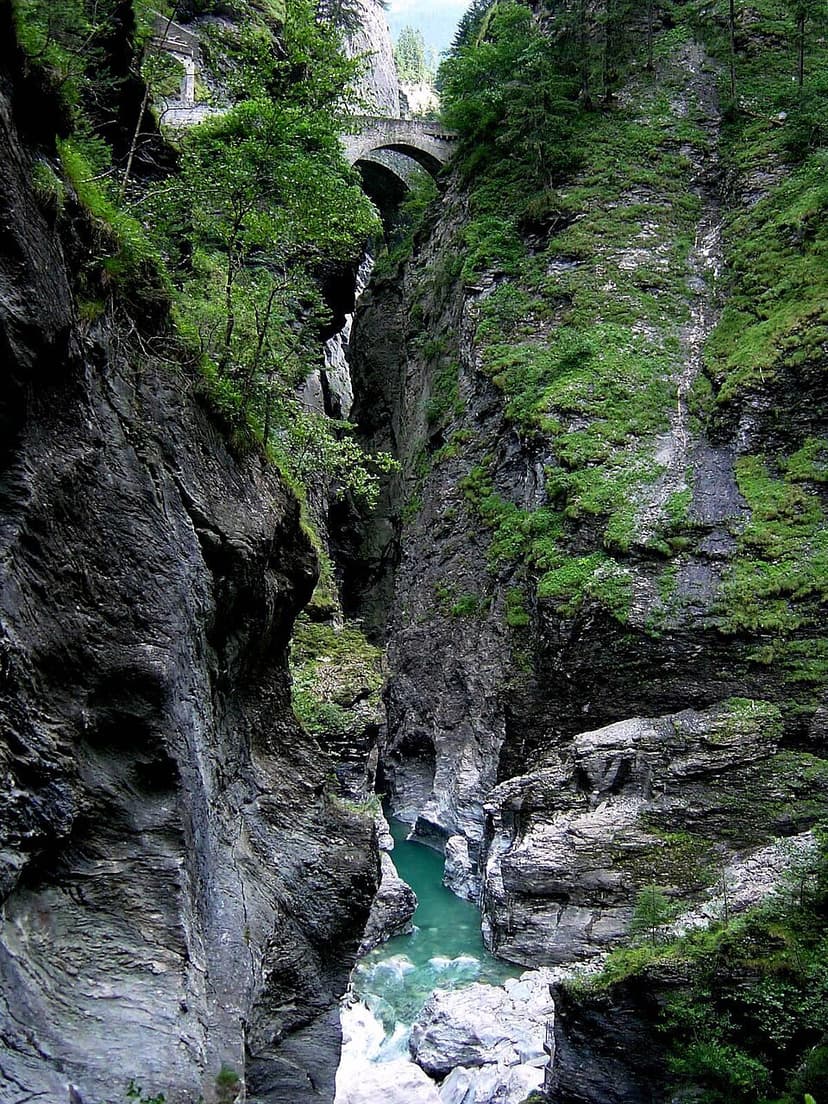
The Rofla Gorge is a narrow, ancient section of the Hinterrhein river in Graubünden, Switzerland. It served as a significant natural obstacle on the routes to the Splügen and San Bernardino mountain passes. Today, a footpath allows visitors to experience the gorge and its waterfall.
Key Facts
- ›Located in the canton of Graubünden, Switzerland.
- ›Forms a narrow section of the Hinterrhein river.
- ›Historically an obstacle to travelers on routes to Splügen and San Bernardino passes.
- ›Features a footpath built between 1907 and 1914, leading to and under a waterfall.
- ›Easily accessible from the older main road, near a hotel at its entrance.

Puntcrap, Roflaschlucht
River Erosion
Waterfall
About Rofla Gorge
The Rofla Gorge, known in Romansh as Puntcrap and in German as Roflaschlucht, is an ancient and notably narrow section of the Hinterrhein river. Located in the canton of Graubünden, Switzerland, it lies between the communities of Sufers and Andeer. This formidable gorge historically served as a significant natural obstacle for travelers attempting to reach the two important mountain passes, Splügen Pass and San Bernardino Pass, in addition to the Viamala gorge.
Modern Access and Tourism
While modern transportation has bypassed the gorge's historical role as a primary route impediment with the construction of the A13 motorway and San Bernardino Tunnel, the Rofla Gorge remains a point of interest. The older, main road passes by a hotel situated at the gorge's entrance. From this hotel, a dedicated footpath provides access to and allows exploration under the gorge's waterfall. This path was painstakingly constructed between 1907 and 1914 by the family who owned the hotel, facilitating public access to the natural spectacle.
Source: Wikipedia ↗
Frequently Asked Questions
What is the Rofla Gorge?
The Rofla Gorge is an ancient and narrow section of the Hinterrhein river in Graubünden, Switzerland. It historically presented a challenge for travelers approaching the Splügen and San Bernardino mountain passes.
How can I visit the Rofla Gorge?
A footpath was constructed between 1907 and 1914, which allows visitors to walk to and even under the gorge's waterfall. This path is accessible from the older main road near a hotel located at the gorge's entrance.
What is the significance of the Rofla Gorge?
The Rofla Gorge was a natural barrier that hindered travel towards the important Splügen and San Bernardino mountain passes. Its accessibility has been improved in modern times for tourism.
Are there other gorges like Rofla Gorge in the region?
The Rofla Gorge is mentioned alongside the Viamala gorge as another obstacle on the approach to the Splügen and San Bernardino mountain passes.
Related Canyons
Viamala
Viamala, meaning "bad path" in Romansh, is a narrow gorge in the canton of Graubünden, Switzerland, carved by the Hinterrhein river. It historically served as a treacherous obstacle on the route to the Splügen and San Bernardino mountain passes, with a pathway existing since Roman antiquity that has been repeatedly engineered and improved over centuries.

Aare Gorge
The Aare Gorge is a dramatic canyon carved through a limestone ridge near Meiringen, Switzerland, by the Aare River. Formed approximately 10,000 years ago by glacial meltwater erosion at the end of the Ice Age, this narrow passage features sheer cliffs and is a significant tourist attraction, partly due to its proximity to the famous Reichenbach Falls.

Küsnachter Tobel
The Küsnachter Tobel is a small river canyon located on the southwestern slope of the Pfannenstiel mountain in Switzerland, carved by the Küsnachter Dorfbach stream. This gorge, extending about 12 kilometers in length and up to 70 meters deep, is renowned for its wild, primeval landscape and serves as a popular hiking destination. It also holds ecological significance as a spawning ground for lake trout and features geological points of interest like glacial erratics and a cave formed in glacial conglomerate.