
Viamala
Viamala, meaning "bad path" in Romansh, is a narrow gorge in the canton of Graubünden, Switzerland, carved by the Hinterrhein river. It historically served as a treacherous obstacle on the route to the Splügen and San Bernardino mountain passes, with a pathway existing since Roman antiquity that has been repeatedly engineered and improved over centuries.
Key Facts
- ›Viamala is a narrow gorge located between Zillis-Reischen and Thusis in Graubünden, Switzerland.
- ›The pathway through Viamala dates back to Roman antiquity, initially as a foot and bridle path.
- ›Significant renovations and new constructions occurred in the medieval period (1473) and modern era (18th-20th centuries) to improve passage.
- ›The gorge was a critical, though difficult, route for accessing the Splügen and San Bernardino mountain passes.
- ›Modern infrastructure, including tunnels and bridges like the Great Viamala Bridge, bypasses much of the original gorge.
- ›The name Viamala directly translates to "bad path" in Romansh, reflecting its historical challenges.
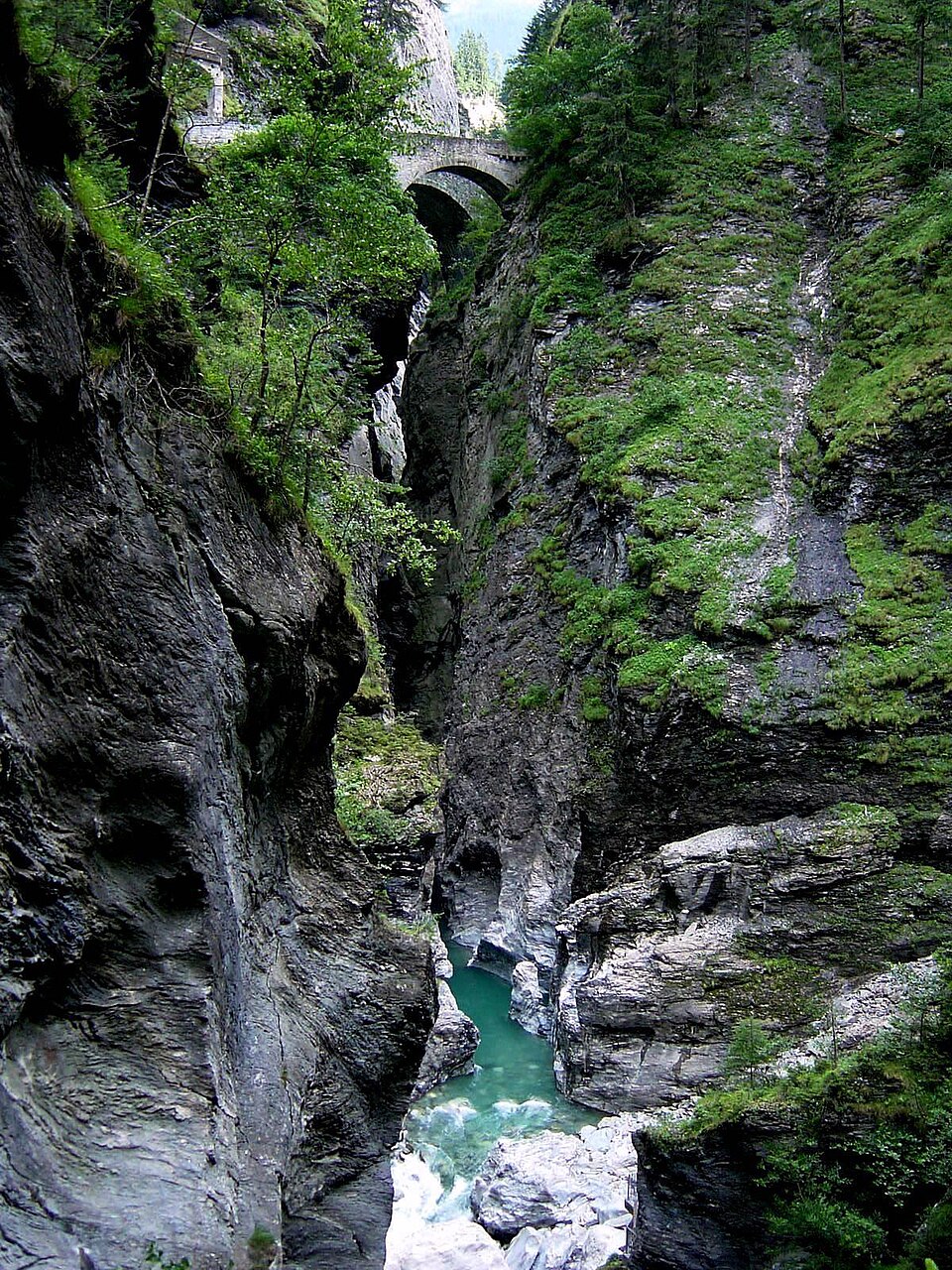
Via Mala
River Erosion
Rock Galleries, Punt Da Tgiern, Great Viamala Bridge, Traversinersteg
Viamala
About Viamala
Viamala: The "Bad Path" of Switzerland
Viamala, a name derived from Romansh meaning "bad path," is a dramatic and historically significant narrow gorge situated in the canton of Graubünden, Switzerland. Carved by the Hinterrhein river, it lies between the communities of Zillis-Reischen and Thusis. For centuries, Viamala presented one of the most formidable natural obstacles for travelers attempting to cross the Alps via the Splügen and San Bernardino mountain passes.
A Passage Through Time
Evidence suggests a pathway through Viamala existed as far back as Roman antiquity. The Romans ingeniously created passages by cutting rock galleries into the gorge's left walls and constructing a wooden bridge to cross the Hinterrhein. This early route facilitated foot and bridle traffic, and possibly wagons.
During the medieval period, the passage deteriorated, but a pivotal rebuilding effort occurred in 1473. Municipalities and transport cooperatives undertook renovations, incorporating the Roman sections and constructing the first stone bridge, the Punt da Tgiern. This new path was designed with a notable level of technical sophistication, intended to accommodate horses and sleds.
The modern era brought about substantial engineering advancements to tame the "bad path." Between 1738 and 1739, Christian Wildener built bridges that improved upon the Roman route. Later, from 1818 to 1821, state engineer Richard La Nicca created a completely new road featuring tunnels and connecting existing bridges. The 20th century saw further developments, including the construction of the A13 expressway with long tunnels and the impressive Great Viamala Bridge, designed by Christian Menn, which largely bypasses the most challenging sections of the gorge. More recently, pedestrian bridges like the Traversinersteg have been installed, offering access to visible remains of the ancient Roman path.
Source: Wikipedia ↗
Frequently Asked Questions
What does Viamala mean?
Viamala is a Romansh term that literally translates to "bad path." This name reflects the historical difficulties and dangers associated with traversing the gorge.
When did the pathway through Viamala originate?
A pathway through Viamala existed as early as Roman antiquity. The Romans constructed rock galleries and a wooden bridge to facilitate passage.
How has the Viamala pathway been improved over time?
The pathway has undergone numerous improvements, including medieval renovations by transport cooperatives who built the Punt da Tgiern stone bridge, and in the modern era, new roads with tunnels and several bridges were constructed to bypass the most difficult sections.
What is the significance of Viamala historically?
Historically, Viamala was the most serious obstacle on the approach to the Splügen and San Bernardino mountain passes, making it a crucial but challenging route for travelers.
Are there any notable modern structures in Viamala?
Yes, modern infrastructure includes the Great Viamala Bridge, a concrete suspension bridge designed by Christian Menn, and several tunnels that bypass the gorge. Pedestrian bridges like the Traversinersteg have also been built to connect to visible remains of the Roman path.
Related Canyons

Rofla Gorge
The Rofla Gorge is a narrow, ancient section of the Hinterrhein river in Graubünden, Switzerland. It served as a significant natural obstacle on the routes to the Splügen and San Bernardino mountain passes. Today, a footpath allows visitors to experience the gorge and its waterfall.

Aare Gorge
The Aare Gorge is a dramatic canyon carved through a limestone ridge near Meiringen, Switzerland, by the Aare River. Formed approximately 10,000 years ago by glacial meltwater erosion at the end of the Ice Age, this narrow passage features sheer cliffs and is a significant tourist attraction, partly due to its proximity to the famous Reichenbach Falls.

Küsnachter Tobel
The Küsnachter Tobel is a small river canyon located on the southwestern slope of the Pfannenstiel mountain in Switzerland, carved by the Küsnachter Dorfbach stream. This gorge, extending about 12 kilometers in length and up to 70 meters deep, is renowned for its wild, primeval landscape and serves as a popular hiking destination. It also holds ecological significance as a spawning ground for lake trout and features geological points of interest like glacial erratics and a cave formed in glacial conglomerate.