
Sautso Canyon
River Canyon·Norway·Altaelva·Sedimentary rocks
Sautso Canyon, also known as Alta Canyon, is a prominent geological feature in Finnmark county, Norway, carved by the Altaelva river. Stretching approximately 12 kilometers and reaching depths of up to 420 meters, it holds the distinction of being the largest canyon in Northern Europe. Its formation showcases numerous sedimentary layers as the river descends from the Finnmarksvidda plateau.
Key Facts
- ›Approximately 12 kilometers (7.5 miles) in length.
- ›Maximum depth ranges from 300 to 420 meters (980 to 1,380 feet).
- ›Located in Alta Municipality, Finnmark county, Norway.
- ›Considered the largest canyon in Northern Europe.
- ›Features visible sedimentary layers due to elevation changes.
- ›Formed by the erosion of the Altaelva river.

Alta Canyon, Čávžu
River Erosion
Visible Sedimentary Layers
čáVžU
About Sautso Canyon
Sautso Canyon, also known by its Northern Sami name Čávžu and referred to as Alta Canyon, is a significant geological formation located in Finnmark county, Norway. Carved by the Altaelva river, this canyon is recognized as the largest in Northern Europe, measuring approximately 12 kilometers (7.5 miles) in length and reaching depths of 300 to 420 meters (980 to 1,380 feet).
Geological Formation and Features
The canyon's formation is primarily attributed to the erosive action of the Altaelva river. The river originates from the Finnmarksvidda plateau, which has an elevation of about 450 meters (1,480 feet), and flows down into the canyon, where the elevation is around 90 meters (300 feet). This considerable drop in elevation has facilitated the river's carving power, exposing striking sedimentary layers along the canyon walls. These layers offer a visual record of the region's geological history.
Location and Significance
Sautso Canyon is situated within Alta Municipality, just north of the border with Kautokeino Municipality. Its impressive scale and the clear display of geological strata make it a notable natural landmark. The canyon begins just downstream of the Alta Power Station, marking a dramatic transition in the landscape as the river descends from the high plateau into the deep gorge.
Source: Wikipedia ↗
Frequently Asked Questions
What is Sautso Canyon?
Sautso Canyon, also known as Alta Canyon, is a large valley or canyon located along the Altaelva river in Finnmark county, Norway. It is recognized as the largest canyon in Northern Europe due to its significant length and depth.
How was Sautso Canyon formed?
The canyon was formed by the erosive power of the Altaelva river. As the river flows down from the higher Finnmarksvidda plateau into the canyon, its waters have carved through the landscape over time, revealing distinct sedimentary layers.
What are the dimensions of Sautso Canyon?
Sautso Canyon is approximately 12 kilometers (7.5 miles) long. Its depth varies, reaching between 300 and 420 meters (980 to 1,380 feet).
Where is Sautso Canyon located?
The canyon is situated in Alta Municipality, within Finnmark county, Norway. It lies just north of the border with Kautokeino Municipality and begins downstream from the Alta Power Station.
What is significant about the geology of Sautso Canyon?
The canyon walls clearly display numerous sedimentary layers. This geological feature is a result of the significant elevation difference as the Altaelva river descends from the Finnmarksvidda plateau (elevation 450 meters) to the canyon floor (elevation 90 meters).
Related Canyons
Mågålaupet Gorge
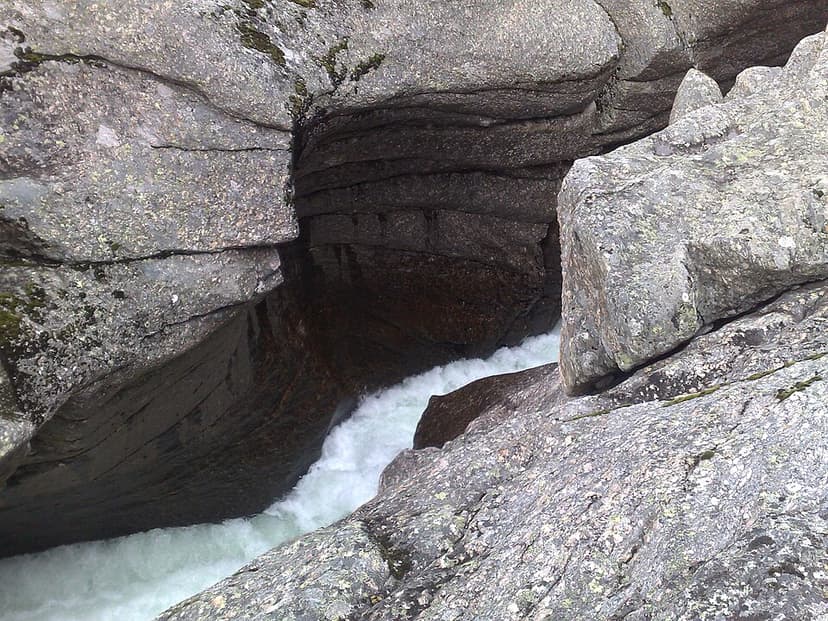
Mågålaupet Gorge is a striking 100-meter long, zigzag-shaped canyon carved by the river Driva in Oppdal Municipality, Norway. Its formation is attributed to the continuous erosion and the development of giant's kettles by the river since the last ice age, primarily in hard gneiss bedrock. The gorge is notable for its extreme narrowness, measuring just 1.5 meters at its tightest point.

Allmannajuvet Canyon
Allmannajuvet is a significant ravine located in Sauda Municipality, Rogaland county, Norway, carved by the river Storelva. Once the site of a large zinc mine operating from 1881 to 1899, it has been transformed into a cultural heritage site and tourist attraction featuring a museum and rest area designed by Peter Zumthor.

Aare Gorge
The Aare Gorge is a dramatic canyon carved through a limestone ridge near Meiringen, Switzerland, by the Aare River. Formed approximately 10,000 years ago by glacial meltwater erosion at the end of the Ice Age, this narrow passage features sheer cliffs and is a significant tourist attraction, partly due to its proximity to the famous Reichenbach Falls.