
Acroteriobatus blochii
Acroteriobatus blochii·Medium
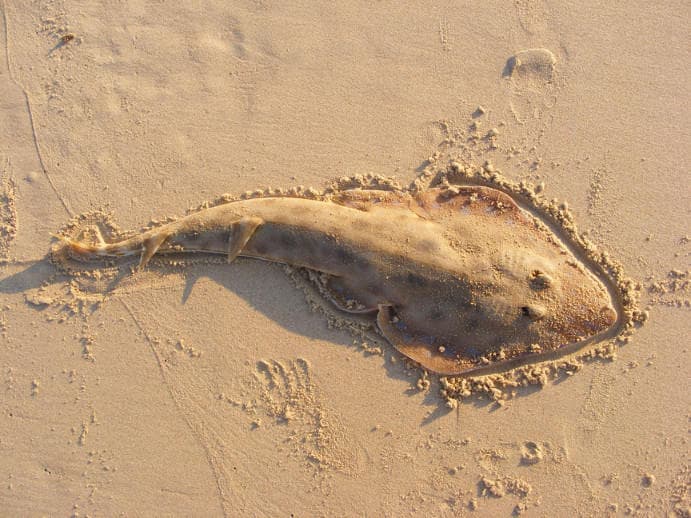
The bluntnose guitarfish, or fiddlefish (Acroteriobatus blochii), is a species of ray belonging to the Rhinobatidae family. This ray inhabits shallow seas and estuarine waters along the coasts of Angola, Namibia, and South Africa. It is known for its guitarfish-like body shape and is often confused with closely related species.
Key Facts
- ›Found in Angola, Namibia, and South Africa.
- ›Inhabits shallow seas and estuarine waters.
- ›Belongs to the Rhinobatidae family.
- ›Potentially threatened by habitat loss.
- ›Frequently misidentified with related species like *a. annulatus*.
Bluntnose Guitarfish, Fiddlefish
Angola, Namibia, South Africa
Ray With A Guitarfish-Like Body Shape.
Blunt Nose, Often Confused With *A. Annulatus*
About Acroteriobatus blochii
Bluntnose Guitarfish (Acroteriobatus blochii)
The bluntnose guitarfish, scientifically known as Acroteriobatus blochii and also commonly called the fiddlefish, is a species of ray found in the waters of southwestern Africa. This cartilaginous fish inhabits coastal areas, preferring shallow seas and estuarine environments. Its range includes the waters off Angola, Namibia, and South Africa.
Habitat and Distribution
Acroteriobatus blochii is adapted to life in nearshore marine environments. Its presence in estuarine waters suggests a tolerance for varying salinity levels, making it a resident of these transitional aquatic ecosystems. The species is geographically restricted to the western coast of southern Africa.
Conservation Concerns
While specific population data and conservation status are not detailed, the bluntnose guitarfish faces potential threats, notably habitat loss. Diamond mining operations along the Namibian coast are identified as a significant factor that can degrade or eliminate the shallow water habitats crucial for this species.
Identification
The bluntnose guitarfish is closely related to other species within the Acroteriobatus genus. It is frequently misidentified, with Acroteriobatus annulatus being a common point of confusion. Accurate identification often requires careful examination of specific morphological features.
Source: Wikipedia ↗
Frequently Asked Questions
Where can the bluntnose guitarfish be found?
The bluntnose guitarfish is found along the coasts of Angola, Namibia, and South Africa. Its natural range includes shallow seas and estuarine waters in these regions.
What is the habitat of the bluntnose guitarfish?
This species prefers shallow marine environments and estuarine waters. These areas provide suitable conditions for feeding and reproduction.
What are the main threats to the bluntnose guitarfish?
A significant threat to the bluntnose guitarfish is habitat loss, particularly due to diamond mining activities along the Namibian coast. This can reduce the available areas for them to live and breed.
How is the bluntnose guitarfish identified?
The bluntnose guitarfish is often misidentified with other species, especially its close relative *Acroteriobatus annulatus*. Distinguishing features may be subtle and require expert examination.
Related Cartilaginous fish species
Acroteriobatus leucospilus
Acroteriobatus leucospilus, commonly known as the grayspotted guitarfish, is a species of ray found along the coast of Madagascar, South Africa, Mozambique, and Tanzania. It is characterized by elongated bluish-gray spots on its snout and numerous small bluish spots on its fins, with a white ventral surface. This species faces significant population decline due to overfishing and harvesting.

Acroteriobatus omanensis
Acroteriobatus omanensis, commonly known as the Oman guitarfish, is a species of guitarfish native to the Gulf of Oman and the Arabian Sea. It is distinguished by its dense pattern of small, symmetrical ocelli and a very narrowly pointed nose. This small guitarfish inhabits the subtidal zone at depths of up to 100 meters, typically found in muddy and sandy seafloor areas.
Acroteriobatus zanzibarensis
The Zanzibar guitarfish (Acroteriobatus zanzibarensis) is a species of ray belonging to the Rhinobatidae family, found exclusively in the waters of Tanzania. It inhabits both open and shallow seas, characterized by its unique guitarfish-like body shape, a common feature among its relatives.