
Crocodylus niloticus
The Nile crocodile (Crocodylus niloticus) is a large crocodilian found in freshwater habitats across sub-Saharan Africa, inhabiting lakes, rivers, and swamps. It is Africa's largest predator and the second-largest extant reptile globally, distinguished by its powerful bite, armored skin, and opportunistic hunting strategy.
Key Facts
- ›Native to freshwater habitats in 26 African countries.
- ›Can grow up to 6.1 meters (20 ft) and weigh over 1,000 kg (2,200 lb).
- ›Opportunistic apex predators with a varied diet of fish, reptiles, birds, and mammals.
- ›Males contribute to parental care, a rare trait among reptiles.
- ›Responsible for hundreds of human deaths annually, making it one of the most dangerous crocodile species.
- ›Common and not currently endangered, though some regional populations have declined.
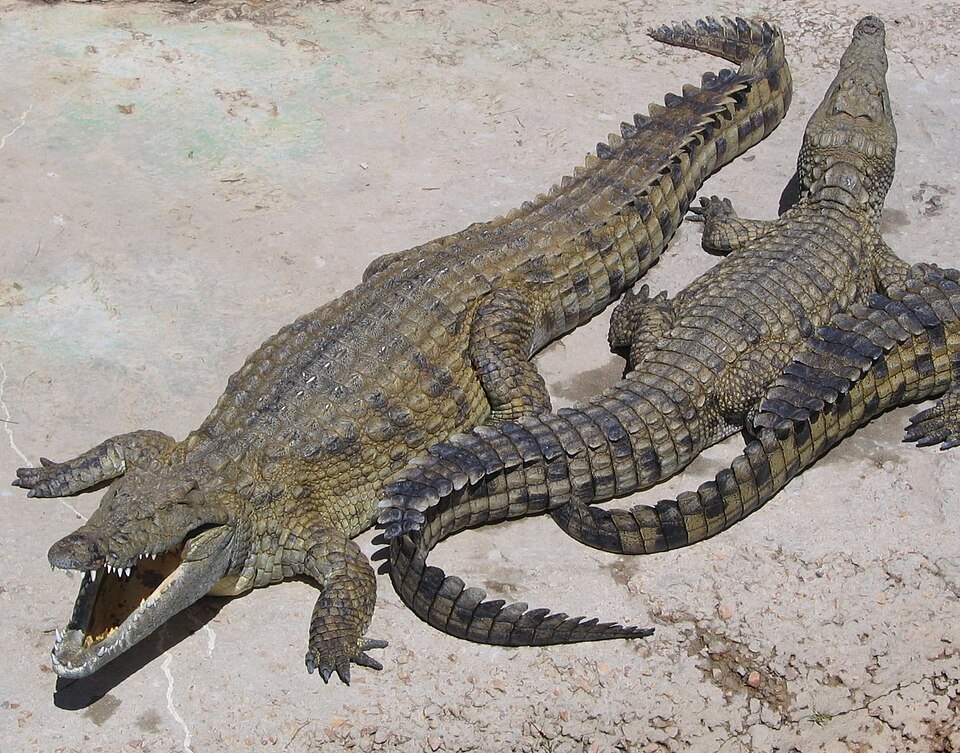
Lakes, Rivers, Swamps, Marshlands, Deltas, Brackish Lakes
- Thick, Scaly, Heavily Armored Skin.
- Dark Bronze Coloration Above With Faded Blackish Spots and Stripes; Dingy Off-Yellow On the Belly.
- Yellowish-Green Flanks With Dark Patches In Oblique Stripes.
- Green Eyes.
- Juveniles Are Grey, Multicoloured, Or Brown With Dark Cross-Bands.
- Quadrupedal With Short, Splayed Legs.
- Long, Powerful Tail.
- Rows of Ossified Scutes Down the Back and Tail.
- Powerful, Elongated Jaws With 64-68 Sharp, Cone-Shaped Teeth.
- Relatively Long Snout, About 1.6 To 2.0 Times As Long As Broad.
- Lay Eggs.
- Eggs Are Guarded By Both Females and Males.
- Hatchlings Are Protected For A Period.
- Hatchlings Hunt By Themselves and Are Not Fed By Parents.
About Crocodylus niloticus
The Nile Crocodile
The Nile crocodile (Crocodylus niloticus) is a formidable large crocodilian native to freshwater habitats across sub-Saharan Africa. It is one of the most widespread and common crocodilians on the continent, inhabiting a variety of aquatic environments including lakes, rivers, swamps, and marshlands. While primarily a freshwater species, it occasionally ventures into brackish lakes and, rarely, saltwater environments.
Physical Characteristics and Size
Adult Nile crocodiles are characterized by their thick, scaly, and heavily armored skin, typically displaying a dark bronze coloration above with faded blackish spots and stripes, and a dingy off-yellow on the belly. Their flanks are yellowish-green with variable dark patches. They possess powerful jaws armed with 64 to 68 sharp, cone-shaped teeth, and their eyes are green. The species has a relatively long snout compared to other crocodilians. Nile crocodiles are the largest predators in Africa and are considered the second-largest extant reptile in the world, surpassed only by the saltwater crocodile. Adult males generally measure between 3.5 and 5 meters (11.5 to 16.5 ft) in length and can weigh from 225 to 750 kg (496 to 1,653 lb). Exceptionally large individuals have been recorded to exceed 6.1 meters (20 ft) and weigh over 1,000 kg (2,200 lb). Size is sexually dimorphic, with females typically being about 30% smaller than males.
Diet and Hunting
As opportunistic apex predators, Nile crocodiles are highly aggressive and capable of preying on a wide array of animals within their territory. Their diet is diverse, consisting mainly of fish, reptiles, birds, and mammals. They are ambush predators, employing patience and agility to wait for the opportune moment to strike. Their powerful bite and sharp teeth are highly effective for gripping and holding large prey underwater to drown them.
Reproduction and Social Behavior
Nile crocodiles exhibit a degree of social behavior, often sharing basking sites and large food sources. A strict social hierarchy, determined by size, dictates access to resources, with larger, older males at the top. When this order is challenged, conflicts can become violent. Reproduction involves females laying eggs, which are then guarded by both males and females, a notable aspect of parental care among reptiles. While hatchlings are protected initially, they soon become independent hunters, not receiving food from their parents.
Conservation and Danger to Humans
The Nile crocodile is a common species and is not considered endangered, despite some regional population declines. However, it is also one of the most dangerous crocodile species to humans, responsible for hundreds of fatalities annually. Its presence in areas frequented by humans necessitates caution and respect for its predatory capabilities.
Source: Wikipedia ↗
Frequently Asked Questions
What is the typical size of an adult Nile crocodile?
Adult male Nile crocodiles typically range from 3.5 to 5 meters (11.5 to 16.5 ft) in length and weigh 225 to 750 kg (496 to 1,653 lb). However, larger specimens exceeding 6.1 meters (20 ft) and 1,000 kg (2,200 lb) have been recorded.
What do Nile crocodiles eat?
Nile crocodiles are opportunistic feeders with a varied diet. They primarily consume fish, reptiles, birds, and mammals found within their range, acting as ambush predators.
Where are Nile crocodiles found?
They are widely distributed in sub-Saharan Africa, found in freshwater environments such as lakes, rivers, swamps, and marshlands across 26 countries. Their historical range also included coastal areas and deltas.
Are Nile crocodiles dangerous to humans?
Yes, the Nile crocodile is considered one of the most dangerous crocodile species and is responsible for hundreds of human deaths each year. They are aggressive and capable of attacking a wide range of prey.
How social are Nile crocodiles?
Nile crocodiles are relatively social animals. They share basking spots and food sources, with a strict hierarchy determined by size. Large males dominate the social order.
Do male Nile crocodiles care for their young?
Yes, male Nile crocodiles participate in guarding eggs and protecting hatchlings, making them one of the few reptile species where males contribute to parental care.
Related Crocodilians

American alligator
The American alligator (Alligator mississippiensis) is a large crocodilian reptile native to the Southeastern United States. It is distinguished by its broad, U-shaped snout and darker coloration compared to the American crocodile. These apex predators play a crucial role as ecosystem engineers in freshwater wetlands, creating vital habitats for other organisms.

Caiman yacare
The yacare caiman, also known as the Paraguayan caiman or piranha caiman, is a species of crocodilian found in South America. It is characterized by its brown coloration with dark blotches and can be distinguished by its lower jaw teeth that can poke through holes in the upper jaw. Historically hunted for its skin, its populations have recovered due to conservation efforts and trade restrictions.

American crocodile
The American crocodile (Crocodylus acutus) is the most widespread of the four crocodile species native to the Americas, found from South Florida and the Caribbean to the coasts of Mexico and down to South America. It primarily inhabits coastal areas, preferring brackish and saltwater environments like mangrove swamps and lagoons, though it can also be found in freshwater systems. This species is distinguished by its relatively slender snout compared to the American alligator and a distinctive bump on its snout, and it is known for being less aggressive than some other crocodile species.