
American alligator
The American alligator (Alligator mississippiensis) is a large crocodilian reptile native to the Southeastern United States. It is distinguished by its broad, U-shaped snout and darker coloration compared to the American crocodile. These apex predators play a crucial role as ecosystem engineers in freshwater wetlands, creating vital habitats for other organisms.
Key Facts
- ›Adult males can reach lengths of 3.4 to 4.8 meters and weigh up to 450 kg.
- ›They inhabit subtropical and tropical freshwater wetlands across the Southeastern United States.
- ›American alligators are apex predators with a diverse diet including fish, amphibians, reptiles, birds, and mammals.
- ›They create 'alligator holes' which are essential habitats for other aquatic organisms during dry seasons.
- ›Mothers exhibit parental care, protecting eggs and young for up to three years.
- ›Listed as 'Least Concern' by the IUCN, their populations have recovered significantly from historical hunting declines.

Freshwater Wetlands, Marshes, Cypress Swamps, Streams, Rivers, Ponds, Lakes, Wetland Prairies, Urban Environments
- Broad, U-Shaped Snout
- Darker Coloration Compared To American Crocodiles
- Cream-Colored Undersides
- 74-80 Teeth, Frequently Replaced
- Juveniles Have Needle-Like Teeth, Adults Have More Robust Teeth
- Juveniles Have Yellow Bands
- Can Be Olive, Brown, Gray, Or Black Dorsally
- Eggs Are Laid In Nests Constructed From Vegetation, Sticks, Leaves, and Mud.
- Nests Are Located In Sheltered Spots On Land Near Water.
- Mothers Protect Their Eggs During Incubation and Move Hatchlings To Water Using Their Mouths.
- Parental Care Is Provided By the Mother For Up To One Year For Young and Up To 3 Years Post Birth.
- Males Use Infrasound To Attract Females During the Breeding Season.
Bellowing
About American alligator
The American alligator (Alligator mississippiensis), also known as the common alligator or gator, is a large crocodilian native to the southeastern United States. It is one of the two extant species in the genus Alligator and is notably larger than its only living relative, the Chinese alligator. This species is characterized by its broad, U-shaped snout, which distinguishes it from the sympatric American crocodile, and its generally darker coloration.
Habitat and Distribution
American alligators inhabit subtropical and tropical freshwater wetlands, including marshes, cypress swamps, rivers, ponds, and lakes, ranging from southern Oklahoma and Texas eastward to North Carolina. While they primarily prefer freshwater environments, they may occasionally venture into brackish water but are less tolerant of saltwater than American crocodiles. Their adaptability to cooler climates allows them to be found further north than the American crocodile.
Physical Characteristics and Diet
Adult males typically measure between 3.4 to 4.8 meters (11.2 to 15.7 ft) in length and can weigh up to 450 kg (1,000 lb), making them the heaviest members of the Alligatoridae family. Females are smaller, usually reaching 2.6 to 3.35 meters (8.5 to 11.0 ft). They possess a powerful bite, historically holding the record for the strongest laboratory-measured bite of any living animal. The American alligator's diet is diverse, consisting of fish, amphibians, reptiles, birds, mammals, and other alligators. Hatchlings focus on smaller prey like invertebrates.
Behavior and Reproduction
American alligators are known for their role as ecosystem engineers. They create 'alligator holes' in wetlands, which are crucial for other aquatic organisms during dry seasons. During the breeding season, they bellow to establish territory and attract mates, with males using infrasound. Reproduction involves laying eggs in nests made of vegetation and mud. Mothers display a rare form of parental care among reptiles, protecting their eggs and young for up to three years.
Conservation Status
Historically, the American alligator faced severe population declines due to hunting and habitat loss, leading to its listing as an endangered species under the Endangered Species Act of 1973. However, successful conservation efforts have allowed their numbers to rebound significantly. In 1987, the American alligator was removed from the endangered species list and is now classified as 'Least Concern' by the IUCN, though international trade remains regulated.
Source: Wikipedia ↗
Frequently Asked Questions
What is the difference between an American alligator and an American crocodile?
The American alligator has a broader, U-shaped snout and darker coloration, with its upper jaw overlapping the lower teeth when the mouth is closed. The American crocodile has a narrower snout, lighter coloration, and its fourth tooth on the lower jaw is visible when the mouth is shut. Alligators are also less tolerant of saltwater than crocodiles.
Where do American alligators live?
American alligators are found in the wild in the Southeastern United States, from the Lowcountry in South Carolina to Everglades National Park in Florida, and west to South Texas. They inhabit freshwater wetlands such as marshes, cypress swamps, rivers, and lakes.
What do American alligators eat?
As apex predators, American alligators consume a wide variety of prey, including fish, amphibians, reptiles, birds, mammals, and even other American alligators. Hatchlings primarily feed on invertebrates.
How long do American alligators live?
While specific lifespan data in the wild is not detailed, it is implied they live lengthy lives, with studies suggesting growth may cease around 31-43 years of age. They can go through over 2,000 teeth in their lifetimes.
Are American alligators endangered?
No, the American alligator is currently listed as 'Least Concern' by the IUCN. Historically, they were listed as endangered due to severe population declines from hunting, but conservation efforts have led to their recovery and removal from the endangered list in 1987.
How do American alligators reproduce and care for their young?
Eggs are laid in nests made of vegetation and mud near water. Mothers protect their eggs and young, moving hatchlings to water with their mouths and providing parental care for up to three years, which is rare among reptiles.
What role do American alligators play in their ecosystem?
American alligators are considered keystone species and ecosystem engineers. They create 'alligator holes' by excavating ponds, which retain water during dry seasons and provide vital refuge for aquatic organisms, supporting biodiversity.
Related Crocodilians

Caiman yacare
The yacare caiman, also known as the Paraguayan caiman or piranha caiman, is a species of crocodilian found in South America. It is characterized by its brown coloration with dark blotches and can be distinguished by its lower jaw teeth that can poke through holes in the upper jaw. Historically hunted for its skin, its populations have recovered due to conservation efforts and trade restrictions.
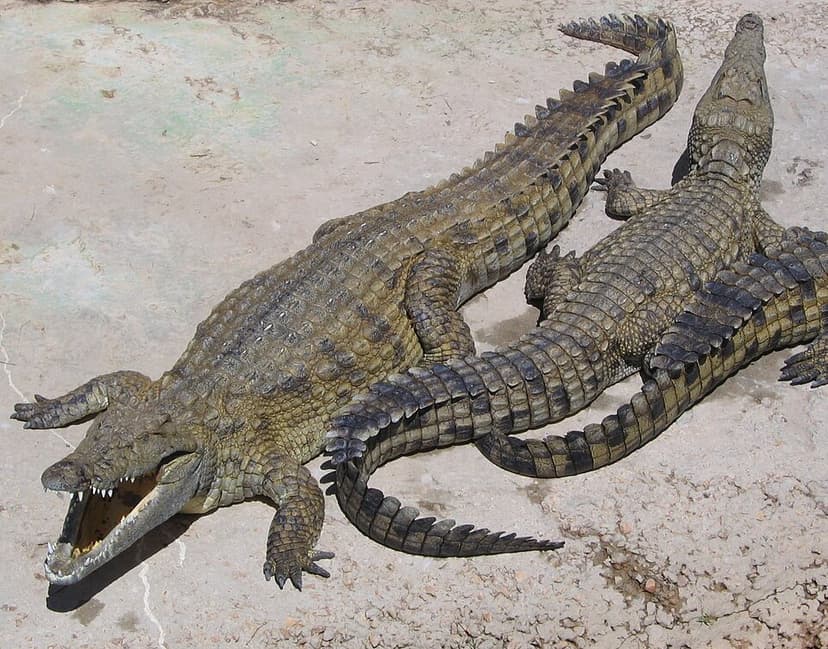
Crocodylus niloticus
The Nile crocodile (Crocodylus niloticus) is a large crocodilian found in freshwater habitats across sub-Saharan Africa, inhabiting lakes, rivers, and swamps. It is Africa's largest predator and the second-largest extant reptile globally, distinguished by its powerful bite, armored skin, and opportunistic hunting strategy.

Caiman latirostris
The broad-snouted caiman (Caiman latirostris) is a large crocodilian native to eastern and central South America, inhabiting freshwater wetlands like marshes and swamps, as well as rivers and lakes. It is distinguished by its unusually broad snout, which is adapted for navigating dense vegetation and crushing shells, and it is known to be an omnivore, consuming invertebrates, fish, birds, mammals, and even fruits.