
Dioon caputoi
Dry scrubland·Cycad·Insect (Pharaxonotha bicolor)·Critically Endangered
Dioon caputoi is a species of cycad indigenous to Puebla, Mexico, specifically near Loma de la Grana. This cycad is characterized by its presence in dry scrubland habitats and its unique mutualistic relationship with the beetle Pharaxonotha bicolor, which acts as its primary pollinator. Critically endangered, its survival is dependent on protection within the Tehuacán-Cuicatlán Biosphere Reserve.
Key Facts
- ›Native to Puebla, Mexico, near San Luis Atolotitlán.
- ›Found in dry scrubland environments.
- ›Has an obligatory mutualistic relationship with the beetle Pharaxonotha bicolor for pollination.
- ›Protected within the Tehuacán-Cuicatlán Biosphere Reserve.
- ›Faces critical endangerment with very few known wild populations.
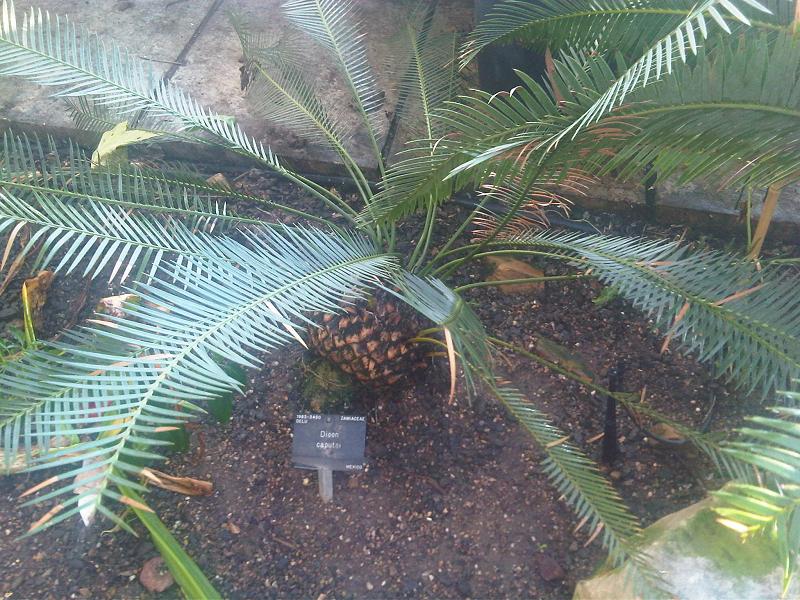
Puebla, Mexico
- Male cones serve as habitat and breeding grounds for the pollinating beetle Pharaxonotha bicolor.
Habitat Loss, Small Population Size, Limited Number of Known Populations
About Dioon caputoi
Dioon caputoi is a critically endangered species of cycad native to the state of Puebla, Mexico. Its known habitat is restricted to dry scrubland environments, particularly near Loma de la Grana, southwest of San Luis Atolotitlán. The species is under protection within the Tehuacán-Cuicatlán Biosphere Reserve, a crucial measure given the precarious state of its wild populations.
Botanical Characteristics and Reproduction
This cycad is characterized by its adaptation to arid conditions. A significant aspect of its life cycle is the obligatory mutualistic relationship it shares with the beetle Pharaxonotha bicolor. These beetles inhabit and breed within the male cones of Dioon caputoi, feeding on pollen and cone tissues. In return, they play a vital role in the species' reproduction by transferring pollen from male to female cones, acting as the primary pollinators.
Conservation Status and Population
As of recent assessments, Dioon caputoi faces severe threats to its survival. There are only five or six known wild populations, with each typically containing between 50 and 120 primarily adult specimens. The total estimated mature population numbers between 2,000 and 2,500 individuals. Its limited distribution and small population size make it particularly vulnerable to environmental changes and human impact, underscoring the importance of its protected status within the biosphere reserve.
Source: Wikipedia ↗
Frequently Asked Questions
Where is Dioon caputoi native to?
Dioon caputoi is native to the state of Puebla, Mexico. It is specifically found near Loma de la Grana, which is located southwest of San Luis Atolotitlán in the Caltepec municipality.
What is the habitat of Dioon caputoi?
This species thrives in dry scrubland environments. Its populations are typically found distributed randomly within these arid regions.
How does Dioon caputoi reproduce?
Dioon caputoi relies on an obligatory mutualistic relationship with the beetle Pharaxonotha bicolor for pollination. The beetle lives and breeds in the male cones, consuming pollen and cone tissues while transferring pollen to female cones.
What is the conservation status of Dioon caputoi?
Dioon caputoi is critically endangered, with only five or six known populations remaining in the wild. The species is protected by the Tehuacán-Cuicatlán Biosphere Reserve to aid its survival.
How many Dioon caputoi individuals are estimated to be in the wild?
The total mature population of Dioon caputoi is estimated to be between 2,000 and 2,500 individuals. These individuals are found in small, scattered populations, with each population containing primarily adult specimens.
Related Cycad species

Cycas petraea
Cycas petraea is a species of cycad exclusively found in Thailand. It is known to inhabit a specific range of limestone mountains adjacent to the Phu Kra Dueng massif in Phu Kradueng National Park, Loei Province. This species is distinguished by its unique geographic restriction.

Ceratozamia latifolia
Ceratozamia latifolia is a species of cycad native to the cloud zone oak forests of the Sierra Madre Oriental in Mexico, specifically in the states of Querétaro, Hidalgo, and San Luis Potosí. This species is characterized by its broad leaves, a feature reflected in its specific epithet 'latifolia'. It belongs to the Zamiaceae family and plays a role in its unique ecological niche.

Cycas riuminiana
Cycas riuminiana, also known as Arayat pitogo or pitogo, is a species of cycad native to the island of Luzon in the Philippines. This cycad is characterized by its edible young fronds and poisonous seeds, which can be detoxified and processed into flour. It is found in five distinct subpopulations across several provinces of Luzon.