
Agujaceratops
Herbivore·Late Cretaceous·Western Texas, USA·Quadrupedal
Agujaceratops was a genus of chasmosaurine ceratopsid dinosaur that lived in western Texas during the Late Cretaceous period. Known for its distinctive cranial ornamentation, including brow horns and a frill, it was a large, four-legged herbivore that inhabited environments potentially including swamps along the Western Interior Seaway.
Key Facts
- ›Agujaceratops means "horned face from Aguja."
- ›It was a large, quadrupedal herbivore, reaching an estimated length of 4.3 meters and weighing 1.5 metric tons.
- ›Fossils were discovered in the Aguja Formation of western Texas.
- ›It possessed long brow horns, a short nose horn, and an elaborate, notched frill often described as heart-shaped.
- ›The frill was fringed with numerous small hornlets, giving it a scalloped appearance.
- ›Agujaceratops lived alongside other dinosaurs, feathered dinosaurs, small pachycephalosaurs, tyrannosaurs, and large crocodilians.
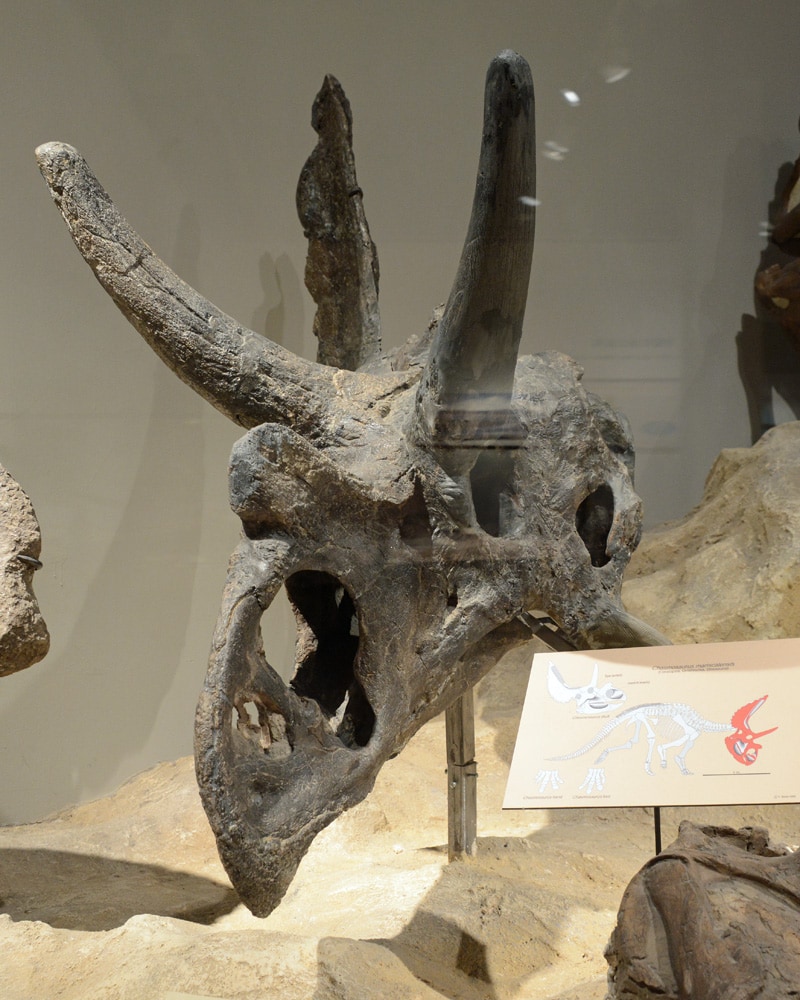
- Estimated length: 4.3 meters
- Estimated weight: 1.5 metric tons
- Long brow horns
- Short nose horn
- Elongate, heart-shaped frill with a strong notch
- Frill edges bear numerous low, blunt hornlets
- Scalloped frill appearance
Chasmosaurus, Pentaceratops
North America
About Agujaceratops
Agujaceratops is a genus of chasmosaurine ceratopsid dinosaur that roamed western Texas during the Late Cretaceous period. The name Agujaceratops means "horned face from Aguja," a reference to the Aguja Formation where its fossils were unearthed and its prominent cranial ornamentation.
Discovery and Species
Fossil material attributed to Agujaceratops was first collected in 1938 from Big Bend National Park in Texas. Initially, this material was identified as Chasmosaurus mariscalensis by Lehman in 1989, based on a partial adult skull. Later, in 2006, Spencer G. Lucas, Robert M. Sullivan, and Adrian Hunt established the new genus Agujaceratops for this species. Subsequent research by Lehman and colleagues identified further variation within the Agujaceratops material, leading to the description of a second species, Agujaceratops mavericus, from a nearly complete skull found at Rattlesnake Mountain.
Description and Ecology
Agujaceratops was a substantial horned dinosaur, with estimates placing its length at around 4.3 meters (14 feet) and its body mass at approximately 1.5 metric tons (1.7 short tons). It shared characteristics with other chasmosaurines, featuring a short nasal horn, long brow horns that curved backward, and an elongated frill. This frill was distinctively notched, giving it a heart-like shape, and was encircled by small hornlets, creating a strongly scalloped outline. The elaborate frill and horns likely played roles in social displays, potentially for territorial defense or mating rituals. The discovery of multiple individuals in a single quarry raises questions about their social structure, possibly indicating herd behavior or aggregation due to environmental conditions like drought or flood.
Agujaceratops lived in an ecosystem that included other dinosaurs such as the feathered Leptorhynchos gaddisi and the small pachycephalosaur Texacephale. The environment, inferred from the sediments of the Aguja Formation, may have been swampy, situated along the western edge of the Western Interior Seaway. Potential predators included tyrannosaurs and the large crocodilian Deinosuchus riograndensis.
Source: Wikipedia ↗
Frequently Asked Questions
What does the name Agujaceratops mean?
The name Agujaceratops translates to "horned face from Aguja," referring to the Aguja Formation where its fossils were discovered and its characteristic horned facial features.
What period did Agujaceratops live in?
Agujaceratops lived during the Late Cretaceous period, specifically the Campanian stage, approximately 77 million years ago.
How big was Agujaceratops?
Agujaceratops was a relatively large dinosaur, estimated to reach about 4.3 meters (14 feet) in length and weighing around 1.5 metric tons (1.7 short tons).
What did Agujaceratops eat?
As a ceratopsid, Agujaceratops was a plant-eater (herbivore).
Where were Agujaceratops fossils found?
The fossils of Agujaceratops were discovered in the Aguja Formation in western Texas, primarily within Big Bend National Park.
What were the distinctive physical features of Agujaceratops?
Agujaceratops was characterized by its long brow horns, a short nasal horn, and a large, heart-shaped frill edged with numerous small hornlets. The frill had a distinct notch at the back.
Related Dinosaur species

Abditosaurus
Abditosaurus is an extinct genus of titanosaurian sauropod dinosaur that lived during the Late Cretaceous period in what is now Catalonia, Spain. It is known from the most complete titanosaur skeleton ever discovered in Europe, representing a large species that inhabited the Ibero-Armorican Island. Phylogenetic analyses suggest it was related to South American and African saltasaurines, distinguishing it from other European dwarf sauropods.

Acantholipan
Acantholipan is a genus of herbivorous nodosaurid dinosaur discovered in Mexico. It lived during the early Santonian age of the Late Cretaceous period and is known from fragmentary fossils, including a partial skeleton with osteoderms. Acantholipan gonzalezi is the type species, named in honor of paleontologist Arturo Homero González-González.

Acanthopholis
Acanthopholis is a genus of herbivorous ankylosaurian dinosaur belonging to the family Nodosauridae. It lived during the Late Cretaceous Period in England and is characterized by its distinctive armor, including keeled plates and prominent spikes along its neck and shoulders. The genus name translates to "spiny scales."