
Altirhinus
Altirhinus was a herbivorous ornithopod dinosaur that lived in what is now Mongolia during the Early Cretaceous period. Known for its distinctive tall, arched snout, this dinosaur was primarily bipedal but may have also moved on four legs, especially when feeding.
Key Facts
- ›Altirhinus means "high nose," referring to its prominent cranial feature.
- ›It lived in Mongolia during the Early Cretaceous, approximately 125 to 100.5 million years ago.
- ›This dinosaur was herbivorous, feeding on plants using a beak and grinding teeth.
- ›Altirhinus was capable of bipedal locomotion but likely also used its forelimbs for support, possibly quadrupedally.
- ›Its forelimbs had a thumb spike, potentially used for defense or breaking hard seeds and fruits.
- ›The nasal arch may have been involved in cooling blood, water conservation, olfaction, vocalization, or visual display.

- Estimated length of 6.5 to 8 meters.
- Estimated weight of 1.1 tonnes.
- Skull approximately 760 mm long.
- Distinctive tall arch on the snout formed by nasal bones.
- Wide mouth and beak for cropping vegetation.
- Forelimbs with thick, blocky carpals and hoof-like bones on the three middle fingers.
- Thumb spike on the first digit.
- Fifth digit somewhat opposable.
Iguanodon, Ouranosaurus, Muttaburrasaurus, Fukuisaurus, Eolambia, Protohadros, Probactrosaurus
Mongolia
About Altirhinus
Altirhinus is a genus of hadrosauroid ornithopod dinosaur that roamed the Earth during the Early Cretaceous period. The name "Altirhinus" translates to "high nose," a direct reference to the prominent, arched structure adorning its snout, which was primarily formed by its nasal bones. This distinctive feature likely played a role in its behavior, though its exact function remains a subject of scientific speculation, possibly related to thermoregulation, water conservation, enhancing smell, or even visual displays for communication or mating.
Discovery and Classification
Fossils of Altirhinus were unearthed in 1981 from the Khuren Dukh Formation in Mongolia's Dornogovi Province during joint Soviet and Mongolian expeditions. The geological strata date back to the Aptian to Albian stages of the Early Cretaceous, between approximately 125 and 100.5 million years ago. Initially, the remains were attributed to Iguanodon orientalis, but this species was later deemed too fragmentary and indistinguishable from European relatives. In 1998, British paleontologist David B. Norman formally described the new genus and species, Altirhinus kurzanovi, honoring the Russian paleontologist Sergei Kurzanov who discovered the specimens.
Anatomy and Paleobiology
Altirhinus was a herbivorous dinosaur, equipped with a beak for cropping vegetation and specialized teeth for grinding. While capable of bipedal locomotion, its sturdy forelimbs, featuring thick wrist bones and broad, hoof-like terminal phalanges on its main digits, suggest it could also adopt a quadrupedal stance, particularly when feeding at ground level. This quadrupedal adaptation might be linked to grazing habits, paralleled in modern herbivores with wide muzzles. The forelimbs also possessed a characteristic thumb spike, similar to Iguanodon, which could have served for defense or manipulating food. The dinosaur's estimated length ranged from 6.5 to 8 meters, with an approximate weight of 1.1 tonnes. Its taxonomic position is considered an advanced iguanodontian, situated just before the divergence of the hadrosaurid family, commonly known as duck-billed dinosaurs.
Source: Wikipedia ↗
Frequently Asked Questions
What does the name Altirhinus mean?
The name Altirhinus is derived from the Latin word "altus" meaning "high" and the Greek word "rhis" meaning "nose" or "snout." This name refers to the distinctive tall, arched structure on its snout.
When and where did Altirhinus live?
Altirhinus lived during the Early Cretaceous period, specifically from the Aptian to Albian stages, which spanned from approximately 125 to 100.5 million years ago. Its fossils have been found in Mongolia.
What did Altirhinus eat?
Altirhinus was a herbivore. It possessed a keratinous beak at the front of its mouth for cropping vegetation and grinding teeth further back for chewing. This allowed it to feed efficiently on plants.
How did Altirhinus move?
Altirhinus was primarily bipedal, meaning it walked on its hind legs. However, its forelimbs were robust and had weight-bearing adaptations, suggesting it could also move on four legs, especially when grazing close to the ground.
What was the purpose of Altirhinus's nasal arch?
The exact function of the nasal arch is not definitively known. Proposed uses include housing tissues for cooling blood, conserving water, enhancing the sense of smell, or playing a role in vocalization or visual display, possibly for sexual selection.
Was Altirhinus related to Iguanodon?
Altirhinus was originally referred to the species Iguanodon orientalis. However, it has since been determined to be distinct from Iguanodon. It is classified as an advanced iguanodontian, positioned just before the evolution of hadrosaurids.
Related Dinosaur species

Brontomerus
Brontomerus is a genus of sauropod dinosaur that lived during the Early Cretaceous period, approximately 110 million years ago. It is notable for its unusually large hipbones, which would have supported the largest thigh muscles of any known sauropod, suggesting unique locomotive capabilities. The genus is known from fragmentary fossils of at least two individuals, likely an adult and a juvenile, discovered in Utah, USA.
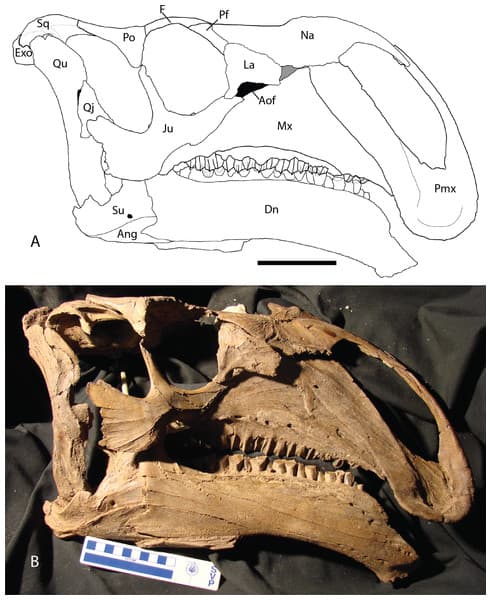
Choyrodon
Choyrodon is a genus of hadrosauroid dinosaur that lived during the Early Cretaceous period in what is now Mongolia. The only known species, Choyrodon barsboldi, is distinguished by its unique dental features and is considered a close relative of Eolambia. Its fossils were discovered in the Khuren Dukh Formation.
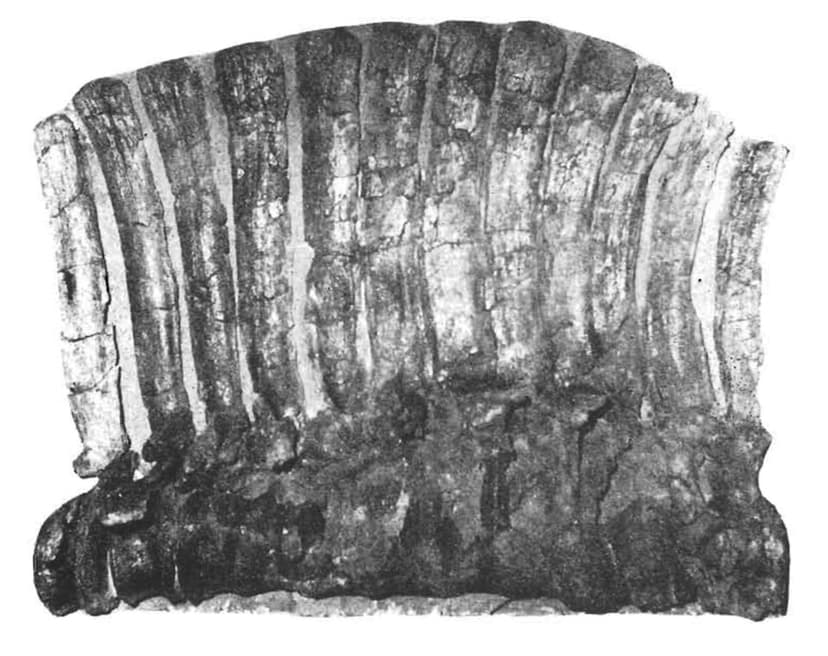
Barsboldia
Barsboldia was a large hadrosaurid dinosaur that lived during the Maastrichtian stage of the Late Cretaceous period in what is now Mongolia. It is known from a partial skeleton including vertebrae, pelvis, and ribs, and is distinguished by its very tall neural spines, particularly over the hips. While initially classified as a lambeosaurine, later studies suggest it may have been a saurolophine.