
Choyrodon
Choyrodon is a genus of hadrosauroid dinosaur that lived during the Early Cretaceous period in what is now Mongolia. The only known species, Choyrodon barsboldi, is distinguished by its unique dental features and is considered a close relative of Eolambia. Its fossils were discovered in the Khuren Dukh Formation.
Key Facts
- ›Choyrodon lived during the Early Cretaceous period (Albian stage).
- ›The type species is Choyrodon barsboldi.
- ›Fossils were discovered in the Khuren Dukh Formation of Mongolia.
- ›It is considered the sister taxon of Eolambia.
- ›The scientific name "Choyrodon" refers to its teeth and the city of Choyr.
- ›Three specimens, including partial skulls and skeletons, are known.
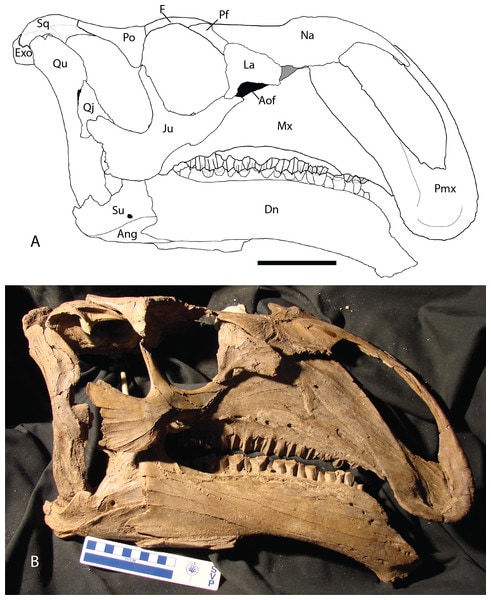
Possessed An Open Antorbital Fenestra ., Dental Features Are Distinctive.
Eolambia
Mongolia
About Choyrodon
Choyrodon is a genus of hadrosauroid dinosaur that roamed the Earth during the Early Cretaceous period. The sole recognized species, Choyrodon barsboldi, was discovered in the Khuren Dukh Formation of Mongolia. This dinosaur is noted for its unique dental characteristics and its close evolutionary relationship to other dinosaur groups.
Discovery and Naming
Three specimens of Choyrodon were unearthed from the Khuren Dukh Formation by an expedition led by Mongolian paleontologist Rinchen Barsbold. These fossils were found within sediments that also yielded the iguanodontian Altirhinus. However, comparisons revealed them to be distinct taxa. In 2018, American paleontologist Terry Gates and his colleagues formally described and named Choyrodon barsboldi. The genus name combines the nearby city of Choyr with the Latin word for "tooth," odon, reflecting a key feature of the dinosaur. The species name honors Rinchen Barsbold for his significant contributions to Mongolian paleontology.
Paleontological Significance
The known fossils of Choyrodon include a holotype partial skull and cervical ribs, as well as two referred specimens comprising another partial skull with associated skeletal material and a fragmentary skull with a partial skeleton. These discoveries have provided insights into the diversity of hadrosauroids in Early Cretaceous Asia. Phylogenetic analyses have placed Choyrodon as the sister taxon to Eolambia, indicating a close evolutionary link between these two genera. The presence of an open antorbital fenestra is a distinguishing feature, though its variability in adults was considered in taxonomic assessments. The fossil record for Choyrodon, while not extensive, is sufficient to establish its distinctiveness and its position within the hadrosauroid lineage.
Source: Wikipedia ↗
Frequently Asked Questions
When did Choyrodon live?
Choyrodon lived during the Early Cretaceous period, specifically the Albian stage. This places its existence millions of years ago, before the Late Cretaceous period.
Where were Choyrodon fossils found?
Fossils of Choyrodon have been discovered in the Khuren Dukh Formation in Mongolia. This geological formation has yielded multiple specimens of the dinosaur.
What does the name Choyrodon mean?
The genus name Choyrodon is derived from the city of Choyr, located near the discovery site, and the Latin word "odon," meaning tooth. The species name, barsboldi, honors the paleontologist Rinchen Barsbold.
What other dinosaurs is Choyrodon related to?
Phylogenetic analyses indicate that Choyrodon is the sister taxon of Eolambia. This means they are each other's closest relatives among the known dinosaur species.
How many specimens of Choyrodon are known?
Three specimens of Choyrodon have been described. These specimens include a holotype partial skull and cervical ribs, along with two other partial skulls that have associated postcranial material.
Related Dinosaur species

Amtocephale
Amtocephale is a genus of pachycephalosaurid dinosaur discovered in the southern Gobi Desert of Mongolia. Known from a nearly complete frontoparietal dome, it represents a subadult individual. Amtocephale is considered a potentially very old representative of its family, dating back to the early Late Cretaceous period.

Beg
Beg tse is an extinct species of neoceratopsian dinosaur that lived in Mongolia during the Early Cretaceous period. Known from a partial skull and fragmentary postcrania, it represents the most basal neoceratopsian discovered to date. Its scientific name honors the Himalayan war deity Beg-tse, reflecting the rugose appearance of its preserved skull.

Altirhinus
Altirhinus was a herbivorous ornithopod dinosaur that lived in what is now Mongolia during the Early Cretaceous period. Known for its distinctive tall, arched snout, this dinosaur was primarily bipedal but may have also moved on four legs, especially when feeding.