
Archaeoceratops
Archaeoceratops was a small, bipedal herbivorous dinosaur from the Early Cretaceous period of north central China. Meaning "ancient horned face," it possessed a relatively large head with a small bony frill but lacked the prominent horns seen in later ceratopsians. It is considered the first basal neoceratopsian discovered in its region.
Key Facts
- ›Lived during the Early Cretaceous period (Aptian stage).
- ›Meaning "ancient horned face," it was a basal neoceratopsian dinosaur.
- ›Discovered in north central China, specifically the Mazong Shan area of Gansu Province.
- ›Estimated to be small, reaching about 0.9 meters (3.0 ft) in length and weighing around 10 kg (22 lb).
- ›Was bipedal and herbivorous, feeding on ferns, cycads, and conifers.
- ›Possessed a small bony frill but no significant horns.

- Small size, reaching approximately 0.9 meters in length.
- Weighed an estimated 10 kg.
- Possessed a comparatively large head.
- Had a small bony frill at the back of its skull.
- Lacked prominent horns.
Helioceratops, Yamaceratops
China
About Archaeoceratops
Archaeoceratops, a genus of dinosaurs whose name translates to "ancient horned face," represents an early form of neoceratopsian dinosaurs. These creatures inhabited north central China during the Early Cretaceous period, specifically the Aptian stage. Unlike their more famous, heavily-horned descendants, Archaeoceratops was relatively small and appears to have been bipedal.
Discovery and Characteristics
Fossils of Archaeoceratops were unearthed in the Mazong Shan area of Gansu Province, China. The type species, Archaeoceratops oshimai, was formally described and named in 1997 by Dong Zhiming and Azuma. The genus is significant as the first basal neoceratopsian discovered in this region. The dinosaur was quite small, with estimated lengths of about 0.9 meters (3.0 ft) and a body mass of approximately 10 kg (22 lb). It featured a comparatively large head adorned with a modest bony frill at the back, but it lacked the pronounced horns characteristic of later ceratopsian evolution.
Diet and Classification
All ceratopsians, including Archaeoceratops, were herbivores. During the Cretaceous, flowering plants were not yet dominant, suggesting that Archaeoceratops likely fed on the prevalent flora of the time, such as ferns, cycads, and conifers. Its sharp, beak-like mouth would have been used to snip off vegetation for consumption. Archaeoceratops has been placed in its own family, Archaeoceratopsidae, a group that also includes other related genera like Helioceratops and potentially Yamaceratops.
Source: Wikipedia ↗
Frequently Asked Questions
What does Archaeoceratops mean?
The name Archaeoceratops means "ancient horned face." This name reflects its position as an early member of the ceratopsian group, which is characterized by "horned faces."
When did Archaeoceratops live?
Archaeoceratops lived during the Early Cretaceous period, specifically during the Aptian stage. This places it in a time frame over 100 million years ago.
Where were Archaeoceratops fossils found?
Fossils of Archaeoceratops were discovered in north central China, in the Mazong Shan area of Gansu Province. They were found within the Middle Gray Unit of the Xinminbao Group.
What did Archaeoceratops eat?
As a ceratopsian dinosaur, Archaeoceratops was a herbivore. It likely used its sharp, parrot-like beak to bite off and consume leaves and needles from plants like ferns, cycads, and conifers.
What were the physical characteristics of Archaeoceratops?
Archaeoceratops was a small dinosaur, estimated to be about 0.9 meters (3.0 ft) long and weighing around 10 kg (22 lb). It had a comparatively large head and a small bony frill projecting from the back of its skull, but it did not possess prominent horns.
How did Archaeoceratops move?
Based on its anatomy, Archaeoceratops appears to have been bipedal, meaning it walked on two legs. Its hind limbs and feet were well-preserved in fossil specimens, supporting this mode of locomotion.
Related Dinosaur species

Auroraceratops
Auroraceratops is a genus of bipedal basal neoceratopsian dinosaur that lived in north central China during the Early Cretaceous period. Meaning "dawn horned face," its name also honors Dawn Dodson, wife of one of its describers. This dinosaur is known for its relatively short and wide skull, a feature distinct from many other neoceratopsians.

Baiyinosaurus
Baiyinosaurus is an extinct genus of stegosaurian dinosaur that lived during the Middle Jurassic period. Its fossils, discovered in Gansu Province, China, represent a partial skeleton including cranial and vertebral bones. Baiyinosaurus exhibits transitional features, displaying characteristics of both basal thyreophorans and more derived stegosaurs, making it a significant find for understanding the evolution of armored dinosaurs.
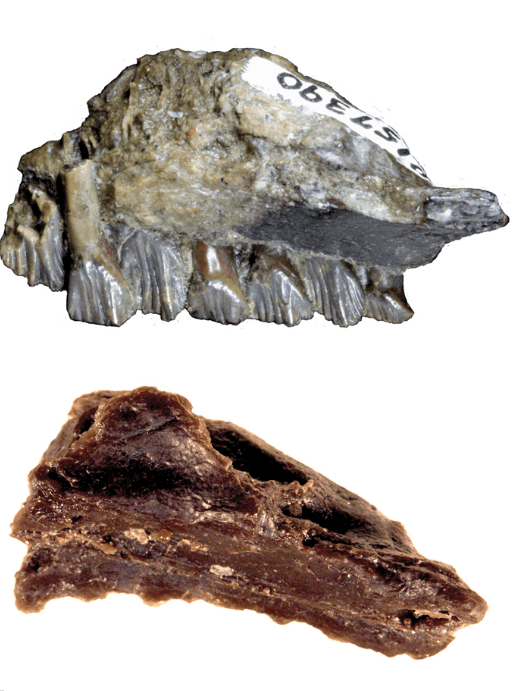
Atlascopcosaurus
Atlascopcosaurus is a genus of herbivorous dinosaur that lived during the Early Cretaceous period in what is now Australia. Based on related species, it is inferred to have been a small, bipedal herbivore.