
Atlantosaurus
Atlantosaurus is a dubious genus of sauropod dinosaur from the Late Jurassic Morrison Formation of Colorado, United States. It was the first sauropod described during the "Bone Wars" and is known from limited fossil material, making its distinctiveness as a species uncertain.
Key Facts
- ›Atlantosaurus is considered a nomen dubium, or "dubious name," due to the limited and indistinct fossil remains.
- ›The type species, Atlantosaurus montanus, was originally named Titanosaurus montanus by Othniel Charles Marsh in 1877.
- ›Marsh renamed the species Atlantosaurus montanus after discovering the name Titanosaurus was already in use.
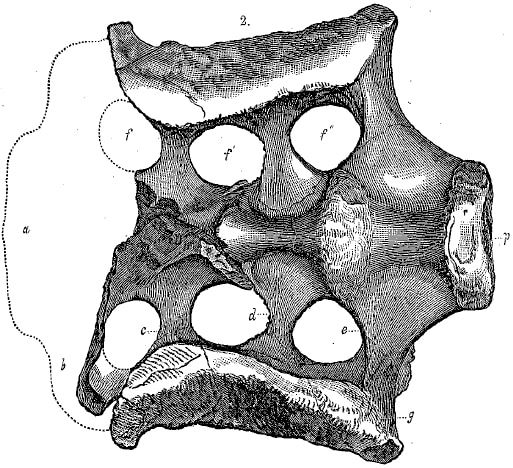
- ›The remains include posterior sacral vertebrae connected to the ilia, notable for their size and pleurocoels.
- ›Atlantosaurus lived in the Late Jurassic period.
- ›Fossils were discovered in the Morrison Formation of Colorado, United States.
- Estimated length of twenty-four meters.
- Posterior sacral vertebrae connected to the ilia.
- Vertebrae feature pleurocoels.
Apatosaurus Ajax, Apatosaurus, Brontosaurus
United States
About Atlantosaurus
Atlantosaurus is a genus of sauropod dinosaur from the Late Jurassic period, known primarily from fossils discovered in the Morrison Formation of Colorado, United States. The genus contains a single recognized species, Atlantosaurus montanus. Its discovery is historically significant as it was the first sauropod to be formally described during the intense and often contentious "Bone Wars" of the 19th century, a period of fierce competition among paleontologists.
History and Classification
The type specimen of Atlantosaurus montanus was initially named Titanosaurus montanus by Othniel Charles Marsh in July 1877. Marsh later renamed it Atlantosaurus montanus after realizing the name Titanosaurus had already been used. The original description was based on two or three posterior sacral vertebrae connected to the ilia. These bones were characterized by their immense size and the presence of pleurocoels, or air-filled pockets, within the vertebrae. However, since the time of its discovery, these features have been found to be common among many sauropods, making it difficult to definitively distinguish the known vertebrae of Atlantosaurus from those of its relatives.
Due to the limited and indistinct nature of the fossil material, Atlantosaurus montanus is considered a nomen dubium, or "dubious name." This means its status as a distinct species is uncertain. Some researchers have suggested it might be a synonym of Apatosaurus ajax, another well-known sauropod from the same geological formation. Marsh also named a second species, Atlantosaurus immanis, in 1878, based on more complete postcranial remains. However, A. immanis has since been identified as a dubious member of the Apatosaurinae, separate from both Apatosaurus and Brontosaurus, without a clear relationship to Atlantosaurus montanus.
Physical Characteristics and Paleoecology
Marsh initially estimated the length of Atlantosaurus to be around twenty-four meters, though this was based on comparisons to crocodiles and the limited skeletal material available. The known remains provide little insight into its complete anatomy or lifestyle. As a sauropod, Atlantosaurus was undoubtedly a large, long-necked, herbivorous dinosaur. Its habitat would have been the terrestrial environments of the Late Jurassic, likely characterized by vast floodplains and forests, typical of the Morrison Formation ecosystem.
Legacy
Despite its dubious status, Atlantosaurus remains an important figure in the history of paleontology due to its early description during a pivotal era of dinosaur discovery. The challenges in classifying it highlight the difficulties faced by early paleontologists and the ongoing process of refining our understanding of dinosaur evolution and taxonomy as new evidence emerges.
Source: Wikipedia ↗
Frequently Asked Questions
What does the name Atlantosaurus mean?
The name Atlantosaurus means "Atlas lizard." It was named by Othniel Charles Marsh in reference to the titan Atlas from Greek mythology.
When did Atlantosaurus live?
Atlantosaurus lived during the Late Jurassic period. This places it among dinosaurs that roamed the Earth millions of years ago.
Where were Atlantosaurus fossils found?
Fossils attributed to Atlantosaurus have been discovered in the Morrison Formation of Colorado, United States. This region is famous for its rich dinosaur fossil sites.
Why is Atlantosaurus considered a "dubious name"?
Atlantosaurus is considered a "dubious name" (nomen dubium) because the distinguishing features of its known fossil remains, such as large size and air pockets in vertebrae, are common among many sauropods. This makes it difficult to confirm if it represents a truly distinct species.
What was the significance of Atlantosaurus's discovery?
Atlantosaurus holds historical significance as the first sauropod to be described during the notorious "Bone Wars." This period of paleontological rivalry in the 19th century was marked by intense competition and a sometimes-unscientific pursuit of academic acclaim.
What other dinosaur species might Atlantosaurus be related to?
Some researchers have considered Atlantosaurus montanus to be a likely synonym of Apatosaurus ajax. Another species, Atlantosaurus immanis, was identified in 2015 as a dubious member of the Apatosaurinae, separate from Apatosaurus and Brontosaurus.
Related Dinosaur species

Brachiosaurus
Brachiosaurus was a genus of large sauropod dinosaur that inhabited North America during the Late Jurassic period. Known for its exceptionally long arms compared to its legs, which gave it a steeply inclined trunk, Brachiosaurus was a high browser that likely fed on vegetation up to 9 meters off the ground. While once thought to be one of the largest dinosaurs, its popular image has often been influenced by the closely related genus Giraffatitan.

Amphicoelias
Amphicoelias was a genus of herbivorous sauropod dinosaur that roamed the Earth approximately 150 million years ago during the Late Jurassic period. Known from fossils found in Colorado, United States, it was moderately sized, with estimated lengths of around 18 meters and a body mass of 15 metric tons. Its anatomy, particularly its vertebrae and limb bones, shares similarities with its close relative, Diplodocus.

Apatosaurus
Apatosaurus was a large, herbivorous sauropod dinosaur that roamed North America during the Late Jurassic period. Known for its "deceptive lizard" name, it possessed a long neck, a whip-like tail, and stocky limbs, distinguishing it from its close relative, Diplodocus. Fossils have been unearthed primarily in the Morrison Formation, providing significant insights into its anatomy and lifestyle.