
Augustynolophus
Herbivore·Late Cretaceous·California, USA·Facultative Biped
Augustynolophus is an extinct genus of herbivorous saurolophine hadrosaurid dinosaur that lived in what is now California during the late Maastrichtian age, making it one of the last non-avian dinosaurs before the Cretaceous–Paleogene extinction event. It was a large hadrosaur, estimated to be 8 meters (26 ft) long and weigh 3 metric tons (3.3 short tons), and was specialized for chewing its plant-based diet.
Key Facts
- ›Augustynolophus was a herbivorous hadrosaurid dinosaur.
- ›It lived during the late Maastrichtian age, near the end of the Cretaceous period.
- ›Fossils have been found exclusively in the Moreno Formation of California.
- ›The genus was named in honor of the Augustyn family and the suffix '-lophus' meaning crest.
- ›Augustynolophus is estimated to have reached lengths of 8 meters (26 ft) and weighed 3 metric tons (3.3 short tons).
- ›It is one of the official state dinosaurs of California.

Large Hadrosaur, Estimated Length of 8 Meters, Estimated Body Mass of 3 Metric Tons, Specialized For Chewing Food
Saurolophus, Prosaurolophus
North America
About Augustynolophus
Augustynolophus is an extinct genus of herbivorous dinosaur belonging to the saurolophine hadrosaurid family. This dinosaur roamed the land that is now California during the late Maastrichtian age, a period near the very end of the Cretaceous period. Its existence makes it one of the last known non-avian dinosaurs before the mass extinction event that marked the end of the Mesozoic Era.
Discovery and Naming
The fossils of Augustynolophus have been found exclusively in California, specifically within the Moreno Formation. This discovery location places it within the ancient landmass of Laramidia. The genus name, Augustynolophus, is a tribute to the Augustyn family, who provided support to the Los Angeles County Museum, combined with the Greek suffix "-lophus," meaning crest, a nod to its close relatives in the Saurolophus genus. The species name, morrisi, honors paleontologist William Morris. Initially described as a species of Saurolophus, subsequent studies revealed significant differences in its cranial structure that warranted its classification as a distinct genus.
Physical Characteristics and Diet
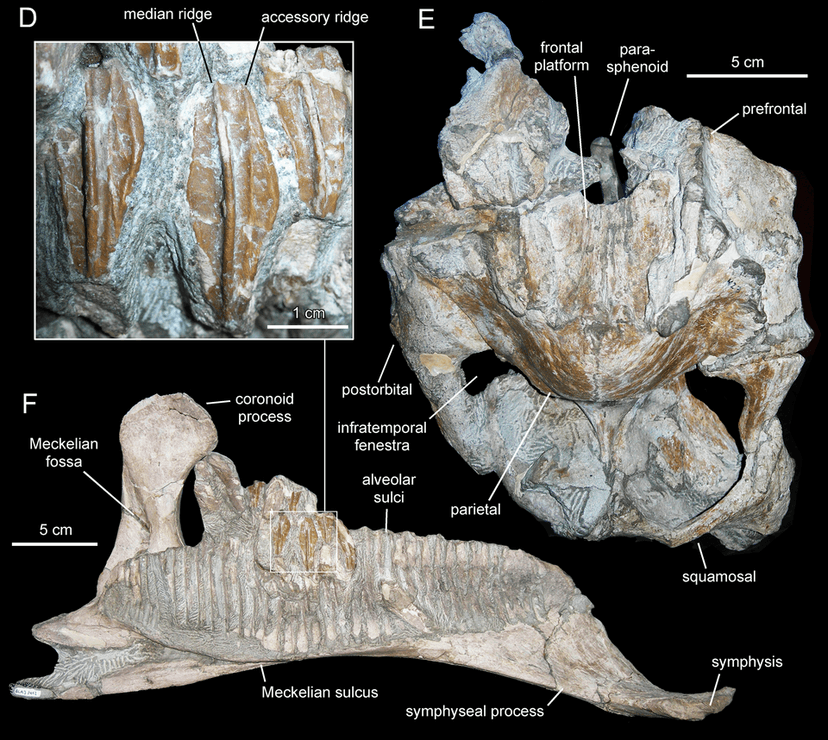
Augustynolophus was a substantial dinosaur, estimated to have reached lengths of approximately 8 meters (26 feet) and a body mass of around 3 metric tons (3.3 short tons). Like other hadrosaurs, it was a herbivore, subsisting on the plant life of its environment. A notable characteristic of hadrosaurs, including Augustynolophus, was their specialized dental batteries, which allowed them to efficiently chew their food. This adaptation was crucial for processing tough plant matter.
Paleoecology and Significance
Augustynolophus lived in a region that, while rich in marine fossils, has a less well-documented terrestrial fauna compared to other parts of western Laramidia. It shared its environment with a diverse array of marine life, including various species of mosasaurs, plesiosaurs, ray-finned fish, and non-marine turtles. In addition to its scientific significance as one of the last dinosaurs, Augustynolophus holds a special place in California's natural heritage, having been declared the official state dinosaur in September 2017.
Source: Wikipedia ↗
Frequently Asked Questions
What does Augustynolophus mean?
The generic name Augustynolophus is a combination of the Augustyn family, who supported the Los Angeles County Museum, and the suffix '-lophus,' meaning crest. This likely refers to its relative, Saurolophus.
When did Augustynolophus live?
Augustynolophus lived during the late Maastrichtian age, which was one of the final stages of the Cretaceous period. This places it among the last known non-avian dinosaurs before the Cretaceous–Paleogene extinction event.
Where were Augustynolophus fossils found?
All known specimens of Augustynolophus have been discovered in the Moreno Formation in California. This region was part of Laramidia during the Late Cretaceous.
How large was Augustynolophus?
Augustynolophus was a large hadrosaur, estimated to reach lengths of 8 meters (26 ft). It also had an estimated body mass of 3 metric tons (3.3 short tons).
What did Augustynolophus eat?
As a herbivorous dinosaur, Augustynolophus fed on the plant life available in its environment. Hadrosaurs like Augustynolophus were notable for their specialized chewing abilities.
What other creatures lived alongside Augustynolophus?
Augustynolophus shared its environment with a variety of marine creatures, including non-marine turtles, mosasaurs, plesiosaurs, and ray-finned fish. Terrestrial fauna in this region is less well-studied.
Related Dinosaur species

Amurosaurus
Amurosaurus was a genus of lambeosaurine hadrosaurid dinosaur that lived in what is now eastern Asia during the Late Cretaceous period, approximately 70 to 66 million years ago. Named "Amur lizard," its remains were discovered near the Amur River, which forms the border between Russia and China. This herbivorous dinosaur is estimated to have been about 8 meters long and weighed around 3 metric tons.
Arenysaurus
Arenysaurus is a genus of hadrosaurid dinosaur that lived during the Late Cretaceous period, approximately 66 million years ago. It was one of the last non-avian dinosaurs, becoming extinct during the Cretaceous–Paleogene extinction event. Fossils of Arenysaurus have been discovered in the Tremp Formation of the Pyrenees Mountains in Spain.

Coahuilasaurus
Coahuilasaurus is an extinct genus of kritosaurin ornithopod dinosaur that lived during the Late Cretaceous period in what is now Coahuila, Mexico. Known from fragmentary skull bones, it was a large dinosaur, estimated to be 8-9 meters long and weighing over 4 metric tons. The genus name honors the region of its discovery, while the species name recognizes the Lipan Apache tribe.