
Betasuchus
Carnivore·Late Cretaceous·Netherlands·Bipedal
Betasuchus was a probable abelisaurid theropod dinosaur that lived during the Late Cretaceous Period. Its fossil remains, consisting of an incomplete femur, were discovered in the Netherlands, making it one of the few dinosaur genera named from that region and the only non-avian theropod found in the Maastrichtian Beds. The exact placement of Betasuchus within theropod phylogeny has been debated, with various studies suggesting relationships to ornithomimids, tyrannosauroids, and ultimately, abelisaurids.
Key Facts
- ›Betasuchus lived during the Late Cretaceous Period.
- ›Its only known fossil is an incomplete right femur.
- ›The species was discovered in the Netherlands near Maastricht.
- ›It is classified as a probable abelisaurid theropod dinosaur.
- ›Estimates suggest Betasuchus reached a length of approximately 4 meters (13 feet).
- ›It is the only non-avian theropod found in the Maastrichtian Beds of the Netherlands.
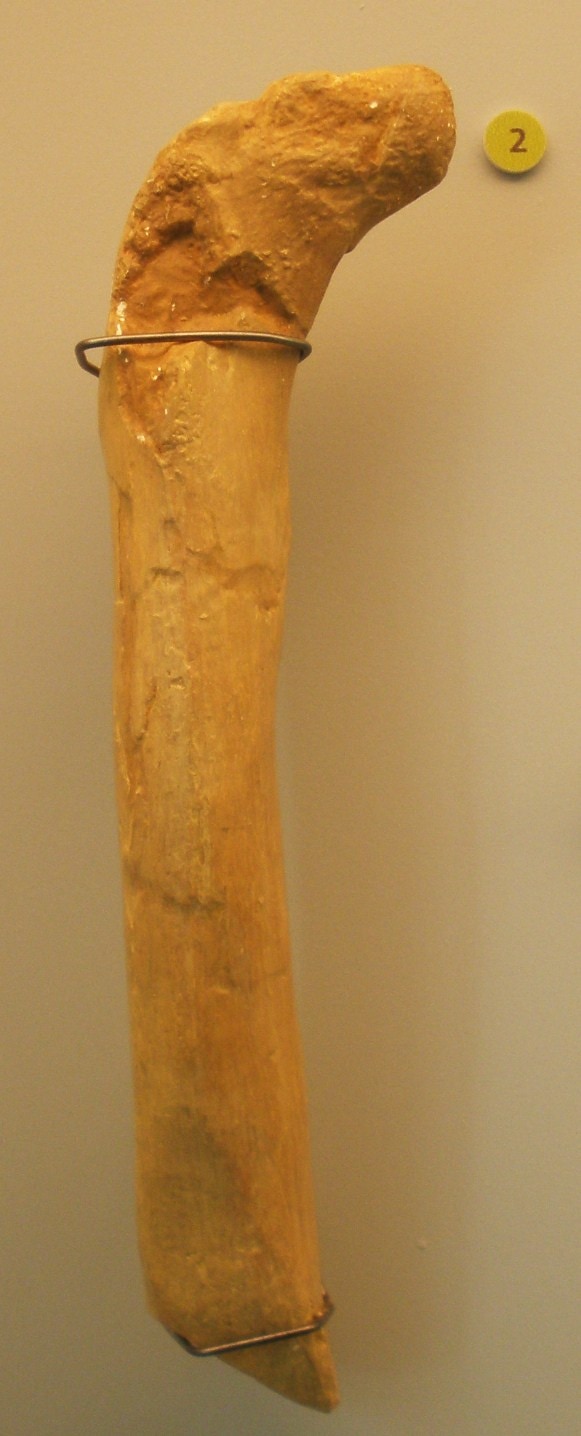
Incomplete Right Femur, 312 mm Long., Estimated Total Length of 4 Meters .
Tarascosaurus, Carnotaurus, Dryptosaurus
Netherlands
About Betasuchus
Betasuchus is a genus of theropod dinosaur that lived during the Late Cretaceous Period, specifically in the late Maastrichtian stage, approximately 67 to 66 million years ago. It is notable for being one of the few dinosaur genera discovered in the Netherlands and the only non-avian theropod found in the Maastrichtian Beds of that region.
Discovery and Naming
The only known fossil of Betasuchus is an incomplete right femur, designated BMNH 42997. This specimen was collected from the chalkstone quarry at St Pietersberg near Maastricht sometime between 1820 and 1860. Initially, Harry Govier Seeley described it in 1883 as a new species of Megalosaurus, naming it Megalosaurus bredai in honor of Jacob Gijsbertus Samuël van Breda. However, Friedrich von Huene re-evaluated the fossil in 1926, concluding it belonged to a distinct genus, not Megalosaurus. He provisionally designated it "Ornithomimidorum genus b" before formally renaming it Betasuchus in 1932.
Classification and Phylogeny
The exact phylogenetic placement of Betasuchus has been a subject of debate due to the limited fossil evidence. Early interpretations by von Huene suggested it might be an ornithomimosaur. Later, in 1991, Jean le Loeuff and Eric Buffetaut proposed it was a small abelisaurid, closely related to Tarascosaurus. Other researchers have suggested connections to tyrannosauroids. More recent studies, including one from 2022 and another in 2024, have reinforced the classification of Betasuchus as a ceratosaur, and likely an abelisaurid.
Physical Characteristics and Paleoecology
Based on the partial femur, Betasuchus is estimated to have been about 4 meters (13 feet) in length. Its diet is inferred to have been carnivorous, consistent with its classification as a theropod. The precise habitat and lifestyle of Betasuchus remain largely unknown due to the fragmentary nature of the fossil record.
Source: Wikipedia ↗
Frequently Asked Questions
What period did Betasuchus live in?
Betasuchus lived during the Late Cretaceous Period. The fossil material found is generally considered to be from the latest Maastrichtian stage, dating to approximately 67-66 million years ago.
Where were the fossils of Betasuchus found?
The fossil remains of Betasuchus were discovered in the Netherlands, near the city of Maastricht, specifically in the chalkstone quarry at St Pietersberg. This location is significant as it's one of the few places in the Netherlands yielding dinosaur fossils.
What type of dinosaur was Betasuchus?
Betasuchus is classified as a probable abelisaurid theropod dinosaur. While its exact phylogenetic placement has been debated, recent studies suggest it was closely related to other abelisaurids.
What is known about the physical characteristics of Betasuchus?
The known physical characteristics of Betasuchus are limited to a single, incomplete right femur. This femur was estimated to be 312 mm long, and the dinosaur as a whole was estimated to be about 4 meters (13 feet) in length.
What is the scientific name of Betasuchus?
The scientific name for this dinosaur is Betasuchus. It was originally described as Megalosaurus bredai, but was later reclassified and renamed by Friedrich von Huene in 1932.
Why is Betasuchus significant?
Betasuchus is significant because it is one of the only dinosaur genera named from remains found in the Netherlands. It is also the only non-avian theropod dinosaur discovered in the Maastrichtian Beds of that region.
Related Dinosaur species

Abelisaurus
Abelisaurus was a genus of predatory theropod dinosaur that lived in South America during the Late Cretaceous Period. Known primarily from a partial skull, it is estimated to have been a bipedal carnivore reaching around 7.4 meters in length.

Acheroraptor
Acheroraptor is an extinct genus of dromaeosaurid theropod dinosaur that lived in North America during the Late Cretaceous period. It is known from fossil remains discovered in the Hell Creek Formation of Montana, United States. Acheroraptor is notable for being one of the geologically youngest dromaeosaurids, existing just before the Cretaceous-Paleogene extinction event.

Achillobator
Achillobator was a large, heavily-built dromaeosaurid theropod dinosaur that inhabited Mongolia during the Late Cretaceous period. It is distinguished by its robust skeleton, deep maxilla, and primitive pelvis, contrasting with the generally lighter build of other dromaeosaurids. This predator likely hunted large prey using its enlarged sickle claw.