
Borealopelta
Borealopelta is an extinct genus of herbivorous nodosaurid ankylosaur discovered in Alberta, Canada. Its single species, B. markmitchelli, is known from an exceptionally well-preserved fossil that includes not only its armor but also its skin, keratin sheaths, and stomach contents. This specimen provides remarkable insights into the dinosaur's appearance, diet, and defensive strategies.
Key Facts
- ›Borealopelta lived during the Lower Cretaceous period.
- ›It was a large herbivorous dinosaur, measuring approximately 5.5 meters (18 ft) long and weighing 1.3 metric tons (1.4 short tons).
- ›The species B. markmitchelli is named after Mark Mitchell, who spent six years preparing the fossil.
- ›Its stomach contents revealed a diet primarily consisting of ferns, suggesting it was a selective feeder.
- ›Fossils indicate Borealopelta possessed a reddish-brown coloration with countershading for camouflage.
- ›It had distinctive shoulder spines and a straight tail, lacking the tail club found in many other ankylosaurids.
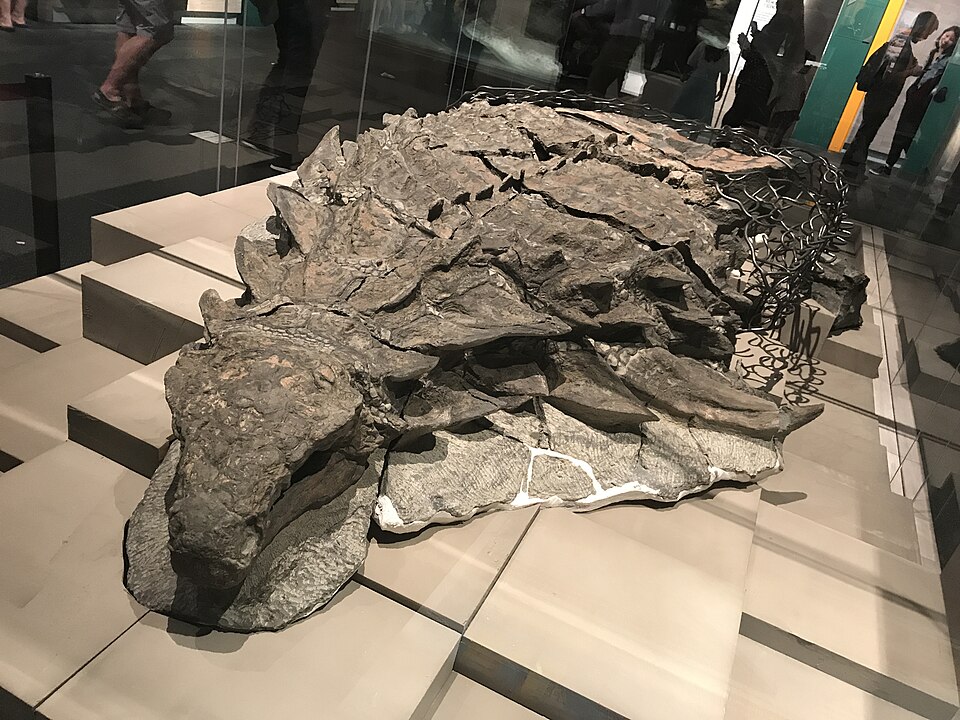
- Approximately 5.5 meters long
- Weighed about 1.3 metric tons
- Covered in numerous closely spaced rows of osteoderms
- Possessed long, bull-horn-shaped spines protruding from its shoulders
- Had a straight tail, unlike the tail clubs of some other ankylosaurids
- May have had a reddish-brown coloration with countershading
Europelta, Pawpawsaurus, Nodosaurus, Hungarosaurus
North America
About Borealopelta
What is Borealopelta?
Borealopelta is an extinct genus of herbivorous dinosaur belonging to the nodosaurid family of ankylosaurs. It lived during the Lower Cretaceous period, approximately 110–112 million years ago. The genus is known from a single species, Borealopelta markmitchelli, named in 2017. This dinosaur is renowned for its exceptionally preserved fossil, discovered in Alberta, Canada, which provides unprecedented detail about its physical characteristics and soft tissues.
Discovery and Preservation
The holotype specimen was unearthed in 2011 at an oil sands mine near Fort McMurray, Alberta. This remarkably complete fossil includes not only the bony armor (osteoderms) in their life positions but also impressions of overlying skin, keratin sheaths, and the contents of its last meal. Unlike many dinosaur fossils, which are often flattened during fossilization, the Borealopelta specimen was preserved in three dimensions. This exceptional preservation is attributed to the animal sinking upside-down onto the seafloor shortly after death, leading to rapid burial with minimal distortion.
Description and Paleobiology
Borealopelta was a large dinosaur, estimated to be about 5.5 meters (18 feet) long and weighing around 1.3 metric tons (1.4 short tons). It was heavily armored, featuring numerous osteoderms along its back and sides. Distinctive features include long, bull-horn-shaped spines on its shoulders and a straight tail, lacking the club found in some other ankylosaurids. Evidence from preserved pigments suggests Borealopelta had a reddish-brown coloration with countershading, likely used for camouflage. Its diet consisted primarily of ferns, indicating it was a selective feeder. The presence of armor and camouflage suggests Borealopelta was actively preyed upon and relied on these features for defense.
Classification and Paleoecology
Borealopelta is classified within the Nodosauridae family, a group of armored herbivorous dinosaurs. It lived in a region that was covered by the Western Interior Seaway during the Early Cretaceous. While Borealopelta was a terrestrial animal, its fossil was found preserved in marine sediments, indicating it was likely washed out to sea after death. The fossil's preservation in a siderite concretion protected it from scavenging and environmental degradation, contributing to its extraordinary completeness.
Source: Wikipedia ↗
Frequently Asked Questions
What does Borealopelta mean?
Borealopelta means 'northern shield'. This name reflects its discovery location in the north and its heavily armored body.
Where was Borealopelta discovered?
Borealopelta fossils were discovered at the Millennium Mine, an oil sands mine north of Fort McMurray in Alberta, Canada.
What makes the Borealopelta fossil so special?
The Suncor nodosaur specimen of Borealopelta is exceptionally well-preserved, retaining its armor, skin, keratin sheaths, and stomach contents in three dimensions with minimal distortion.
What did Borealopelta eat?
Examination of its stomach contents shows that ferns were a major part of Borealopelta's diet. The presence of charcoal suggests it may have fed in areas recovering from wildfires.
Did Borealopelta have camouflage?
Yes, the discovery of melanosomes in its fossilized skin suggests Borealopelta had a reddish-brown, countershaded coloration, which would have served as camouflage.
What were the defensive features of Borealopelta?
Borealopelta was heavily armored with osteoderms and possessed long shoulder spines. Its armor, covered by a keratinous layer, could withstand significant force, indicating it was used for defense against predators.
Related Dinosaur species

Albertadromeus
Albertadromeus is an extinct genus of herbivorous dinosaur from the Late Cretaceous period, known from Alberta, Canada. It was a small, bipedal runner, likely specialized in eating ferns and low vegetation. The genus contains a single species, Albertadromeus syntarsus.

Albertaceratops
Albertaceratops was a centrosaurine horned dinosaur that lived during the middle Campanian age of the Late Cretaceous period in what is now Alberta, Canada. It is distinguished by its unique combination of long brow horns and a bony ridge over its nose, along with large, outwardly-projecting hooks on its frill. This dinosaur is estimated to have reached lengths of up to 5.8 meters and weighed around 3,500 kilograms.

Anchiceratops
Anchiceratops is an extinct genus of chasmosaurine ceratopsid dinosaur that roamed what is now Alberta, Canada, during the Late Cretaceous Period, approximately 73 to 68 million years ago. This heavily built, quadrupedal herbivore was characterized by a distinctive skull featuring two long brow horns, a short nasal horn, and an elongated, rectangular frill with ornate, triangular projections along its edges. The genus name "Anchiceratops" translates to "near horned face," reflecting its perceived evolutionary relationship to other ceratopsids.