
Conchoraptor
Herbivore/Generalist (suggested)·Late Cretaceous·Mongolia·Bipedal (inferred)
Conchoraptor was a small oviraptorid dinosaur that lived in Asia during the Late Cretaceous period, approximately 70 million years ago. Notable for its lack of a prominent head crest and its specialized beak, Conchoraptor's diet and feeding habits have been a subject of scientific study, with evidence suggesting it was a powerful-biting generalist or specialist.
Key Facts
- ›Lived in Asia during the Late Cretaceous epoch, about 70 million years ago.
- ›Known from the Barun Goyot and possibly the Nemegt formations of Mongolia.
- ›Unlike many oviraptorids, it lacked a prominent head crest.
- ›Possessed a powerful beak instead of teeth, possibly adapted for crushing.
- ›Estimated to be 1–2 meters (3.3–6.6 ft) in length.
- ›Recent studies suggest a strong bite force, indicating possible herbivory on tough vegetation or a generalist diet.

Small size, 1–2 meters in length., Lacked a prominent head crest., Possessed a powerful beak instead of teeth., Skull was heavily pneumatised.
Oviraptor, Ajancingenia, Ingeniinae Subfamily Members
Asia
About Conchoraptor
Conchoraptor is a genus of oviraptorid dinosaurs that roamed Asia during the Late Cretaceous epoch, approximately 70 million years ago. Fossils have been unearthed in the Barun Goyot Formation and potentially the Nemegt Formation of Mongolia. The genus is named for its hypothesized feeding habits, with the name translating to "conch plunderer," suggesting a diet that may have included mollusks.
Discovery and Classification
Initially discovered in the Red Beds of Hermiin Tsav, Conchoraptor was first thought to be a juvenile Oviraptor. However, further examination of multiple skeletons revealed distinct anatomical differences, particularly in the structure of its hands, leading to its classification as a new genus. The type species, Conchoraptor gracilis, was described by Barsbold in 1986. Anatomical analyses place Conchoraptor within the oviraptorid subfamily Ingeniinae (now Heyuanninae).
Physical Characteristics and Paleobiology
Conchoraptor was a relatively small dinosaur, measuring between 1 to 2 meters (3.3 to 6.6 feet) in length. A notable feature was its lack of a prominent head crest, which is present in many other oviraptorids. Like its relatives, Conchoraptor was toothless and possessed a powerful beak, likely adapted for crushing. Its skull was also characterized by significant pneumatization, meaning many of its bones were hollow. Internal ear structures suggest enhanced hearing capabilities.
Recent scientific studies have analyzed Conchoraptor's bite force, comparing it to other oviraptorosaurs. These investigations suggest a powerful bite, leading to re-evaluation of its diet. While herbivory is considered a possibility, particularly on tough vegetation, the evidence points towards Conchoraptor being a powerful-biting generalist or specialist capable of exploiting various food sources within its environment.
Paleoenvironment
The Barun Goyot Formation, where many Conchoraptor fossils are found, dates to the Maastrichtian stage of the Late Cretaceous. This ancient landscape was arid, characterized by sand dunes and seasonal streams. If Conchoraptor remains from the Nemegt Formation are confirmed, it would have shared its habitat with a diverse array of other dinosaurs, including other oviraptorosaurs, tyrannosaurs, troodontids, ankylosaurs, and hadrosaurs.
Source: Wikipedia ↗
Frequently Asked Questions
What does the name Conchoraptor mean?
The name Conchoraptor is derived from Greek 'konkhè', meaning 'mussel', and Latin 'raptor', meaning 'plunderer'. This name was inspired by a hypothesis that oviraptorids might have specialized in feeding on mollusks.
When did Conchoraptor live?
Conchoraptor lived during the Late Cretaceous epoch, approximately 70 million years ago. Its fossils are found in formations dating to the Maastrichtian stage of this period.
Where were Conchoraptor fossils found?
Fossils of Conchoraptor have been discovered in Asia, primarily in the Barun Goyot Formation of Mongolia. Possible remains have also been recovered from the Nemegt Formation.
What was Conchoraptor's diet?
Initially, it was suggested that Conchoraptor fed on mollusks. However, more recent studies propose it had a strong bite force, indicating it might have been a powerful-biting generalist or specialist, possibly feeding on tougher or varied types of vegetation.
Did Conchoraptor have a head crest?
Unlike many of its oviraptorid relatives, Conchoraptor lacked a prominent head crest. This feature, along with its hand anatomy, was a key reason scientists classified it as a new genus.
How large was Conchoraptor?
Conchoraptor was a relatively small dinosaur. It is estimated to have been between 1 and 2 meters (3.3 to 6.6 feet) in length.
Related Dinosaur species

Chakisaurus
Chakisaurus is an extinct genus of elasmarian ornithopod dinosaur that lived during the Late Cretaceous period in what is now Argentina. Named for its elder guanaco lizard meaning, this medium-sized dinosaur is known from multiple partial skeletons representing individuals of various ages. It holds the distinction of being the first ornithischian species identified from the Huincul Formation.

Avimimus
Avimimus, meaning "bird mimic," was a small, bird-like theropod dinosaur that lived in Mongolia during the Late Cretaceous period. Known for its slender legs and beak-like snout, it is classified as an oviraptorosaurian. Avimimus is notable for its bird-like characteristics and the ongoing scientific discussion about its evolutionary relationship with modern birds.
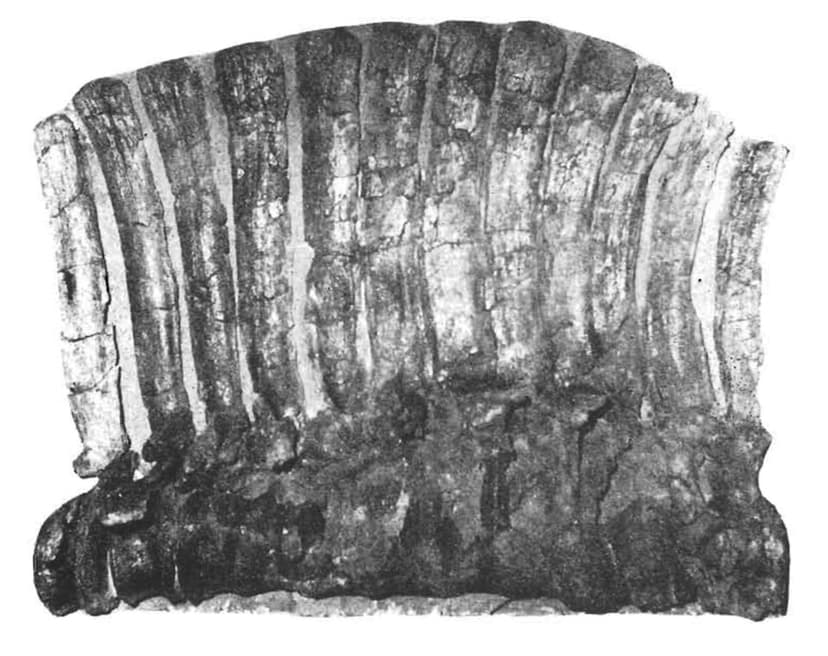
Barsboldia
Barsboldia was a large hadrosaurid dinosaur that lived during the Maastrichtian stage of the Late Cretaceous period in what is now Mongolia. It is known from a partial skeleton including vertebrae, pelvis, and ribs, and is distinguished by its very tall neural spines, particularly over the hips. While initially classified as a lambeosaurine, later studies suggest it may have been a saurolophine.