
Cryptosaurus
Cryptosaurus was a dinosaur genus known from a partial femur discovered in England, dating to the Late Jurassic period. The sole species, Cryptosaurus eumerus, is considered a nomen dubium due to the limited fossil evidence. Despite initial classifications, it is now believed to be an ankylosaurian of uncertain relationships.
Key Facts
- ›Known only from a partial femur, making it a dubious genus.
- ›Fossils date to the Late Jurassic period.
- ›Discovered in the Oxford Clay formation of England.
- ›The specific name 'eumerus' refers to its well-formed thigh bone.
- ›Initially thought to be related to Iguanodon, later classified as an ankylosaurian.
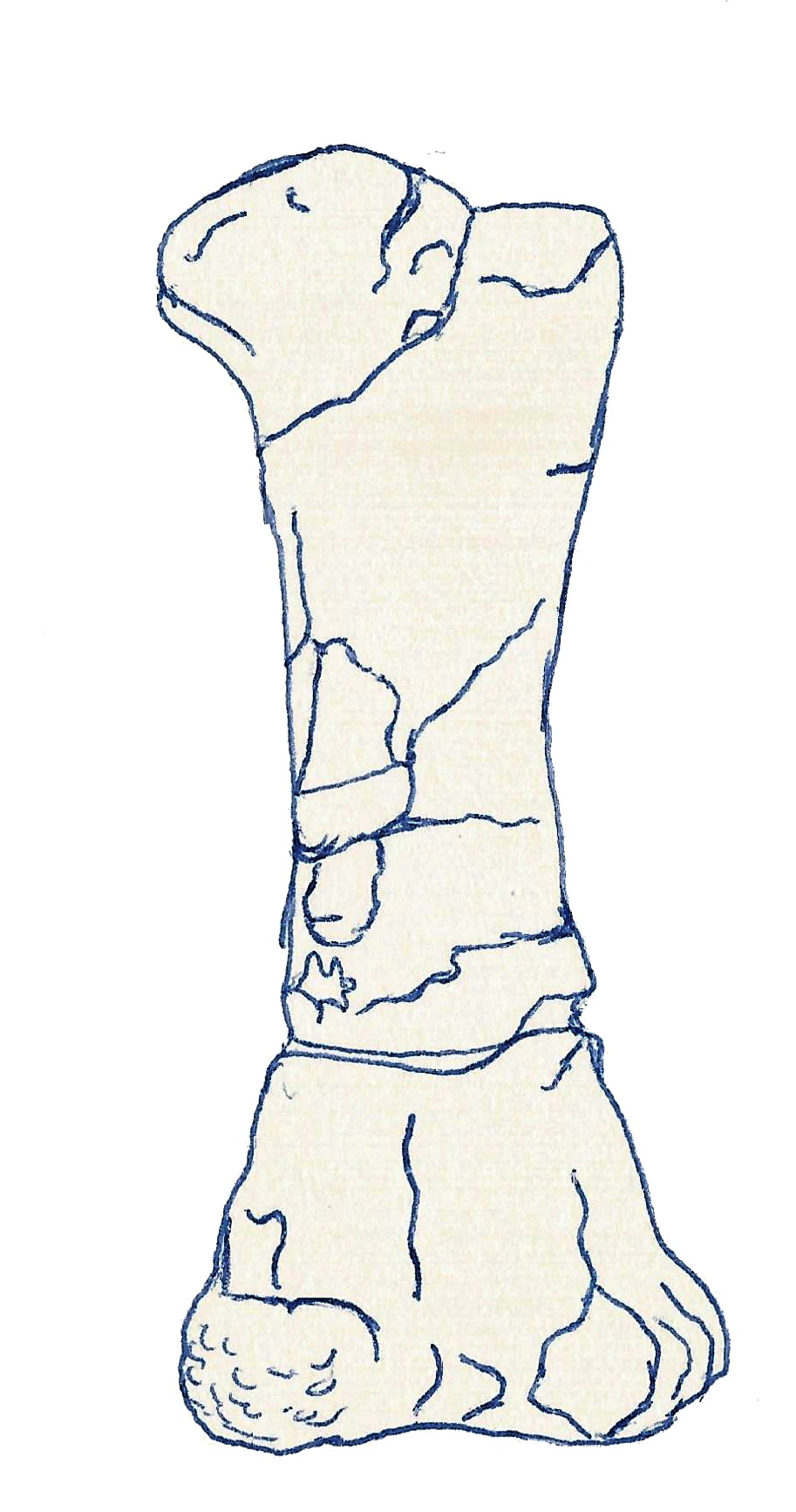
- the type specimen is a right femur.
- the femur is approximately 33 centimeters long.
- the femur has a thick shaft.
- indicated a rather small, adult or subadult individual.
England
About Cryptosaurus
What is Cryptosaurus?
Cryptosaurus is a dinosaur genus known from very limited fossil evidence – a single partial femur discovered in England. This genus is considered a nomen dubium, or dubious name, because the scant remains make it difficult to definitively classify. The scientific name, Cryptosaurus eumerus, translates to 'hidden lizard' and 'well-formed thigh,' reflecting the rarity of its discovery and the nature of the fossil found.
Discovery and Classification
The femur was unearthed and donated to the Woodwardian Museum in Cambridge in 1869. It was named by British paleontologist Harry Seeley in the same year. Initially, Seeley believed Cryptosaurus was related to Iguanodon, as it was the first such dinosaur found in the Oxford Clay formation. Later, Friedrich von Huene classified it within the Camptosauridae. However, subsequent research by Peter Galton suggested it was an ankylosaurian, though its exact affinities remain uncertain due to the lack of more complete fossils. The femur itself indicates the individual was an adult or subadult and relatively small in size.
Source: Wikipedia ↗
Frequently Asked Questions
What does the name Cryptosaurus mean?
The name Cryptosaurus means 'hidden lizard'. This name was chosen due to the rarity of the fossil find.
Where were Cryptosaurus fossils found?
The partial femur of Cryptosaurus was discovered in England, specifically in the Great Gransden brick pit in strata of the Ampthill Clay Formation.
What period did Cryptosaurus live in?
Cryptosaurus lived during the Late Jurassic period. The fossils were found in rock layers dating from the upper Oxfordian stage of this period.
What was Cryptosaurus classified as?
Initially, Cryptosaurus was thought to be related to Iguanodon. Later classifications placed it within the Camptosauridae, and modern understanding considers it an ankylosaurian of unknown affinities.
Why is Cryptosaurus considered a dubious genus?
Cryptosaurus is considered a nomen dubium, or dubious genus, because the fossil remains are very limited, consisting only of a partial femur. This scarcity makes definitive classification challenging.
Related Dinosaur species

Bothriospondylus
Bothriospondylus is a dubious genus of possibly neosauropodan sauropod dinosaur that lived during the Late Jurassic period. The type species, Bothriospondylus suffossus, was described by Richard Owen in 1875 based on fossil vertebrae found in England. Due to the sparse and eroded nature of the remains, the genus is considered a nomen dubium, meaning its validity is uncertain.

Acanthopholis
Acanthopholis is a genus of herbivorous ankylosaurian dinosaur belonging to the family Nodosauridae. It lived during the Late Cretaceous Period in England and is characterized by its distinctive armor, including keeled plates and prominent spikes along its neck and shoulders. The genus name translates to "spiny scales."

Cetiosauriscus
Cetiosauriscus was a herbivorous sauropod dinosaur that lived in England during the Middle Jurassic period, approximately 166 to 164 million years ago. Characterized by a moderately long tail and forelimbs as long as its hindlimbs, it reached an estimated length of 15 meters and a weight of 4 to 10 tonnes. Its fossils were discovered in the Oxford Clay Formation.