
Datousaurus
Datousaurus was a herbivorous sauropod dinosaur that lived during the Middle Jurassic period in what is now Sichuan province, China. Known for its deep, large skull relative to other sauropods, its fossils are rare, suggesting it may not have been as social as its contemporaries.
Key Facts
- ›Datousaurus was a herbivorous sauropod dinosaur.
- ›It lived during the Middle Jurassic period in China.
- ›The genus was named by Dong Zhiming and Tang Zilu in 1984.
- ›Only two partial skeletons and one skull have been discovered.
- ›Its teeth were spoon-shaped, and it had elongated vertebrae for greater reach.
- ›Datousaurus likely fed on different plants or at different heights than contemporary sauropods like Shunosaurus to reduce competition.
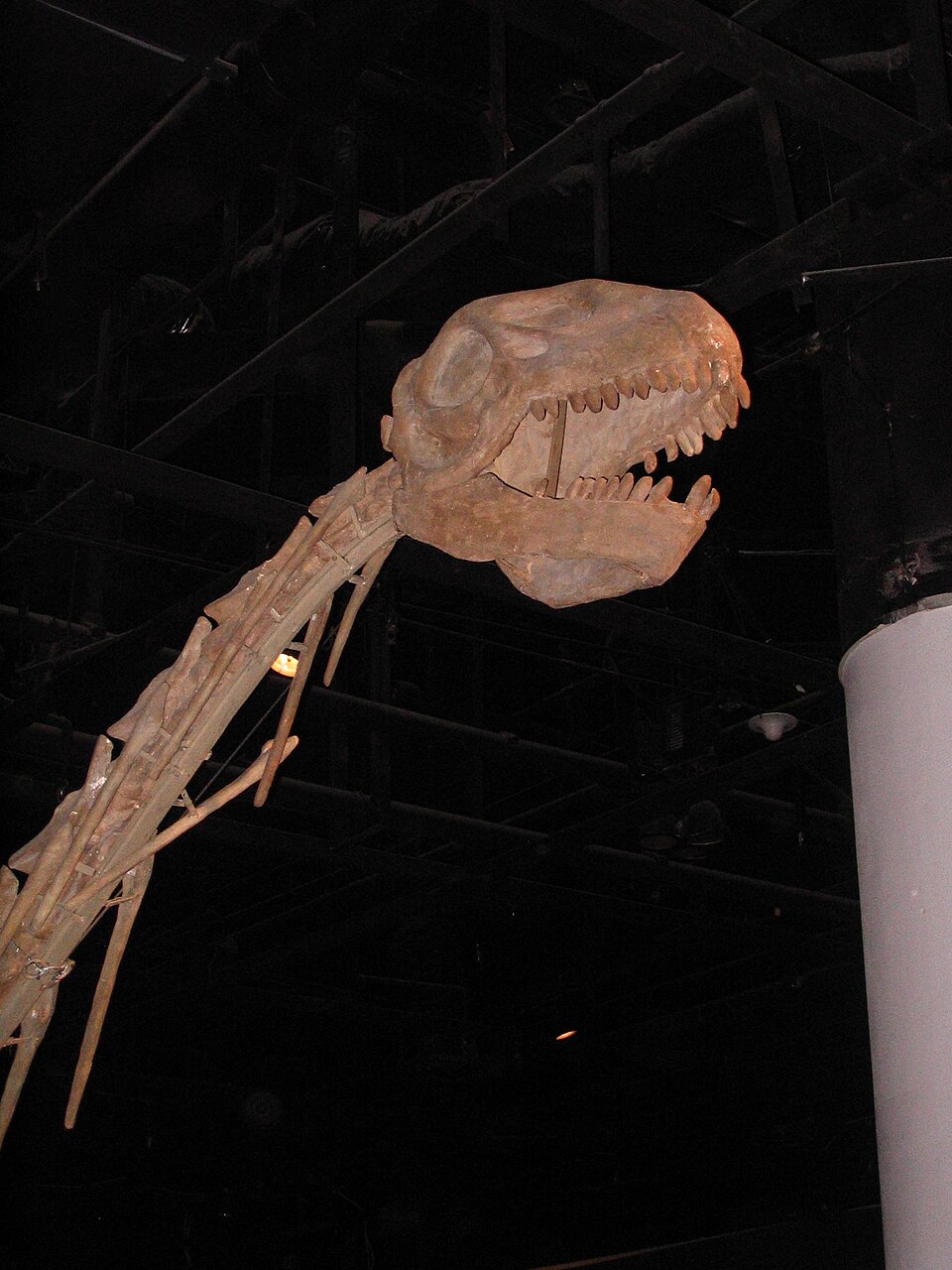
Deep, Large Skull, Spoon-Shaped Teeth, Elongated Vertebrae, Estimated Length of 10-13.9 Meters
Shunosaurus, Omeisaurus
China
About Datousaurus
Datousaurus, a name meaning "chieftain lizard" or "big-head lizard," was a sauropod dinosaur that inhabited the Earth during the Middle Jurassic period. Its fossils have been unearthed in the Lower Shaximiao Formation of Sichuan province, China. This herbivorous dinosaur shared its environment with a diverse array of other dinosaurs, including fellow sauropods like Shunosaurus and Omeisaurus, as well as ornithischians and early stegosaurs.
Discovery and Classification
The genus Datousaurus was formally described and named in 1984 by paleontologists Dong Zhiming and Tang Zilu. To date, the fossil record for Datousaurus is sparse, consisting of only two partial skeletons and one skull that has been attributed to the genus. The only established species within this genus is Datousaurus bashanensis, with its species epithet referencing its discovery in Sichuan.
Paleobiology and Lifestyle
Datousaurus is estimated to have been between 10 and 13.9 meters in length. A distinctive characteristic was its deep and large skull, which was notable for a sauropod. Its teeth were spoon-shaped, and it possessed elongated vertebrae that likely provided a greater reach for feeding. The rarity of its fossils suggests that Datousaurus may have been less social than other sauropods, which are often found in large, gregarious aggregations.
Datousaurus shared its habitat with Shunosaurus, a closely related sauropod. While anatomically similar, Datousaurus had features that may have indicated different feeding strategies. Its higher reach and specialized teeth could have allowed it to consume different plant species or forage at different heights in the vegetation, a strategy that may have helped reduce competition between these two contemporary genera, similar to feeding adaptations seen in diplodocids.
Source: Wikipedia ↗
Frequently Asked Questions
What does the name Datousaurus mean?
The name Datousaurus means "chieftain lizard" or "big-head lizard." It originates from the Malay word 'datu' (chieftain) and a Chinese nickname, 'qiulong' (chieftain dragon), which also plays on the Chinese words 'da tou' meaning 'big head'.
When did Datousaurus live?
Datousaurus lived during the Middle Jurassic period. This places it in a time roughly between 174 to 163 million years ago.
Where were Datousaurus fossils found?
Fossils of Datousaurus have been discovered in the Lower Shaximiao Formation in Sichuan province, China.
What did Datousaurus eat?
Datousaurus was a herbivore, meaning it primarily ate plants. Its spoon-shaped teeth suggest a specialized diet.
How large was Datousaurus?
Datousaurus was estimated to be between 10 and 13.9 meters long. It possessed a deep and large skull, which was notable for a sauropod.
Why are Datousaurus fossils rare?
The rarity of Datousaurus fossils suggests that it may not have been as social as other sauropods, which are often found in large groups in single fossil deposits.
Related Dinosaur species
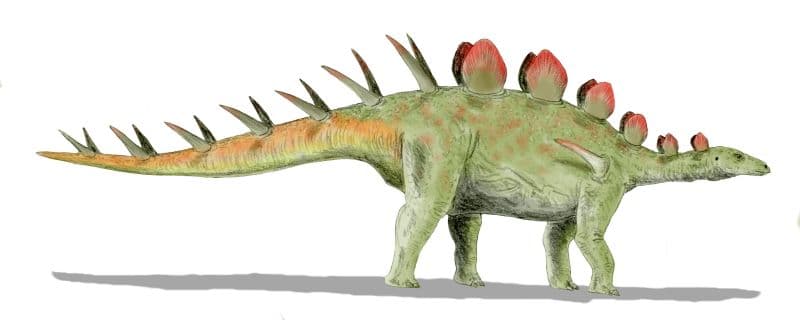
Chialingosaurus
Chialingosaurus, meaning "Chialing Lizard," was a herbivorous stegosaurian dinosaur that lived in China during the Late Jurassic period, approximately 160 million years ago. Similar to Kentrosaurus, it is considered one of the earliest known stegosaurs. Scientists hypothesize that Chialingosaurus likely consumed ferns and cycads, which were abundant during its time.

Abrosaurus
Abrosaurus was a genus of macronarian sauropod dinosaur that lived during the Middle Jurassic Period in what is now Asia. It is known for its relatively small size for a sauropod and its distinctive boxy skull with a prominent nasal arch. The only named species, Abrosaurus dongpoi, was discovered in China.

Baiyinosaurus
Baiyinosaurus is an extinct genus of stegosaurian dinosaur that lived during the Middle Jurassic period. Its fossils, discovered in Gansu Province, China, represent a partial skeleton including cranial and vertebral bones. Baiyinosaurus exhibits transitional features, displaying characteristics of both basal thyreophorans and more derived stegosaurs, making it a significant find for understanding the evolution of armored dinosaurs.