
Chialingosaurus
Chialingosaurus, meaning "Chialing Lizard," was a herbivorous stegosaurian dinosaur that lived in China during the Late Jurassic period, approximately 160 million years ago. Similar to Kentrosaurus, it is considered one of the earliest known stegosaurs. Scientists hypothesize that Chialingosaurus likely consumed ferns and cycads, which were abundant during its time.
Key Facts
- ›Chialingosaurus lived during the Late Jurassic period.
- ›It was a herbivorous dinosaur, likely feeding on ferns and cycads.
- ›The first fossils were discovered in Sichuan Province, China.
- ›It is considered one of the oldest known stegosaur species.
- ›The type species, Chialingosaurus kuani, was named in 1959.
- ›Fossils indicate it may have possessed plates and spines.
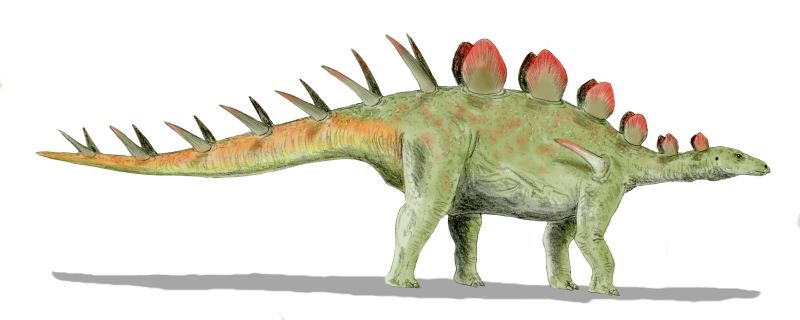
- Slender build
- Estimated length of around 4 meters
- May have possessed plates and spines on its back and tail
Kentrosaurus
China
About Chialingosaurus
Chialingosaurus, meaning "Chialing Lizard," is a genus of herbivorous stegosaurian dinosaur that roamed the Earth during the Late Jurassic period, approximately 160 million years ago. Its fossils have been unearthed in the Upper Shaximiao Formation of Sichuan Province, China, making it one of the earliest known members of the stegosaur family. Scientists believe that Chialingosaurus, like its relatives, was a plant-eater, likely subsisting on the plentiful ferns and cycads that characterized its environment.
Discovery and Naming
The initial fossils of Chialingosaurus were discovered in 1957 by geologist Kuan Yaowu along the Chialing River. The genus was formally named and described by paleontologist Yang Zhongjian (also known as C. C. Young) in 1959. The type species, Chialingosaurus kuani, bears the specific name in honor of Kuan Yaowu. This discovery marked the first stegosaurian to be described from China. The holotype specimen consists of a partial skeleton, including vertebrae, coracoids, humeri, a radius, and three spines, though it lacks a skull. Subsequent discoveries have added more material, including a partial skull and lower jaws from a second specimen, and a partial skeleton from a third, with all specimens representing juvenile or subadult individuals.
Description and Classification
When first described, Chialingosaurus was noted for its slender build, with an estimated length of about four meters (thirteen feet). However, some researchers have suggested that these gracile proportions might be due to the immaturity of the specimens. The diagnostic traits of Chialingosaurus have been a subject of scientific debate, with some paleontologists questioning its distinctiveness and even classifying it as a nomen dubium (doubtful name) due to the lack of unique identifying characteristics. Early reconstructions modeled Chialingosaurus after Kentrosaurus, with plates hypothesized for its upper body and spines for its hips and tail. Its phylogenetic placement has been varied, with some suggesting it was an early ancestor of other stegosaurs, while more recent analyses place it within the Stegosaurinae, closely related to Kentrosaurus.
Paleoecology
Chialingosaurus inhabited terrestrial ecosystems during the Late Jurassic, a period characterized by diverse flora. As an herbivore, its diet would have consisted of plant material readily available in its habitat. The presence of plates and spines, if confirmed, would have served functions such as defense against predators or thermoregulation, as seen in other stegosaurian dinosaurs. The geological age of Chialingosaurus makes it a significant find for understanding the early evolution and diversification of stegosaurs.
Source: Wikipedia ↗
Frequently Asked Questions
What does the name Chialingosaurus mean?
The name Chialingosaurus means "Chialing Lizard." It refers to the Chialing River in southern China, near where the first fossils were discovered.
When did Chialingosaurus live?
Chialingosaurus lived during the Late Jurassic period, approximately 160 million years ago. Its fossils are found in beds dating from the Oxfordian-Kimmeridgian stages.
What did Chialingosaurus eat?
As an herbivore, scientists believe Chialingosaurus likely ate plants such as ferns and cycads. These plants were common in its habitat during the Late Jurassic.
Where were the fossils of Chialingosaurus found?
The fossils of Chialingosaurus were discovered in Sichuan Province, China, specifically at Taipingstai in Qu County. The discovery was made while surveying the Chialing River.
What is known about the physical appearance of Chialingosaurus?
Chialingosaurus may have been around four meters (thirteen feet) long. Some fossil discoveries suggest it possessed plates and spines, possibly arranged on its back and tail, similar to other stegosaurs.
Is Chialingosaurus a well-understood dinosaur?
The classification of Chialingosaurus has been debated among paleontologists. Some research suggests it may be a nomen dubium, meaning its diagnostic traits are not unique enough to definitively distinguish it from other stegosaurs.
Related Dinosaur species
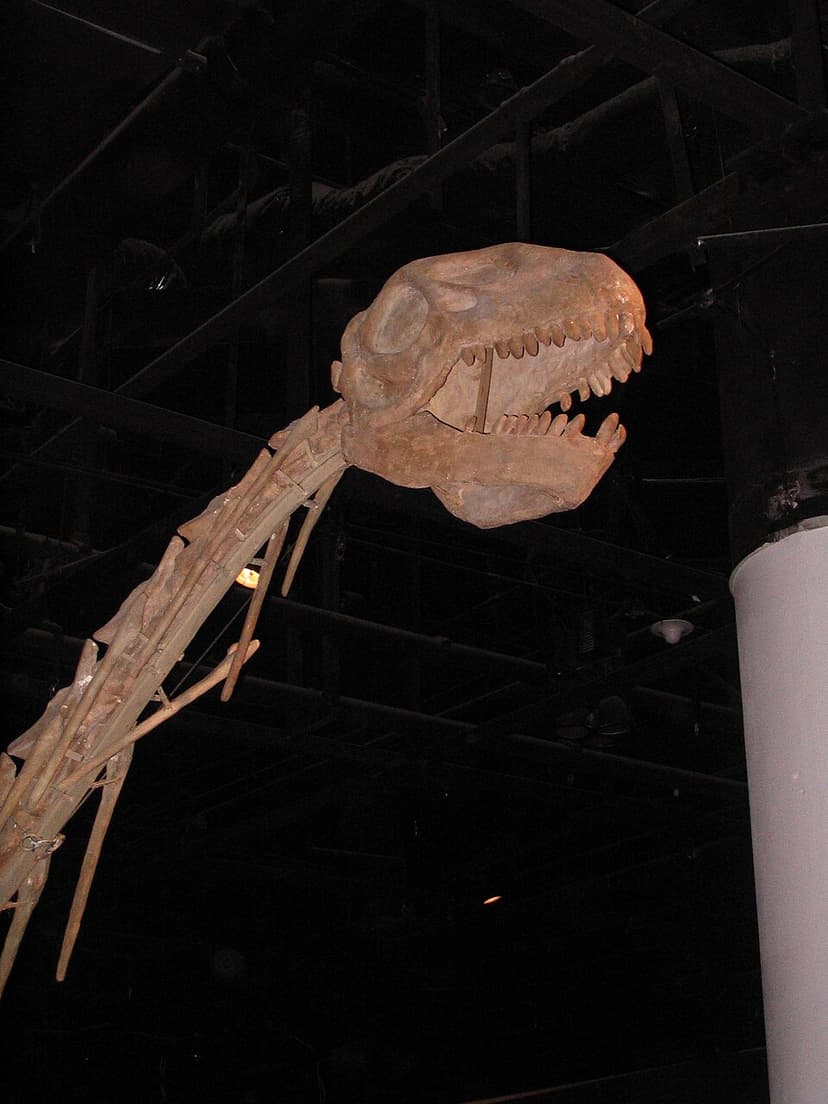
Datousaurus
Datousaurus was a herbivorous sauropod dinosaur that lived during the Middle Jurassic period in what is now Sichuan province, China. Known for its deep, large skull relative to other sauropods, its fossils are rare, suggesting it may not have been as social as its contemporaries.

Alcovasaurus
Alcovasaurus is an extinct genus of herbivorous stegosaurian dinosaur that lived during the Late Jurassic period. Originally described as Stegosaurus longispinus, it was later reclassified into its own genus due to unique characteristics, particularly its exceptionally long tail spines. Its exact taxonomic placement has been debated, with some researchers considering it a distinct genus and others suggesting it might be a species of Miragaia.

Amphicoelias
Amphicoelias was a genus of herbivorous sauropod dinosaur that roamed the Earth approximately 150 million years ago during the Late Jurassic period. Known from fossils found in Colorado, United States, it was moderately sized, with estimated lengths of around 18 meters and a body mass of 15 metric tons. Its anatomy, particularly its vertebrae and limb bones, shares similarities with its close relative, Diplodocus.