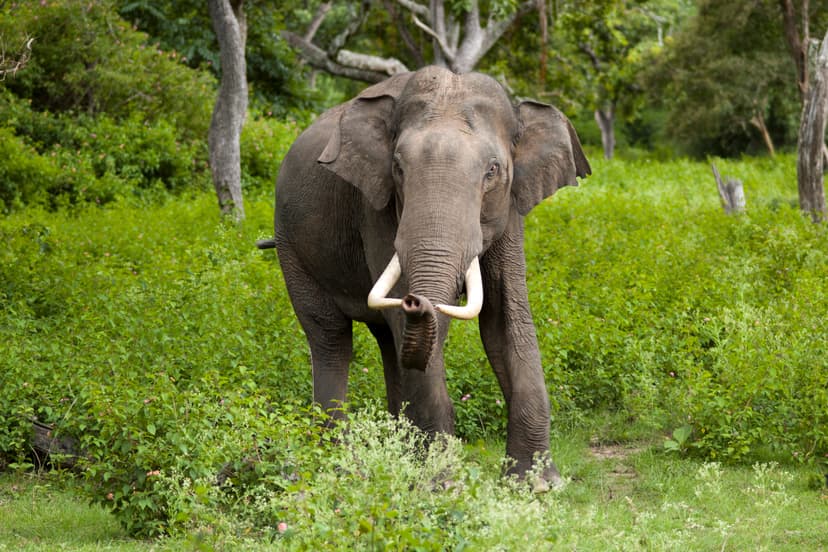
African bush elephant
Africa·Endangered
African bush elephants are the largest living terrestrial animals, native to sub-Saharan Africa. They are distinguished by their long, prehensile trunks, large ears used for heat regulation, and curved tusks. These social animals live in family herds led by a matriarch, with adult males typically living alone or in bachelor groups. They are herbivorous, consuming a wide variety of vegetation, and play a significant role in shaping their habitats. Currently listed as Endangered, they face threats from habitat destruction and poaching.
Key Facts
- ›Largest living terrestrial animal, reaching up to 3.96 meters tall and weighing over 10 tonnes.
- ›Possess a long, prehensile trunk with two finger-like tips, large ears for thermoregulation, and curved tusks.
- ›Inhabit diverse environments including forests, grasslands, woodlands, wetlands, and agricultural land.
- ›Are mixed herbivores, feeding on grasses, leaves, bark, and fruits, consuming up to 150 kg of vegetation daily.
- ›Live in complex social structures, with family herds led by a matriarch; males are often solitary or in bachelor groups.
- ›Have a gestation period of approximately 22 months, the longest of any mammal.
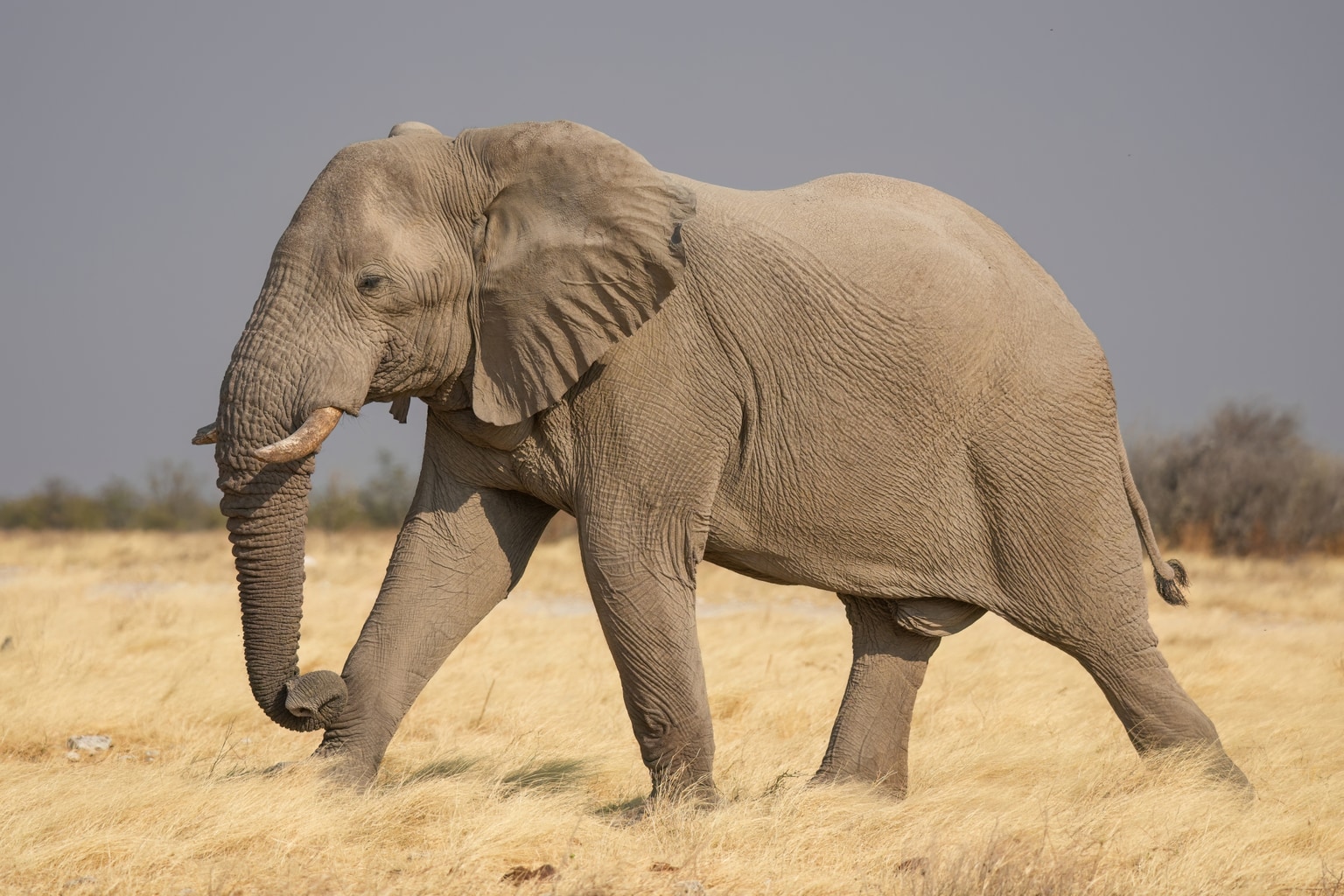
African Savanna Elephant
Family: Elephantidae, Genus: Loxodonta
Forests, Grasslands, Woodlands, Wetlands, Agricultural Land, Desert and Semi-Desert Areas
- Largest and Heaviest Living Land Animal.
- Males Average 3.04–3.36 m Shoulder Height and 5.2–6.9 Tonnes; Largest Recorded 3.96 m and 10.4 Tonnes.
- Females Average 2.47–2.73 m Shoulder Height and 2.6–3.5 Tonnes.
- Long, Prehensile Trunk With Two Finger-Like Processes.
- Concave Back.
- Large, Pointed, Triangular Ears For Heat Reduction.
- Sturdy, Noticeably Curved Tusks That Grow Throughout Life.
- Grey Skin With Scanty Hairs and Bending Cracks For Thermoregulation.
Sub-Saharan Africa, Uganda, Kenya, Tanzania, Botswana, Zimbabwe, Namibia, Zambia, Angola, Malawi, Mali, Rwanda, Mozambique, South Africa, Ethiopia, South Sudan
Habitat Destruction, Poaching For Meat and Ivory, Human-Wildlife Conflict
- Use Trunks For Tactile Communication, Including Greetings and Reassurance.
- Communicate Through Variations of Rumbles, Trumpets, Squeals, and Screams, With Infrasonic Rumbles For Long-Distance Communication.
- Males Undergo 'Musth', A Period of Heightened Testosterone, Aggression, and Secretion From Temporal Glands.
- Exhibit Allomothering, Where Group Members Assist In Caring For Offspring.
- Transform Woodlands Into Grasslands Through Their Habit of Uprooting Trees.
- Serve As Seed Dispersers.
- Raising Penalties For Poaching and Improving Law Enforcement.
- Introduction of Older Male Elephants To Control Aggression In Younger, Orphaned Males.
About African bush elephant
The African bush elephant (Loxodonta africana), also known as the African savanna elephant, is the largest living terrestrial animal. It is native to sub-Saharan Africa and is characterized by its long, prehensile trunk with two finger-like processes, a concave back, large ears that aid in reducing body heat, and noticeably curved tusks. Its skin is grey with scanty hairs and features bending cracks that assist in thermoregulation by retaining water.
Habitat and Distribution
African bush elephants inhabit a diverse range of environments, including subtropical and temperate forests, dry and seasonally flooded grasslands, woodlands, wetlands, and agricultural lands. They can be found from sea level to mountain slopes across sub-Saharan Africa, with significant populations in countries such as Botswana, Zimbabwe, Namibia, Zambia, Kenya, and Tanzania. In some regions, like Mali and Namibia, they also inhabit desert and semi-desert areas.
Physical Characteristics
Fully grown bulls typically reach an average shoulder height of 3.04–3.36 meters (10.0–11.0 ft) and weigh between 5.2–6.9 tonnes (5.7–7.6 short tons). The largest recorded specimen had a shoulder height of 3.96 meters (13.0 ft) and an estimated body mass of 10.4 tonnes (11.5 short tons). Mature females are smaller, averaging about 2.60 meters (8 ft 6 in) at the shoulder and weighing around 3.0 tonnes (3.3 short tons). Their large ears, which can be as big as 2 meters by 1.5 meters, are pointed and triangular and help dissipate heat. Both sexes possess large, curved tusks that continue to grow throughout their lives.
Diet and Daily Consumption
These elephants are mixed herbivores, consuming a diet that varies seasonally and by habitat. Their food consists mainly of grasses, creepers, herbs, leaves, and bark. They are capable of consuming up to 150 kg (330 lb) of vegetation and 230 l (61 US gal) of water each day. To supplement minerals, they visit mineral-rich water holes, termite mounds, and salt licks. Their habit of uprooting trees can significantly alter the landscape, transforming woodlands into grasslands.
Social Structure and Behavior
The social organization is centered around family units, mostly composed of adult cows, their daughters, and young sons, led by a matriarch. Adult males typically live solitary lives or form small bachelor groups. These herds cooperate in finding food and water, defending themselves, and caring for the young through a practice known as allomothering. Communication occurs through vocalizations such as rumbles, trumpets, squeals, and screams, with infrasonic rumbles used for long-distance communication. Tactile communication is also vital, with elephants using their trunks for greetings and reassurance.
Reproduction and Lifespan
The gestation period for African bush elephants is approximately 22 months, the longest of any mammal. Calves are born weighing between 100 and 120 kg (220 and 260 lb) in captivity and can stand within an hour of birth. Cows lactate for about 4.8 years. While specific lifespan data is not detailed, elephants reach their maximum stature in their late 20s to 40s, suggesting a long lifespan.
Conservation Status and Threats
As of 2021, the African bush elephant is listed as Endangered on the IUCN Red List. The primary threats to their survival are habitat destruction and fragmentation, largely driven by human population growth, and poaching for ivory and meat. Conservation efforts include increased penalties for poaching and improved law enforcement, alongside strategies to manage human-wildlife conflict.
Source: Wikipedia ↗
Frequently Asked Questions
What are the defining physical characteristics of the African bush elephant?
African bush elephants are recognized by their immense size, long prehensile trunks ending in two finger-like processes, large ears that aid in heat dissipation, and sturdy, curved tusks. Their skin is grey and has bending cracks that help retain water for thermoregulation.
What is the typical social structure of African bush elephants?
They are social animals that typically live in herds composed of cows and their offspring, led by a matriarch. Adult males generally live alone or form small bachelor groups. These groups cooperate in finding food, water, and in defending themselves.
What do African bush elephants eat?
As mixed herbivores, they consume a variety of grasses, creepers, herbs, leaves, and bark. Their diet can also include fruits, and they are important seed dispersers. Adults consume approximately 150 kg of vegetation daily.
How long is the gestation period for African bush elephants?
The gestation period for African bush elephants is exceptionally long, lasting around 22 months, which is the longest of any mammal.
What is the conservation status of the African bush elephant?
The African bush elephant is listed as Endangered on the IUCN Red List as of 2021. This status reflects significant population declines due to various threats.
What are the main threats facing African bush elephants?
The primary threats to African bush elephants are habitat destruction and poaching for meat and ivory. Habitat loss is exacerbated by human population growth, leading to fragmentation of elephant territories.