
Ameerega macero
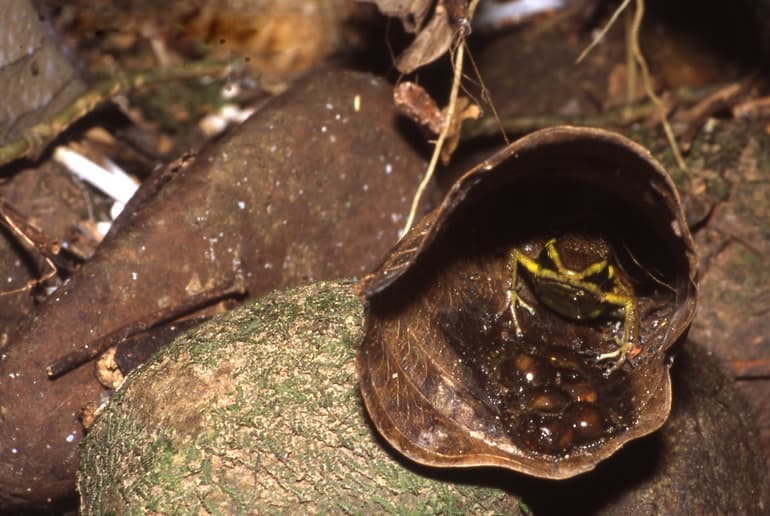
The Manú poison frog (Ameerega macero) is a frog species native to the tropical moist and montane forests of southern Peru and Brazil, particularly in the drainages of several major rivers. It is distinctive for its reproductive behavior, where adults transport hatched tadpoles to slow-moving streams.
Key Facts
- ›Found in southern Peru and Brazil.
- ›Inhabits lowland tropical moist forests and montane forests.
- ›Eggs are laid on the ground, and adults carry tadpoles to streams.
- ›Classified as 'least concern' by the IUCN.
- ›Threatened by habitat loss from agriculture and illegal pet trade harvesting.

Manú Poison Frog
Tropical Moist Forest, Montane Forest, Bamboo Forest
Peru, Brazil
About Ameerega macero
The Manú Poison Frog (Ameerega macero)
The Manú poison frog, scientifically known as Ameerega macero, is a species of frog found in the diverse ecosystems of southern Peru and Brazil. This amphibian is part of the Dendrobatidae family, a group often referred to as poison dart frogs, though specific details about its toxicity are not provided.
Habitat and Distribution
Ameerega macero inhabits a range of forest environments, primarily lowland tropical moist forests and montane forests. It shows a particular affinity for bamboo forests within these regions. The frog's distribution is linked to the river systems of the Manú, Urubamba, Upper Purus, and Ucayali Rivers. It is also found within significant protected areas such as Serra do Divisor National Park and the Alto Juruá Extractive Reserve. Its preferred elevations range from 150 to 1,450 meters.
Reproduction
The reproductive cycle of the Manú poison frog involves distinct parental care. The female deposits her eggs on land. Following hatching, an adult frog assumes the responsibility of carrying the tadpoles to nearby slow-moving streams, ensuring their survival and development in a more aquatic environment.
Conservation Status and Threats
The International Union for Conservation of Nature (IUCN) currently classifies the Manú poison frog as 'Least Concern,' indicating a relatively stable population. However, the species faces localized threats. Habitat loss, driven by agricultural expansion, poses a significant risk to its populations. Additionally, the illegal harvesting of these frogs for the pet trade contributes to the pressures on their survival.
Source: Wikipedia ↗
Frequently Asked Questions
Where is the Manú poison frog found?
The Manú poison frog is found in southern Peru and Brazil. Its specific locations include the drainages of the Manú, Urubamba, Upper Purus, and Ucayali Rivers, as well as within Serra do Divisor National Park and Alto Juruá Extractive Reserve.
What kind of habitat does the Manú poison frog prefer?
This frog inhabits lowland tropical moist forests and montane forests. It shows a particular preference for bamboo forests within these environments.
How does the Manú poison frog reproduce?
The female lays her eggs on the ground. After the eggs hatch, an adult frog carries the tadpoles to nearby slow-moving streams for further development.
What is the conservation status of the Manú poison frog?
The International Union for Conservation of Nature (IUCN) classifies the Manú poison frog as 'least concern' for extinction. However, it faces local threats.
What threats does the Manú poison frog face?
Locally, the Manú poison frog is threatened by habitat loss, primarily due to agricultural expansion. It is also illegally harvested for the pet trade.
Related Frogs

Ameerega flavopicta
Lutz's poison frog (Ameerega flavopicta) is a species of frog native to Bolivia and Brazil. This species inhabits a variety of moist environments, including lowland and montane forests, savannas, and shrublands, and reproduces in rocky pools and streams.
Ameerega petersi
The Peru poison frog (Ameerega petersi) is a species of frog native to the primary premontane and subtropical or tropical forests of eastern Peru and western Brazil. It is distinguished by its habit of carrying tadpoles to water after hatching from eggs laid on leaf litter.

Ameerega picta
The spot-legged poison frog (Ameerega picta) is a species of poison dart frog native to Bolivia, Brazil, Peru, and Venezuela. This species is distinguished by its presence in a wide range of forest types, from lowland to montane, and its remarkable ability to transport tadpoles to water bodies after hatching on land.