
Ameerega pulchripecta
Ameerega pulchripecta, formerly known as Epipedobates pulchripecta, is a species of poison dart frog native to Brazil. It inhabits the rainforest leaf litter of the Amazon biome and is distinguished by its terrestrial breeding behavior where males call from plant roots.
Key Facts
- ›Endemic to Brazil, found in the Amazon biome.
- ›Inhabits rainforest leaf litter at elevations between 100 and 310 meters.
- ›Males call to females from plant root crevices.
- ›Eggs are laid on the ground, and tadpoles are transported to water by adults.
- ›Classified as 'Least Concern' by the IUCN.
- ›Faces some habitat loss due to logging, mining, and agriculture.
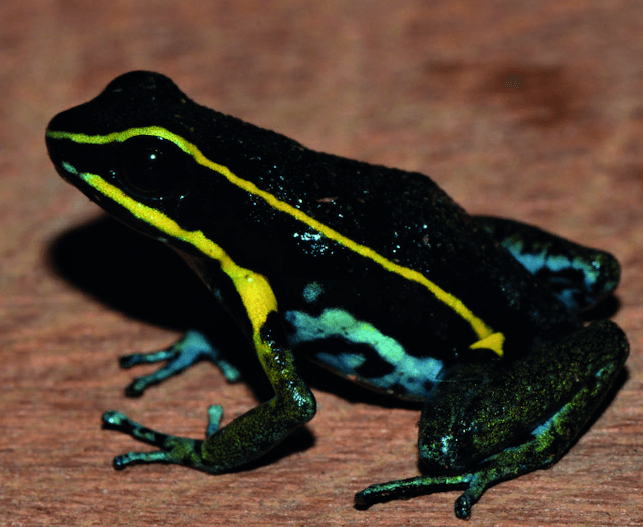
Rainforest, Forest Floor
Brazil
About Ameerega pulchripecta
Ameerega pulchripecta, formerly identified as Epipedobates pulchripecta, is a species of frog native to Brazil. This amphibian belongs to the family Dendrobatidae, commonly known as poison dart frogs.
Habitat and Distribution
The species is endemic to the Amazon biome and is found on the rainforest leaf litter at elevations ranging from 100 to 310 meters above sea level. Scientists have observed Ameerega pulchripecta exclusively within protected park areas, including Floresta Nacional do Amapá and Parque Natural Municipal do Cancão.
Reproduction
Reproductive behavior involves the adult male frogs perching in crevices of plant roots, no more than 40 cm above the forest floor, where they call to attract females. The current understanding suggests that the female frog lays her eggs on the ground. Following hatching, adult frogs are believed to transport the tadpoles to nearby water sources for further development.
Conservation Status
The International Union for Conservation of Nature (IUCN) classifies Ameerega pulchripecta as 'Least Concern' for extinction. While there are documented instances of habitat loss within its range, attributed to activities such as logging, mining, and agriculture, these do not currently pose a significant threat to the overall population. There is also a possibility that the frog may be traded internationally as a pet, but no confirmed reports have been made to suggest this impacts the population.
Source: Wikipedia ↗
Frequently Asked Questions
Where is Ameerega pulchripecta found?
Ameerega pulchripecta is found exclusively in Brazil, within the Amazon biome. It has been observed in protected areas such as Floresta Nacional do Amapá and Parque Natural Municipal do Cancão.
What is the habitat of Ameerega pulchripecta?
This frog lives on the rainforest leaf litter at elevations ranging from 100 to 310 meters above sea level. It is typically found within protected forest parks.
How does Ameerega pulchripecta reproduce?
Male Ameerega pulchripecta frogs call to females from plant root crevices. The female is believed to lay eggs on the ground, and adult frogs carry the hatched tadpoles to water.
What is the conservation status of Ameerega pulchripecta?
Ameerega pulchripecta is classified as 'Least Concern' by the IUCN. While habitat loss from logging, mining, and agriculture occurs, it is not currently considered a major threat to the population.
Related Frogs
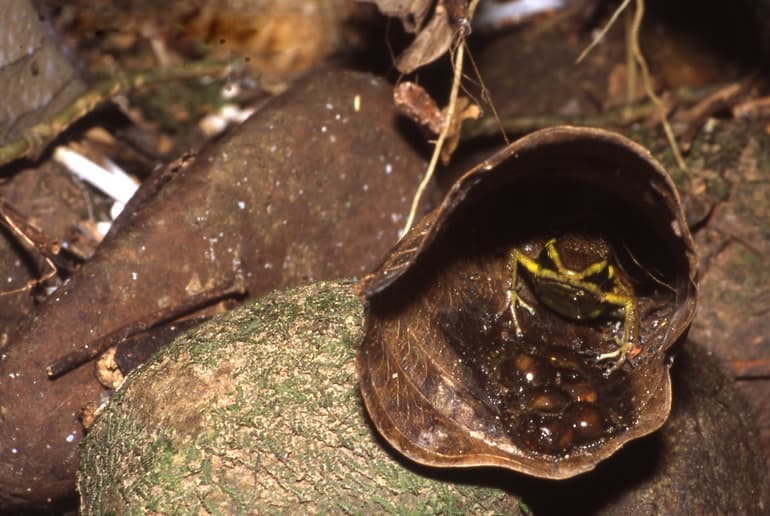
Ameerega petersi
The Peru poison frog (Ameerega petersi) is a species of frog native to the primary premontane and subtropical or tropical forests of eastern Peru and western Brazil. It is distinguished by its habit of carrying tadpoles to water after hatching from eggs laid on leaf litter.

Ameerega picta
The spot-legged poison frog (Ameerega picta) is a species of poison dart frog native to Bolivia, Brazil, Peru, and Venezuela. This species is distinguished by its presence in a wide range of forest types, from lowland to montane, and its remarkable ability to transport tadpoles to water bodies after hatching on land.
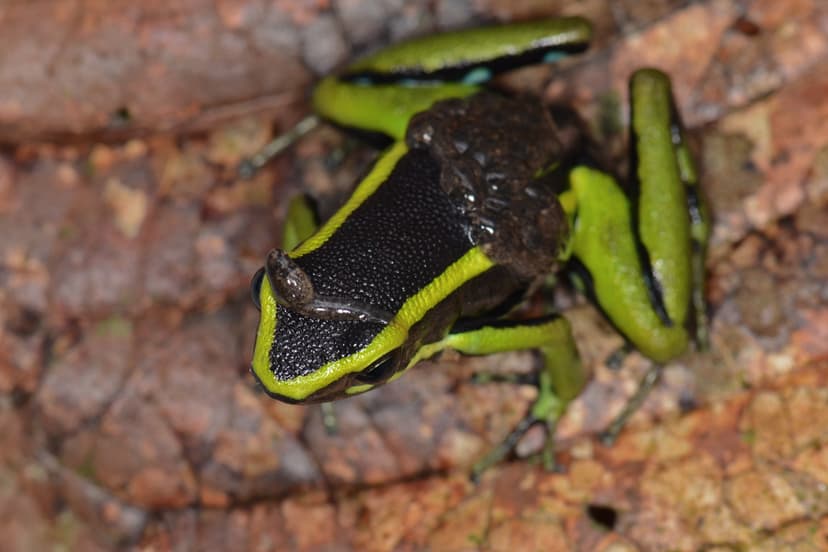
Ameerega trivittata
Ameerega trivittata, also known as the three-striped poison frog, is a species of frog native to lowland forests and marshes in several South American countries. It is distinguished by its terrestrial, diurnal nature, granular skin, lack of webbing between digits, and prominent stripes that vary in color. The species is currently facing threats due to habitat loss.