
Ameerega trivittata
Ameerega trivittata, also known as the three-striped poison frog, is a species of frog native to lowland forests and marshes in several South American countries. It is distinguished by its terrestrial, diurnal nature, granular skin, lack of webbing between digits, and prominent stripes that vary in color. The species is currently facing threats due to habitat loss.
Key Facts
- ›Found in Bolivia, Brazil, Colombia, Guyana, Peru, Suriname, Venezuela, possibly Ecuador, and possibly French Guiana.
- ›Inhabits subtropical or tropical moist lowland forest floors and intermittent freshwater marshes.
- ›Distinctive features include large size (up to 50 MM), granular skin, unwebbed digits, and striped markings.
- ›Stripes typically range from green to yellow and orange.
- ›Males care for eggs and transport tadpoles to water pools.
- ›Primarily feeds on ants.
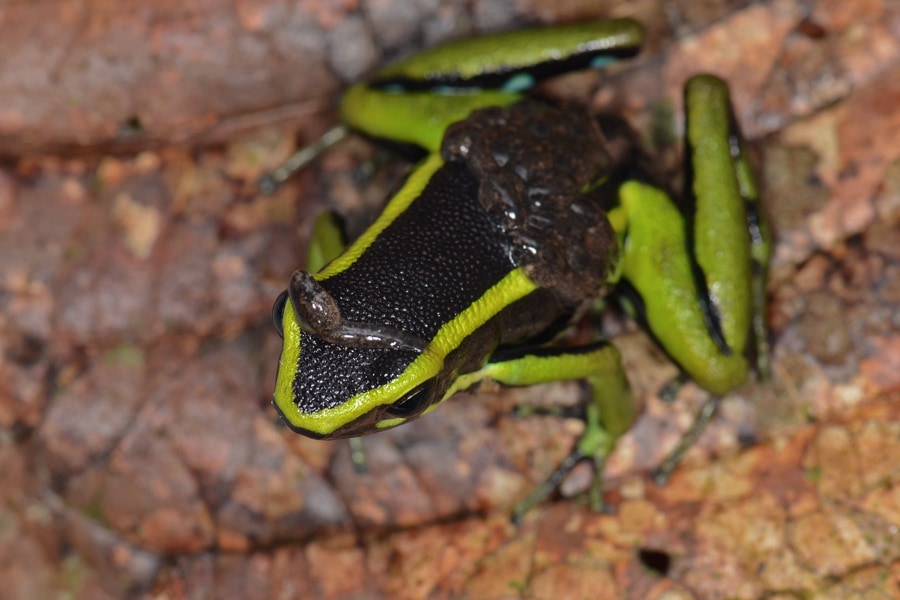
Three-Striped Poison Frog
Lowland Forest, Wetlands, Forest Floor
Large Size, Granular Skin, Lack of Webbing Between Digits, Distinctive Striped Markings, Black Back and Sides With Two Lateral Stripes
About Ameerega trivittata
Ameerega trivittata, commonly recognized as the three-striped poison frog, is a species of frog native to the diverse ecosystems of South America. Its natural range encompasses Bolivia, Brazil, Colombia, Guyana, Peru, Suriname, and Venezuela, with potential presence also noted in Ecuador and French Guiana. This species typically inhabits the moist floors of subtropical and tropical lowland forests and can also be found in intermittent freshwater marshes.
Physical Characteristics and Behavior
The three-striped poison frog is characterized by its terrestrial and diurnal lifestyle, meaning it is active during the day and lives on the ground. Distinctive among its features are its relatively large size, reaching up to 50 mm in snout-to-vent length, its granular skin texture, and the complete absence of webbing between its digits. A prominent characteristic is its striking striped markings, which commonly appear in shades of green but can also manifest as yellow or orange, running from the snout to the hind legs. The frog's coloration typically includes a black back and sides, a black belly tinged with blue posteriorly, and limbs of a yellowish-green or light-brown hue.
Reproduction and Diet
Reproduction in Ameerega trivittata involves terrestrial egg-laying, with clutches deposited under fallen leaves. The male takes on a significant role in parental care, guarding the eggs for approximately 15 days until they hatch. Post-hatching, the male transports the tadpoles on his back to suitable ephemeral pools or water-filled crevices, where they undergo metamorphosis over a period of 41 to 54 days. The primary diet of this species consists of ants, which are readily available in its forest floor habitat.
Conservation Concerns
Currently, Ameerega trivittata is classified as threatened, primarily due to habitat loss. The degradation and destruction of its natural forest and marsh environments pose a significant risk to its population survival.
Source: Wikipedia ↗
Frequently Asked Questions
What are the common names for Ameerega trivittata?
Ameerega trivittata is commonly known as the three-striped poison frog. It was formerly classified under the scientific name Epipedobates trivittatus.
Where is the three-striped poison frog found?
This species is found in several South American countries including Bolivia, Brazil, Colombia, Guyana, Peru, Suriname, and Venezuela. Its presence in Ecuador and French Guiana is also possible.
What is the habitat of Ameerega trivittata?
The three-striped poison frog naturally inhabits the floors of subtropical or tropical moist lowland forests and intermittent freshwater marshes. It lives among the leaf litter on the forest floor.
What are the distinctive physical characteristics of this frog?
Key distinguishing features include its relatively large size, reaching up to 50 mm in length, its granular skin, the absence of webbing between its digits, and its characteristic stripes. The stripes usually run from the snout to the hind legs.
How does the three-striped poison frog reproduce?
The frogs lay terrestrial eggs in small clutches hidden under fallen leaves during the rainy season. The male frog guards the eggs for about 15 days until they hatch, after which he carries the tadpoles on his back to suitable water pools for development.
What does Ameerega trivittata eat?
The primary food source for the three-striped poison frog consists of ants, which are abundant on the forest floor where this species lives.
What is the conservation status of Ameerega trivittata?
The species is currently threatened by habitat loss, which is impacting its natural environment.
Related Frogs

Afrixalus vittiger
The banded banana frog, scientifically known as Afrixalus fulvovittatus, is a species of frog native to West Africa. It inhabits moist savannas, swamps, and marshes, and is particularly found in degraded former forest areas. This species is currently threatened by habitat loss.
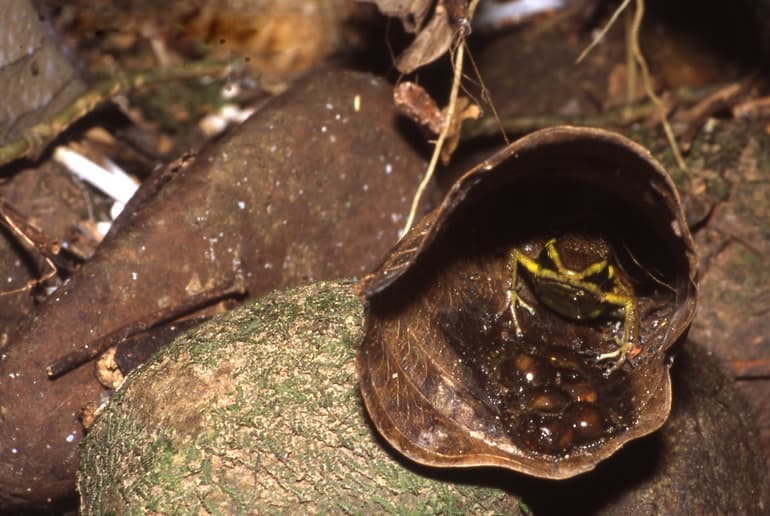
Ameerega petersi
The Peru poison frog (Ameerega petersi) is a species of frog native to the primary premontane and subtropical or tropical forests of eastern Peru and western Brazil. It is distinguished by its habit of carrying tadpoles to water after hatching from eggs laid on leaf litter.

Ameerega picta
The spot-legged poison frog (Ameerega picta) is a species of poison dart frog native to Bolivia, Brazil, Peru, and Venezuela. This species is distinguished by its presence in a wide range of forest types, from lowland to montane, and its remarkable ability to transport tadpoles to water bodies after hatching on land.