
Afrixalus vittiger
Afrixalus·Threatened by habitat loss
The banded banana frog, scientifically known as Afrixalus fulvovittatus, is a species of frog native to West Africa. It inhabits moist savannas, swamps, and marshes, and is particularly found in degraded former forest areas. This species is currently threatened by habitat loss.
Key Facts
- ›Found in Ivory Coast, Ghana, Guinea, Liberia, and Sierra Leone.
- ›Inhabits moist savanna, swamps, freshwater marshes, and degraded former forests.
- ›Breeding occurs on folded leaves above water.
- ›Tadpoles fall into the water to develop after hatching.
- ›Threatened primarily by habitat loss.
- ›Belongs to the family Hyperoliidae.

Banded Banana Frog
Savanna, Wetlands, Marshes, Degraded Former Forest
About Afrixalus vittiger
Afrixalus vittiger: The Banded Banana Frog
The banded banana frog, scientifically recognized as Afrixalus fulvovittatus, is a species of amphibian belonging to the family Hyperoliidae. This species is indigenous to West Africa, with documented populations in Ivory Coast, Ghana, Guinea, Liberia, and Sierra Leone. Its presence is strongly tied to specific environmental conditions, making it an indicator of habitat health in its native regions.
Habitat and Distribution
The natural environments favored by the banded banana frog are characterized by moisture and openness. These include moist savannas, swamps, freshwater marshes, and intermittent freshwater marshes. The species also adapts to human-modified landscapes such as plantations, rural gardens, and notably, heavily degraded former forest areas. It is important to note that Afrixalus fulvovittatus is not found in pristine primary or secondary forests, suggesting a preference for more altered or transitional ecosystems.
Reproduction and Development
Reproductive behavior in the banded banana frog is distinct. Mating and egg-laying occur on folded leaves that are strategically positioned above bodies of water. Following the hatching of the eggs, the developing tadpoles detach from the leaves and fall into the water below, where they will complete their metamorphosis into adult frogs.
Conservation Concerns
A significant threat to the survival of the banded banana frog is habitat loss. The degradation and alteration of its preferred savanna and wetland environments due to various human activities directly impact its population numbers and long-term viability. Conservation efforts are therefore largely focused on preserving and restoring these vital habitats.
Source: Wikipedia ↗
Frequently Asked Questions
Where can the banded banana frog be found?
The banded banana frog is found in several West African countries, including Ivory Coast, Ghana, Guinea, Liberia, and Sierra Leone. Its natural habitats are moist savannas, swamps, and marshes.
What kind of habitat does the banded banana frog prefer?
This frog prefers moist savanna environments and wetlands. It is often found in degraded former forests, but not in primary or secondary forests. Swamps and intermittent freshwater marshes are also suitable habitats.
How does the banded banana frog reproduce?
Breeding takes place on folded leaves positioned above the water. Once the tadpoles hatch, they fall into the water below to complete their development.
What are the main threats to the banded banana frog?
The primary threat to the banded banana frog is habitat loss. As its natural environments are degraded, the population faces significant challenges.
Related Frogs
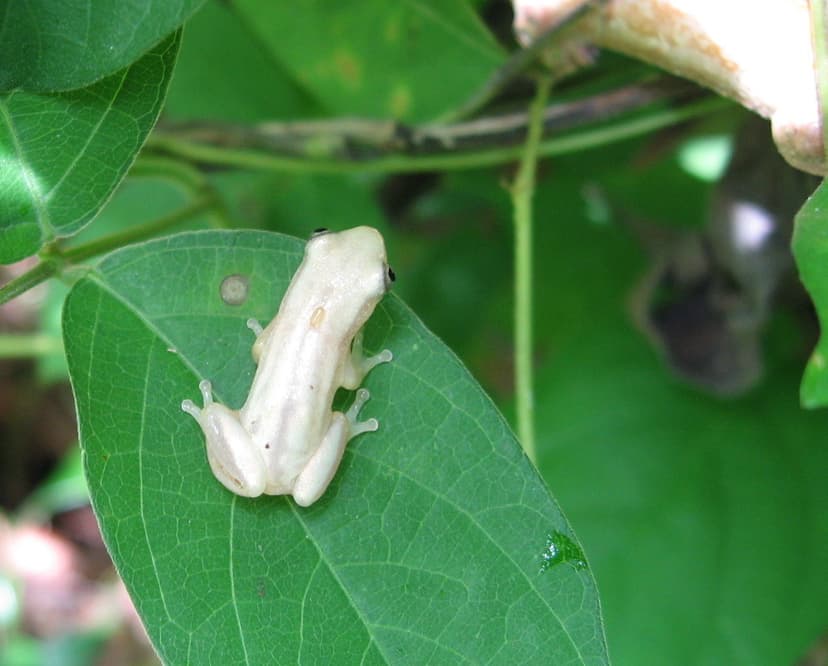
Afrixalus weidholzi
Afrixalus weidholzi, also known as Weidholz's banana frog or Weidholz's leaf-folding frog, is a small frog species found across savannas in West and Central Africa. It is distinctive for its breeding behavior, where males call from flooded grass and eggs are laid in folded leaves, and its specific coloration featuring dark vertebral and lateral stripes.

Afrixalus wittei
Afrixalus wittei, commonly known as De Witte's spiny reed frog, is a species of frog belonging to the Hyperoliidae family. This amphibian is found across several countries in Southern and Central Africa, including Angola, the Democratic Republic of the Congo, Tanzania, and Zambia. Its distinctiveness lies in its adaptation to specific wetland and grassland environments.
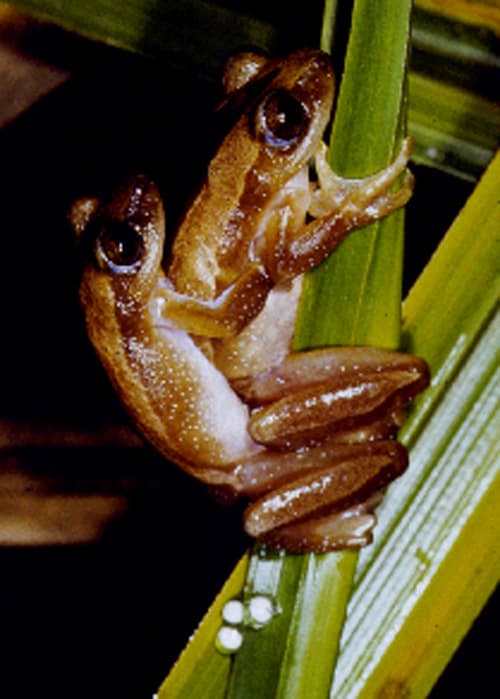
Afrixalus
Afrixalus is a genus of frogs belonging to the family Hyperoliidae, found throughout Sub-Saharan Africa. They are commonly known as banana frogs, spiny reed frogs, cat's eye reed frogs, or leaf-folding frogs. A distinctive characteristic is their habit of laying eggs in vegetation above water, often folding leaves around them for protection.