
Amolops ricketti
Amolops ricketti, also known as the Chinese sucker frog or South China torrent frog, is a species of frog native to southern and eastern China and northern and central montane Vietnam. This small frog is distinguished by its habitat in subtropical or tropical moist lowland and montane forests, as well as rivers. Its skin secretions contain antimicrobial peptides with potential applications in developing new anti-infection agents.
Key Facts
- ›Found in southern and eastern China and northern and central montane Vietnam.
- ›Inhabits subtropical/tropical moist lowland forests, montane forests, and rivers.
- ›Males are approximately 56 MM and females 58 MM in snout-vent length.
- ›Tadpoles reach a length of about 36 MM.
- ›Skin secretions contain antimicrobial peptides.
- ›Not considered threatened by the IUCN.
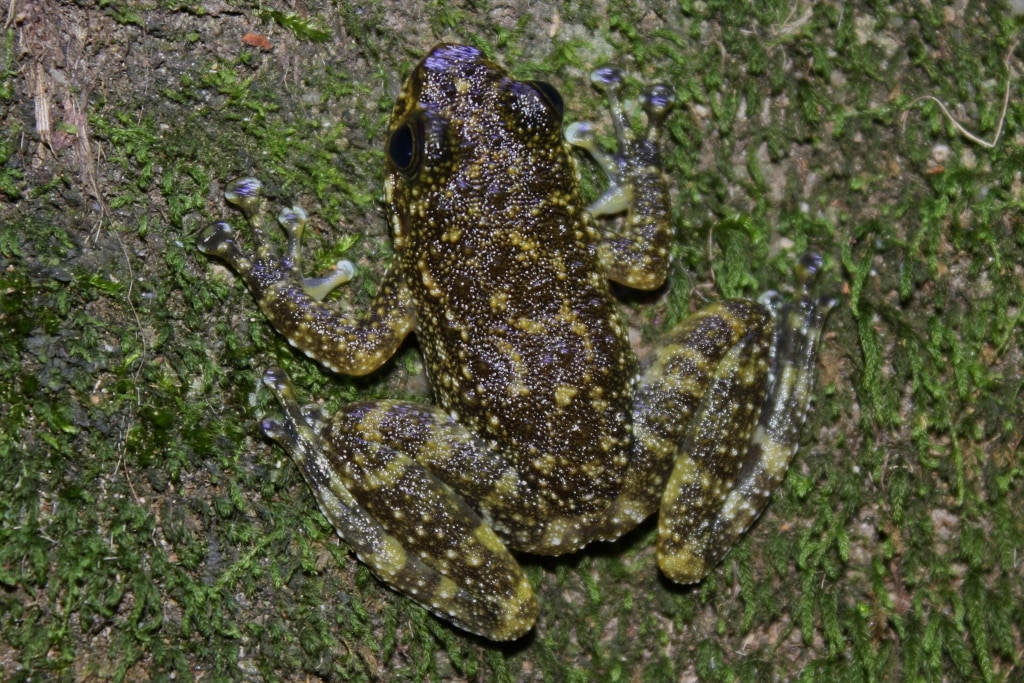
Chinese Sucker Frog, South China Torrent Frog
Subtropical/Tropical Moist Lowland Forests, Subtropical/Tropical Moist Montane Forests, Rivers
China, Vietnam
- Small Size
- Habitat In Moist Forests and Rivers
- Skin Secretions Containing Antimicrobial Peptides
About Amolops ricketti
Amolops ricketti: The Chinese Sucker Frog
Amolops ricketti, commonly known as the Chinese sucker frog or the South China torrent frog, is a species of frog native to the diverse landscapes of southern and eastern China, and extending into the northern and central montane regions of Vietnam. This modest amphibian is characterized by its small stature and its preference for humid environments.
Description and Habitat
Adult Amolops ricketti are relatively small, with males typically measuring around 56 mm (2.2 inches) and females slightly larger at approximately 58 mm (2.3 inches) in snout-vent length. Its tadpoles can reach lengths of about 36 mm (1.4 inches). The natural homes for this frog are subtropical and tropical moist forests, encompassing both lowland and montane varieties, as well as riverine habitats. These environments provide the necessary moisture and shelter for the species.
Significance and Conservation
Beyond its ecological role, Amolops ricketti holds potential interest for its biochemical properties. Antimicrobial peptides, which are candidates for the development of novel anti-infection agents, can be extracted from the skin secretions of this frog. Fortunately, the species is not currently considered threatened, with the IUCN listing its conservation status as Least Concern, indicating a stable population within its natural range.
Source: Wikipedia ↗
Frequently Asked Questions
What are the common names for Amolops ricketti?
Amolops ricketti is commonly known as the Chinese sucker frog or the South China torrent frog. These names reflect its geographic distribution and some of its physical characteristics.
Where is Amolops ricketti found?
This frog species is located in southern and eastern China, as well as in the northern and central mountainous regions of Vietnam. Its range includes various forest types and river systems.
What is the size of Amolops ricketti?
Amolops ricketti is a small species of frog. Adult males typically measure around 56 mm (2.2 inches) in snout-vent length, while females are slightly larger, reaching about 58 mm (2.3 inches).
What are the natural habitats of Amolops ricketti?
The natural habitats for Amolops ricketti include subtropical and tropical moist lowland forests, moist montane forests, and rivers. These environments provide the necessary conditions for its survival and reproduction.
Are there any special properties of Amolops ricketti's skin secretions?
Yes, the skin secretions of Amolops ricketti contain antimicrobial peptides. These compounds are of interest for their potential in developing novel anti-infection agents.
What is the conservation status of Amolops ricketti?
The International Union for Conservation of Nature (IUCN) does not consider Amolops ricketti to be threatened. Its conservation status is currently listed as Least Concern.
Related Frogs
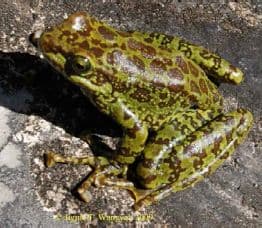
Amolops mantzorum
Amolops mantzorum, also known as the Sichuan torrent frog or Kangting sucker frog, is a species of frog native to Gansu, Sichuan, and Yunnan Provinces of China, with recent reports from Bhutan. It is an abundant species found in streams and small rivers within forest and shrubland habitats.
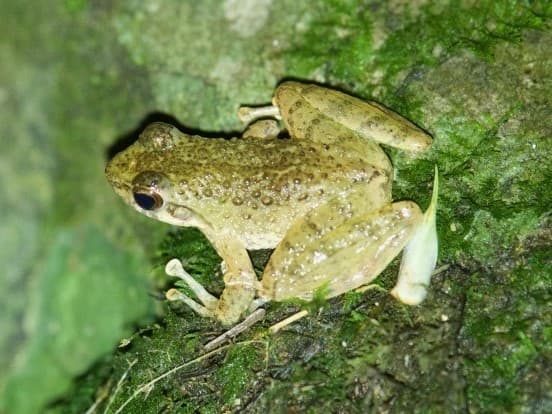
Amolops torrentis
The torrent sucker frog (Amolops torrentis) is a species of frog endemic to Hainan Island, China, found in streams and surrounding wetlands. It is distinguished by the presence of tarsal glands, a specific tympanum edge, and a tibio-tarsal articulation reaching beyond the snout. This species is characterized by its high-pitched mating calls, which females favor, and its skin glands can secrete toxins, offering a defense against predators.
Amolops kangtingensis
Amolops mantzorum, also known as the Sichuan torrent frog or Kangting sucker frog, is a species of frog native to China, with recent reports from Bhutan. This abundant species inhabits large streams and small rivers within forest and shrubland environments.