
Amolops torrentis
The torrent sucker frog (Amolops torrentis) is a species of frog endemic to Hainan Island, China, found in streams and surrounding wetlands. It is distinguished by the presence of tarsal glands, a specific tympanum edge, and a tibio-tarsal articulation reaching beyond the snout. This species is characterized by its high-pitched mating calls, which females favor, and its skin glands can secrete toxins, offering a defense against predators.
Key Facts
- ›Endemic to Hainan Island, China.
- ›Found in streams and surrounding wetland areas.
- ›Males produce high-pitched mating calls that attract females.
- ›Skin glands secrete toxins as a defense mechanism.
- ›Listed as Vulnerable by the IUCN due to habitat loss and declining habitat quality.
- ›Protected by Chinese law.
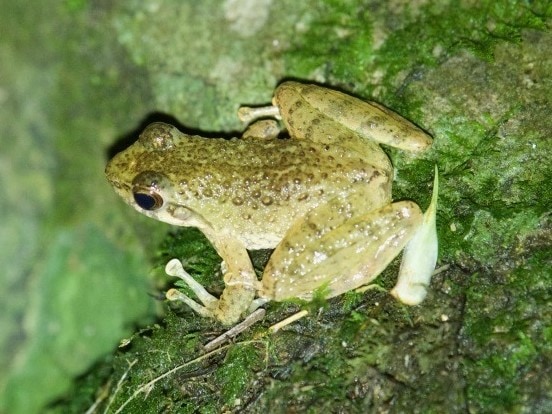
Torrent Sucker Frog, Little Torrent Frog
Streams, Wetlands
Hainan
- Tarsal Glands
- Distinct Tympanum Edge
- Tibio-Tarsal Articulation Reaching Beyond Snout
- Glandular Ridge Under Tarsus
- Smooth Bumps On the Back
- Circummarginal Groove At the Tip of the First Finger
- White Subgular Vocal Sacs In Males
About Amolops torrentis
Amolops torrentis: The Torrent Sucker Frog
The torrent sucker frog, scientifically known as Amolops torrentis, is a species of amphibian endemic to the island of Hainan in China. This small frog is closely associated with fast-flowing streams and the surrounding wetland environments, a habitat that gives it its common name. Distinctive physical characteristics, such as tarsal glands and a unique tibio-tarsal articulation, set it apart from other members of the Amolops genus. The species is also known for the toxins secreted by glands on its skin, which serve as a defense mechanism against potential predators.
Description and Habitat
Amolops torrentis is characterized by several key features, including tarsal glands, a clearly defined tympanum edge, and a tibio-tarsal articulation that extends past the snout when the hind limbs are adpressed. It also possesses a glandular ridge beneath the tarsus, smooth bumps on its dorsal surface, and a distinctive circummarginal groove on the tip of its first finger. Males are further distinguished by a pair of white subgular vocal sacs. The species exhibits sexual size dimorphism, with females typically being larger than males, reaching snout-ventral lengths of less than 42 mm, while males are less than 35 mm. Their tadpoles measure up to 35 mm and possess a divided upper jaw sheath with 5/3 labial tooth rows and ventral glands.
The natural habitat of the torrent sucker frog is confined to Hainan Island, where it inhabits medium to large streams and adjacent wetlands, usually at elevations between 80 and 1000 meters. During the day, individuals are often found on rocks near stream rapids or on stone walls close to waterfalls. At night, they may be observed on rocks by the stream or on the leaves of nearby vegetation.
Reproduction and Vocalization
Reproduction in Amolops torrentis involves females laying eggs in rocky, fast-flowing stream locations, typically in crevices or openings within rock piles. These sites provide secure anchor points for the eggs, preventing them from being washed away by the current. The tadpoles share these aquatic environments. Mating is facilitated by male vocalizations; males emit a high-pitched, sharp call described as "squeak, squeak, squeak," consisting of repeated identical notes. This calling occurs throughout the day and night during the breeding season. Males adjust the frequency of their calls in response to background noise but not their amplitude, a behavior hypothesized to aid in call transmission through noisy stream environments.
Conservation Status and Threats
Amolops torrentis is currently classified as Vulnerable by the International Union for Conservation of Nature (IUCN). This status is attributed to its limited geographic range on Hainan Island and the ongoing degradation and reduction of its habitat. Major threats include habitat loss driven by agricultural expansion, particularly rubber, banana, and areca plantations, which also leads to pollution from herbicides and pesticides. The species also suffers from parasitism by organisms such as frog-biting midges and nematodes. Despite these challenges, the species is protected by Chinese law and is found within several protected areas on Hainan, including nature reserves and forest parks.
Source: Wikipedia ↗
Frequently Asked Questions
What are the distinguishing physical features of Amolops torrentis?
Amolops torrentis has several distinguishing characteristics, including tarsal glands, a distinct tympanum edge, and a tibio-tarsal articulation that extends beyond the snout when the hind limbs are adpressed. They also possess a glandular ridge under the tarsus, smooth bumps on their back, and a circummarginal groove on the tip of the first finger.
How do Amolops torrentis reproduce?
Females of Amolops torrentis lay eggs in fast-flowing stream areas, specifically in rock piles or soil openings where the eggs can be anchored to prevent them from being washed away. Tadpoles also inhabit these same types of locations.
What is the typical habitat of the torrent sucker frog?
The torrent sucker frog inhabits medium and large streams and the adjacent wetland areas. They are often found on rocks near stream rapids or on stone walls near waterfalls during the day, and on rocks or nearby shrubbery and weed leaves at night.
What are the main threats to Amolops torrentis?
The primary threats to Amolops torrentis include habitat loss due to the expansion of rubber, banana, and areca plantations, which pollutes their environment with herbicides and pesticides. Parasitism from frog-biting midges and nematodes also affects the species.
What is the conservation status of Amolops torrentis?
Amolops torrentis is currently listed as Vulnerable by the IUCN. This classification is due to its limited range on Hainan Island and the ongoing decline in the extent and quality of its habitat.
Related Frogs

Anaxyrus terrestris
The southern toad (Anaxyrus terrestris) is a large true toad found in the southeastern United States, commonly inhabiting areas with sandy soils. It is distinguished by knobs on its head and backward-pointing spurs, and its coloration can vary from brick red to mottled gray, brown, or black. This nocturnal species spends its days in burrows and is considered a generalist in its habitat preferences.

American toad
The American toad (Anaxyrus americanus) is a widespread amphibian found across eastern Canada and the United States. It is characterized by its variable coloration, which can range from yellow to brown to black, and its ability to change skin color based on environmental factors. This species is known for its distinctive trilling call during breeding season and its ability to hibernate through the winter.

Anaxyrus boreas
The western toad (Anaxyrus boreas) is a large toad species native to western North America. It is characterized by a white or cream dorsal stripe, dusky gray or greenish coloring, and widely separated parotoid glands. This species is frequently encountered near water and can jump considerable distances, with breeding occurring between March and July.