
Anodonthyla rouxae
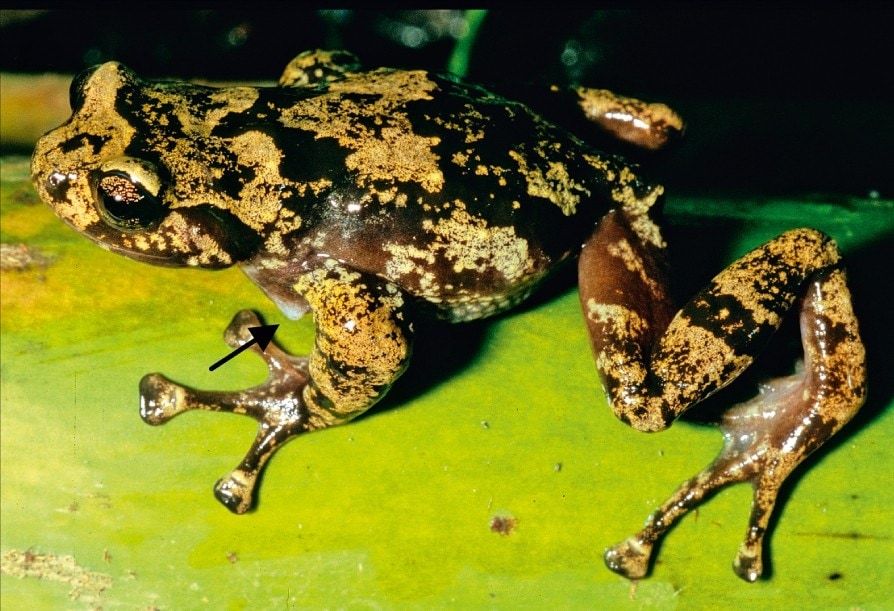
Anodonthyla rouxae is a frog species belonging to the family Microhylidae, found exclusively in Madagascar. This species inhabits subtropical and tropical moist montane forests and is currently facing threats primarily due to habitat loss. It was named in honor of the French herpetologist Mme. Rolande Roux-Estève.
Key Facts
- ›Endemic to Madagascar.
- ›Inhabits subtropical or tropical moist montane forests.
- ›Belongs to the family Microhylidae.
- ›Threatened by habitat loss.
- ›Named in honor of herpetologist Mme. Rolande Roux-Estève.
Montane Forests, Tropical Forests, Subtropical Forests
Madagascar
About Anodonthyla rouxae
Anodonthyla rouxae is a species of frog that belongs to the family Microhylidae. This species is endemic to the island of Madagascar, meaning it is found nowhere else in the world. Its existence is intricately linked to specific types of forest environments.
Habitat and Ecology
The natural habitat of Anodonthyla rouxae consists of subtropical or tropical moist montane forests. These are high-altitude forests that are characterized by consistent moisture and humidity, supporting a unique biodiversity.
Conservation Status
Anodonthyla rouxae is classified as threatened. The primary factor contributing to its endangered status is habitat loss, indicating that the forest ecosystems it relies upon are diminishing.
Etymology
The specific name, 'rouxae', was bestowed upon this species in honor of Mme. Rolande Roux-Estève, a notable French herpetologist. This naming convention is a common way to recognize individuals who have made significant contributions to the scientific study of amphibians and reptiles.
Source: Wikipedia ↗
Frequently Asked Questions
What is Anodonthyla rouxae?
Anodonthyla rouxae is a species of frog that is part of the Microhylidae family. It is native to the island of Madagascar.
Where does Anodonthyla rouxae live?
This frog species is found in the subtropical or tropical moist montane forests of Madagascar. These are specific types of high-altitude forests characterized by consistent moisture.
What are the threats facing Anodonthyla rouxae?
The primary threat to Anodonthyla rouxae is habitat loss. This means that the forests where they live are being destroyed or degraded, impacting their survival.
Why is it called Anodonthyla rouxae?
The specific name 'rouxae' was given in honor of Mme. Rolande Roux-Estève, a French herpetologist. This is a common practice to recognize significant contributors to the field of study.
Related Frogs

Aparasphenodon brunoi
Bruno's casque-headed frog is a species of frog endemic to the coastal region of southeastern Brazil. Distinctive for its casque-like head adorned with sharp projections, it is capable of injecting venom through headbutting, a trait unusual among frogs. This species inhabits lowland forests, shrublands, and freshwater marshes, but is currently threatened by habitat loss.

Aglyptodactylus laticeps
Aglyptodactylus laticeps is a frog species belonging to the Mantellidae family, native to Madagascar. Its natural environment consists of dry forests and temporary freshwater marshes. The primary threat to this species is habitat loss.

Aplastodiscus cavicola
Aplastodiscus cavicola, commonly known as Cruz's treefrog, is a species of frog native to Brazil. It inhabits subtropical or tropical moist lowland forests and rivers, but is currently threatened by habitat loss.