
Assam sucker frog
The Assam sucker frog (Amolops formosus) is a species of frog found in high-gradient streams across northern India, northern Bangladesh, and Nepal. It is distinguished by its smooth green skin with chocolate-colored blotches and yellow dots, fully webbed toes, and discs on its fingers and toes. This rare frog inhabits tropical evergreen forests and is threatened by habitat loss.
Key Facts
- ›Found in high gradient streams of northern India, Bangladesh, and Nepal.
- ›Adult females range from 63–73 MM in snout-to-vent length.
- ›Dorsum is green with irregular chocolate-colored blotches and yellow dots.
- ›Inhabits tropical evergreen forests at elevations between 1,000–2,508 meters.
- ›Threatened by habitat loss due to deforestation and dams.
- ›Present in Namdapha National Park and Dibang Wildlife Sanctuary in India.

Assam Sucker Frog, Beautiful Stream Frog, Assam Cascade Frog, Hill Stream Frog
Tropical Evergreen Forest, Streams, Riparian Zones
India, Bangladesh, Nepal
- Green Dorsum With Chocolate-Colored Blotches and Yellow Dots
- Fully Webbed Toes
- Discs On Fingers and Toes
- Smooth Skin
About Assam sucker frog
The Assam sucker frog, scientifically known as Amolops formosus, is a species of frog noted for its distinctive appearance and specific habitat requirements. It is found in the high-gradient streams of northern India, northern Bangladesh, and Nepal, with possible occurrences in Bhutan, though records for this latter country may overlap with confusion with Amolops himalayanus.
Description and Characteristics
Adult Assam sucker frogs exhibit a striking coloration: their dorsum is green, marked with irregular, distinct chocolate-colored blotches that are further adorned with yellow dots. The underside is typically light, with a greenish tint to the abdomen. The species possesses a relatively wide head and a small yet discernible tympanum. A key characteristic is the presence of discs on both the fingers and toes, with the toes being fully webbed while the fingers are not. Adult females range from 63 to 73 mm in snout-to-vent length, while the holotype male measured 64 mm.
Habitat and Distribution
This rare species is intrinsically linked to streams and the vegetation along their banks, specifically within tropical evergreen forests. Its preferred elevations range significantly, from 1,000 to 2,508 meters above sea level. The Assam sucker frog has been documented in protected areas such as Namdapha National Park and Dibang Wildlife Sanctuary in Arunachal Pradesh, India.
Conservation Concerns
The Assam sucker frog faces significant threats primarily due to habitat loss. Deforestation and the construction of dams are identified as the main drivers of this environmental degradation, putting the survival of this species at risk.
Source: Wikipedia ↗
Frequently Asked Questions
What is the scientific name for the Assam sucker frog?
The scientific name for the Assam sucker frog is Amolops formosus. It is also known by other common names such as the beautiful stream frog, Assam cascade frog, or hill stream frog.
What does the Assam sucker frog look like?
The Assam sucker frog has smooth green skin with distinct chocolate-colored blotches and yellow dots on its dorsum. Its ventral parts are light with a greenish abdomen. Both its fingers and toes have discs, and its toes are fully webbed.
Where does the Assam sucker frog live?
This species is found in high gradient streams within tropical evergreen forests. It typically inhabits elevations ranging from 1,000 to 2,508 meters above sea level in northern India, northern Bangladesh, and Nepal.
What are the threats to the Assam sucker frog?
The Assam sucker frog is considered rare and faces threats primarily from habitat loss. This loss is largely due to deforestation and the construction of dams in its natural environment.
What is the size of an adult Assam sucker frog?
Adult males, based on the holotype, measure approximately 64 mm in snout-to-vent length. Adult females are slightly larger, measuring between 63–73 mm in snout-to-vent length.
Related Frogs
Amolops afghanus
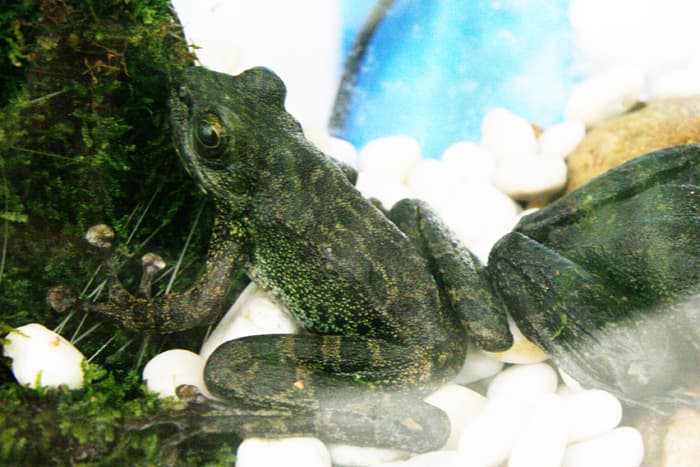
The Kachin torrent frog (Amolops afghanus) is a species of true frog native to Myanmar. This medium-sized amphibian is characterized by its broad head, smooth or slightly knobbed skin, and a dark green coloration with mottled patterns on its dorsal side and limbs. It exhibits significant sexual dimorphism in size, with females being considerably larger than males.

Amolops archotaphus
Amolops archotaphus, also known as the Doi Inthanon rock frog, is a species of frog endemic to Chiang Mai Province in northwestern Thailand, potentially extending into eastern Myanmar. It was formerly considered part of a broader species complex and was only recognized as distinct in 1997. This species is characterized by its habitat near small waterfalls in mountainous regions.
Amolops chunganensis
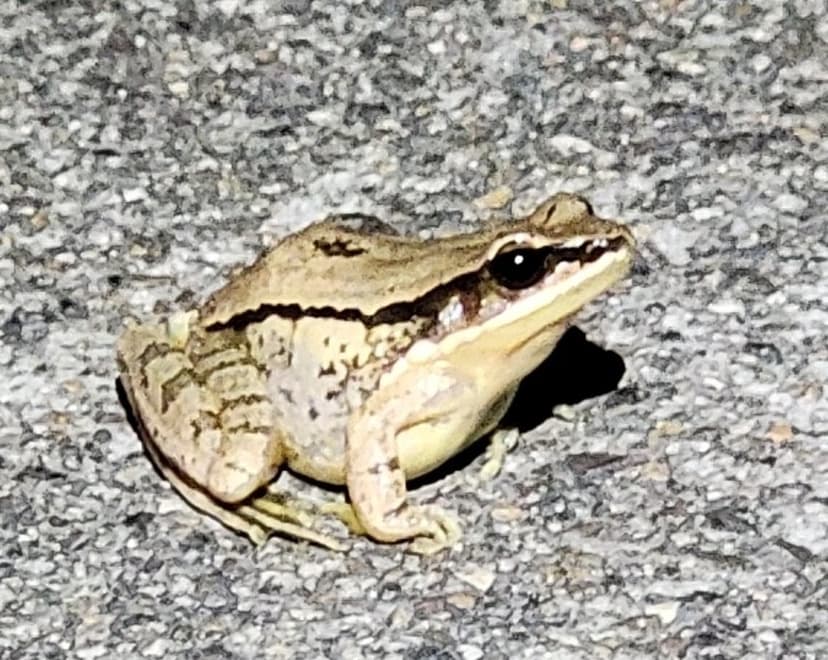
Amolops chunganensis, also known as the Chungan sucker frog or Chungan torrent frog, is a species of frog native to central, southern, and eastern China. This territorial frog is typically found in hill forests and on boulders along streams, particularly during its breeding season. While considered a common species in appropriate habitats, it faces threats from habitat destruction and collection for local consumption.