
Amolops chunganensis
Amolops chunganensis, also known as the Chungan sucker frog or Chungan torrent frog, is a species of frog native to central, southern, and eastern China. This territorial frog is typically found in hill forests and on boulders along streams, particularly during its breeding season. While considered a common species in appropriate habitats, it faces threats from habitat destruction and collection for local consumption.
Key Facts
- ›Endemic to central, southern, and eastern China.
- ›Found in hill forests and on boulders along streams.
- ›A territorial species, especially during the breeding season.
- ›Impacted by habitat destruction and collection for consumption.
- ›IUCN conservation status is not considered threatened.
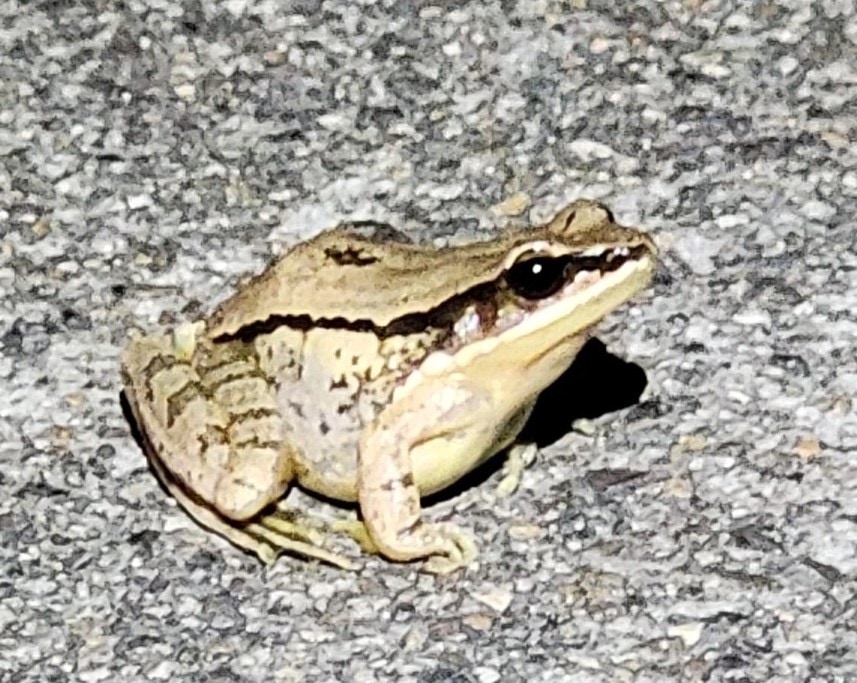
Chungan Sucker Frog, Chungan Torrent Frog
Hill Forests, Streamside
Fujian, Hunan, Guangxi, Guizhou, Sichuan, Gansu, Shaanxi
Territorial Behavior, Association With Stream Boulders
About Amolops chunganensis
Amolops chunganensis: The Chungan Sucker Frog
Amolops chunganensis, commonly referred to as the Chungan sucker frog or Chungan torrent frog, is a species of frog native to China. Its type locality is recorded as Kuatun village in Wuyishan, Fujian province. The species is endemic to central, southern, and eastern China, exhibiting a wide yet scattered distribution across several provinces, including Fujian, Hunan, Guangxi, Guizhou, Sichuan, Gansu, and Shaanxi. Records from Vietnam are believed to pertain to a different species, Amolops mengyangensis.
Habitat and Behavior
This frog is considered a common species within suitable habitats. Amolops chunganensis is characterized by its territorial nature, particularly during the breeding season. It is typically found inhabiting hill forests and is often observed on boulders situated along streams. This suggests an adaptation to environments with flowing water and rocky terrain.
Conservation
The International Union for Conservation of Nature (IUCN) currently lists Amolops chunganensis as not threatened. However, the species is subject to impacts from habitat destruction, a common issue for many amphibians. Additionally, it is collected for local consumption, which can also affect its populations. Despite these pressures, it remains a relatively common species where its preferred habitat is available.
Source: Wikipedia ↗
Frequently Asked Questions
What are the common names for Amolops chunganensis?
Amolops chunganensis is commonly known as the Chungan sucker frog and the Chungan torrent frog.
Where is Amolops chunganensis found?
This species is endemic to central, southern, and eastern China, with a wide but scattered distribution across provinces such as Fujian, Hunan, Guangxi, Guizhou, Sichuan, Gansu, and Shaanxi.
What is the habitat of the Chungan sucker frog?
The Chungan sucker frog inhabits hill forests and is found on boulders along streams, particularly during its breeding season.
What is the conservation status of Amolops chunganensis?
The IUCN does not consider Amolops chunganensis to be threatened. However, the species is impacted by habitat destruction and is collected for local consumption.
Related Frogs
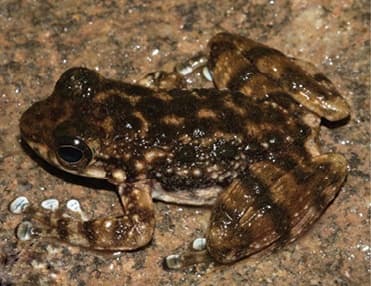
Amolops wuyiensis
Amolops wuyiensis, also known as the Wuyi torrent frog, is a species of frog native to southeastern China, specifically in Fujian, Anhui, and Zhejiang provinces. Its name is derived from the Wuyi Mountains. While its population is decreasing, it is not currently classified as threatened by the IUCN.
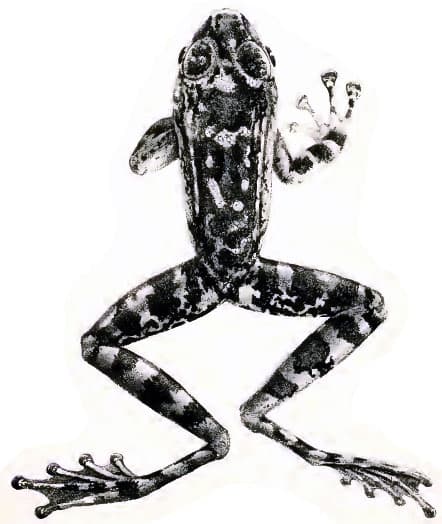
Amolops larutensis
Amolops larutensis, also known as the Larut sucker frog, is a species of frog native to the Malay Peninsula, found from southernmost Thailand to Malaysia. It is distinctive for its large adhesive discs on its fingertips and smaller ones on its toe tips, which aid in clinging to rocky surfaces in its fast-flowing stream habitat.
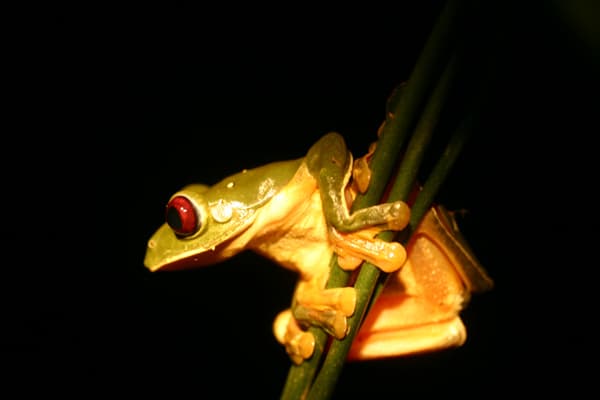
Agalychnis saltator
Agalychnis saltator, also known as the parachuting red-eyed leaf frog or misfit leaf frog, is a species of frog found in the humid and wet forests of Central America, from Honduras to Costa Rica. This arboreal and nocturnal species is distinctive for its bright red eyes with vertical pupils and its ability to 'parachute' by spreading webbing between its limbs and toes to glide between trees.