
Furtwängler Glacier
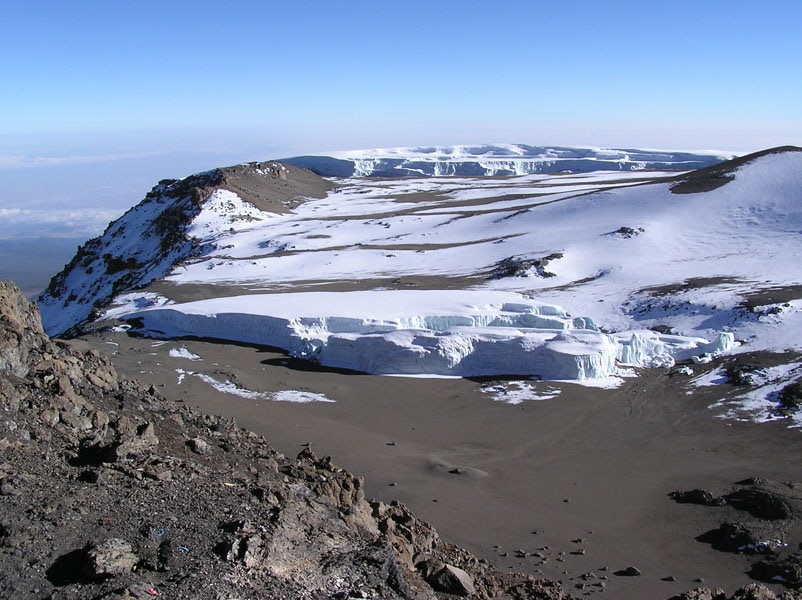
Furtwängler Glacier is a small, rapidly shrinking remnant of an ice cap that once covered the summit of Mount Kilimanjaro in Tanzania. Named after explorer Walter Furtwängler, it is primarily significant as a stark indicator of climate change, with projections suggesting its complete disappearance within the coming decades.
Key Facts
- ›Located near the summit of Mount Kilimanjaro, Tanzania.
- ›Named after Walter Furtwängler, part of the fourth party to ascend Kilimanjaro in 1912.
- ›Has lost nearly 85% of its ice cover between 1912 and 2011.
- ›Estimated to disappear entirely by around 2040, with little ice likely to remain after 2060.
- ›A large hole discovered in 2006 split the glacier into two parts by 2007.
- ›Exists continuously only since approximately 1650 CE.
Known For
- Its rapid retreat as an indicator of climate change
- Its location on Mount Kilimanjaro
- A Large Hole Discovered In 2006 That Split the Glacier
About Furtwängler Glacier
The Furtwängler Glacier is a critically endangered glacial remnant situated at the summit of Mount Kilimanjaro in Tanzania. Named after Walter Furtwängler, who was part of the fourth expedition to reach Kilimanjaro's peak in 1912, this glacier represents a small fragment of a once-extensive ice cap.
Environmental Significance
Furtwängler Glacier serves as a poignant symbol of climate change's impact. Historical data reveals a dramatic reduction in its size, with nearly 85 percent of its ice cover vanishing between 1912 and 2011. By 2018, its area had shrunk to a mere 11,000 square meters. Projections indicate that the glacier may disappear entirely by 2040, with little to no ice remaining after 2060, underscoring the urgency of global climate action.
Geological History and Features
The continuous existence of the Furtwängler Glacier is relatively recent, dating back to approximately 1650 CE. This period coincided with high water levels in Kenya's Lake Naivasha and the beginning of the Maunder Minimum. A notable geological event occurred in 2006 when scientists discovered a large hole near the glacier's center, which extended through its remaining thickness and split the ice body into two by 2007.
Source: Wikipedia ↗
Frequently Asked Questions
Where is the Furtwängler Glacier located?
The Furtwängler Glacier is situated near the summit of Mount Kilimanjaro in Tanzania. This iconic mountain is Africa's highest peak.
Why is the Furtwängler Glacier named after Walter Furtwängler?
The glacier was named in honor of Walter Furtwängler. He was part of the fourth expedition party that successfully reached the summit of Mount Kilimanjaro in 1912.
What has happened to the Furtwängler Glacier's size over time?
The Furtwängler Glacier has experienced drastic shrinkage. Between 1912 and 2011, it lost almost 85 percent of its ice cover, and its area was halved between 1976 and 2000.
When is the Furtwängler Glacier expected to disappear?
Scientists estimate that Furtwängler Glacier will likely disappear completely by around 2040. Projections indicate that very little ice will remain after 2060, if any.
Are there any unusual features of the Furtwängler Glacier?
Yes, during fieldwork in 2006, scientists found a large hole in the glacier's center. This hole extended through the ice to the rock below and had split the glacier into two distinct sections by 2007.
When did the Furtwängler Glacier begin its continuous existence?
The Furtwängler Glacier has existed continuously only since approximately 1650 CE. This period aligns with very high water levels in Kenya's Lake Naivasha and the beginning of the Maunder Minimum solar activity period.
Related Glaciers
Barranco Glacier
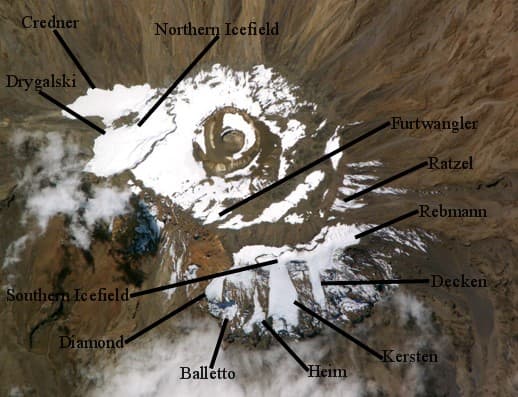
Barranco Glacier is a diminishing ice remnant located on the southwest slope of Mount Kilimanjaro in Tanzania. Once known as the Great Barranco Glacier, it is a small vestige of a much larger ice cap that previously covered the mountain's summit. Its current state reflects significant glacial retreat, with only two small, dormant ice bodies remaining.
Credner Glacier
The Credner Glacier is a significant remnant of the ice cap that once covered Mount Kilimanjaro in Tanzania. Located on the northwest slope, it is one of the largest glaciers on the mountain, descending from the Northern Ice Field. Its rapid retreat, driven by its exposed position, presents a concerning indicator of climate change.
Rebmann Glacier
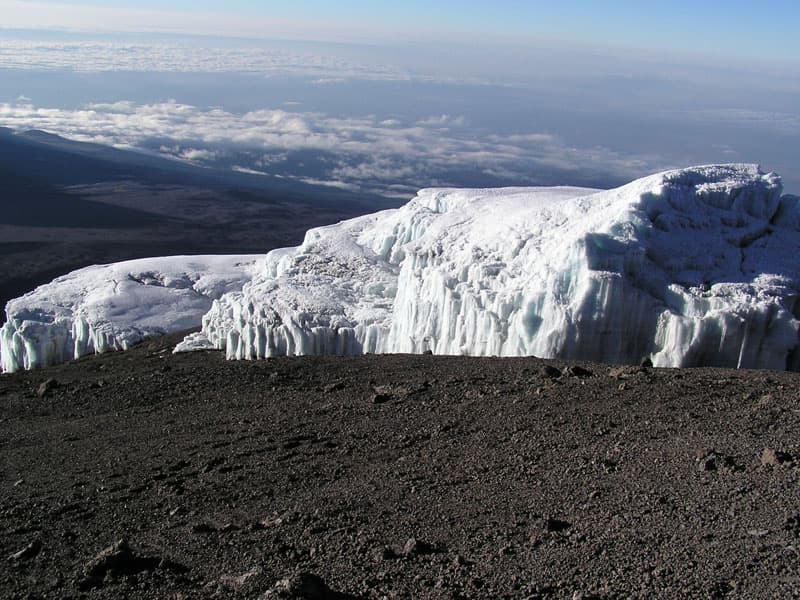
The Rebmann Glacier is an active glacier situated near the summit of Mount Kilimanjaro in Tanzania. It represents a small remaining portion of a once extensive ice cap that covered the mountain. This glacier is significant as it is one of the few remaining glaciers in Africa and is a key indicator of climate change, having experienced substantial retreat.