
Rebmann Glacier
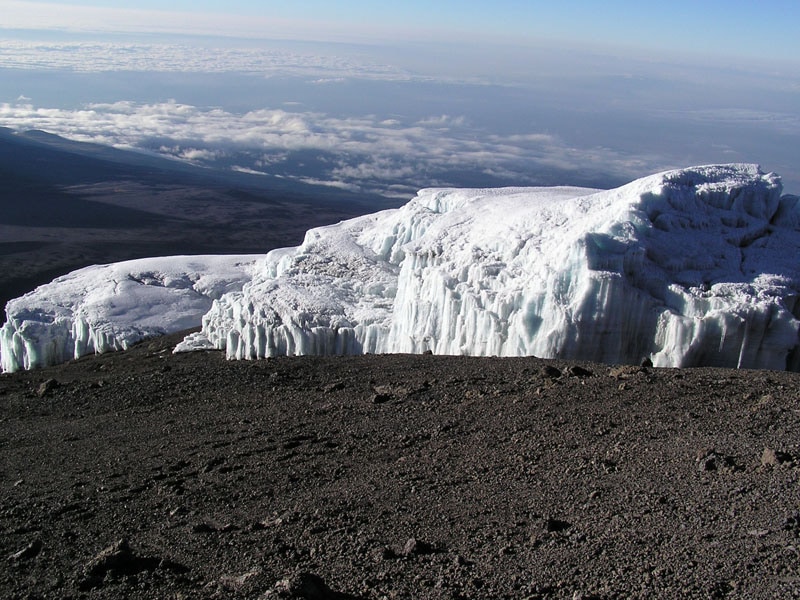
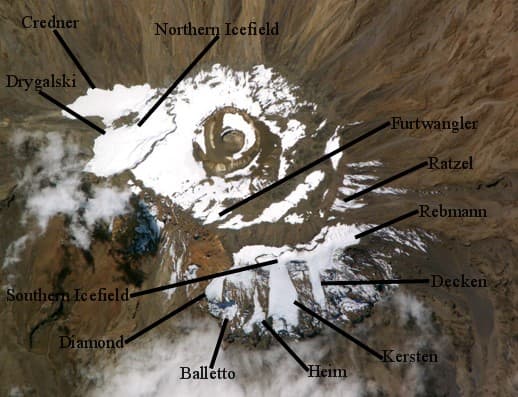
The Rebmann Glacier is an active glacier situated near the summit of Mount Kilimanjaro in Tanzania. It represents a small remaining portion of a once extensive ice cap that covered the mountain. This glacier is significant as it is one of the few remaining glaciers in Africa and is a key indicator of climate change, having experienced substantial retreat.
Key Facts
- ›Located near the summit of Mount Kilimanjaro in Tanzania.
- ›A remnant of a much larger ice cap that previously covered Kilimanjaro.
- ›Has experienced significant retreat over the past century.
- ›Named after German missionary and explorer Johann Rebmann.
- ›Johann Rebmann first reported snow and glaciers on Kilimanjaro in 1848.
Known For
- Being a remnant of a once large ice cap
- Its significant retreat as an indicator of climate change
- Its location on Mount Kilimanjaro
About Rebmann Glacier
The Rebmann Glacier is an active glacier located near the summit of Mount Kilimanjaro in Tanzania. It represents a small, remaining portion of a once substantial ice cap that crowned the mountain. This glacier is notable as one of the few remaining glaciers in Africa and serves as a crucial indicator of global climate change due to its significant observed retreat.
Historical Context and Naming
The glacier is named in honor of Johann Rebmann, a German missionary and explorer. Rebmann holds the distinction of being the first European explorer to document the presence of snow and glaciers atop Mount Kilimanjaro, making his observations in 1848.
Glacier Retreat
The ice cap on Mount Kilimanjaro, of which the Rebmann Glacier is a part, has undergone dramatic shrinkage over the past century. Between 1912 and 2000, a staggering 82 percent of the glacial ice on the mountain disappeared, highlighting the rapid impact of warming temperatures on high-altitude ice masses.
Source: Wikipedia ↗
Frequently Asked Questions
Where is the Rebmann Glacier located?
The Rebmann Glacier is located near the summit of Mount Kilimanjaro in Tanzania.
What is the significance of the Rebmann Glacier?
It is a remnant of a large ice cap that once covered Mount Kilimanjaro and is one of the few remaining glaciers in Africa. Its retreat is a visible indicator of climate change.
Who is the Rebmann Glacier named after?
The glacier is named after Johann Rebmann, a German missionary and explorer.
When were glaciers first reported on Mount Kilimanjaro by Europeans?
Johann Rebmann, the glacier's namesake, was the first European explorer to report observations of snow and glaciers atop Mount Kilimanjaro in 1848.
How much has the ice cap on Mount Kilimanjaro retreated?
Between 1912 and 2000, the ice cap on Mount Kilimanjaro has experienced significant retreat, with 82 percent of its glacial ice disappearing during that period.
Related Glaciers
Barranco Glacier
Barranco Glacier is a diminishing ice remnant located on the southwest slope of Mount Kilimanjaro in Tanzania. Once known as the Great Barranco Glacier, it is a small vestige of a much larger ice cap that previously covered the mountain's summit. Its current state reflects significant glacial retreat, with only two small, dormant ice bodies remaining.
Credner Glacier
The Credner Glacier is a significant remnant of the ice cap that once covered Mount Kilimanjaro in Tanzania. Located on the northwest slope, it is one of the largest glaciers on the mountain, descending from the Northern Ice Field. Its rapid retreat, driven by its exposed position, presents a concerning indicator of climate change.
Furtwängler Glacier
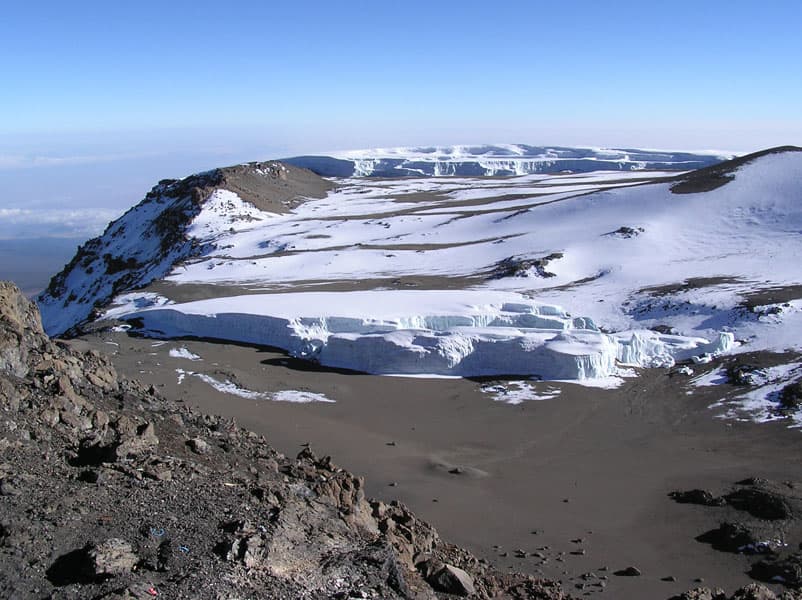
Furtwängler Glacier is a small, rapidly shrinking remnant of an ice cap that once covered the summit of Mount Kilimanjaro in Tanzania. Named after explorer Walter Furtwängler, it is primarily significant as a stark indicator of climate change, with projections suggesting its complete disappearance within the coming decades.