
Bdeogale
Herpestidae·Omnivorous
Bdeogale is a genus of mongooses characterized by their compact paws, round ears, and blunt muzzles. These primarily terrestrial and omnivorous animals forage within dense vegetation, with four distinct species found across various African regions.
Key Facts
- ›The genus Bdeogale was proposed by Wilhelm Peters in 1850.
- ›Species within Bdeogale possess compact paws with four symmetrical toes.
- ›They are characterized by round ears and a blunt muzzle.
- ›Bdeogale mongooses are primarily terrestrial and omnivorous.
- ›They are known to forage in dense vegetation.
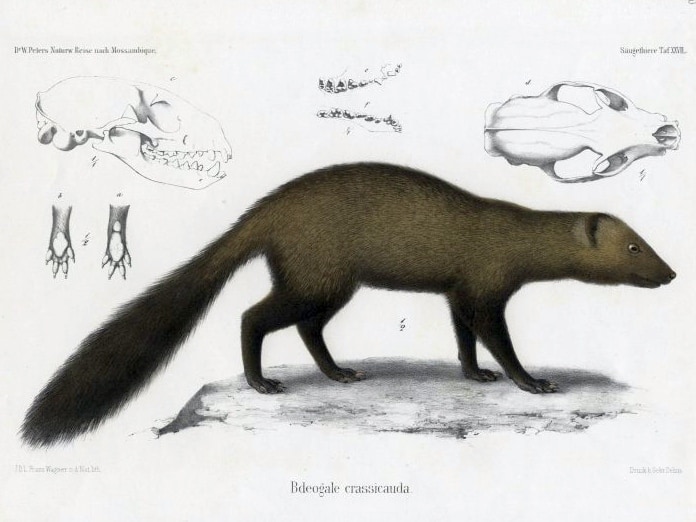
Dense Vegetation
Compact Paws With Four Symmetrical Toes, Round Ears, Blunt Muzzle, Broad, Round, and Bare Rhinarium
Primarily Terrestrial, Omnivorous Foraging Habits, Forage In Dense Vegetation
About Bdeogale
The genus Bdeogale represents a group of mongooses known for their distinctive physical traits and foraging behaviors. Proposed by Wilhelm Peters in 1850, the genus was established based on a specimen discovered in Mozambique.
Physical Characteristics
Species within the Bdeogale genus are recognized by their compact paws, which feature four symmetrical toes. They also possess round ears and a characteristically blunt muzzle. The muzzle is further distinguished by a broad, round, and bare rhinarium.
Habitat and Behavior
These mongooses are predominantly terrestrial, meaning they live and move primarily on land. Their diet is omnivorous, and they are observed to forage within dense vegetation. This behavior suggests an adaptation to environments where cover and a varied food source are readily available.
Source: Wikipedia ↗
Frequently Asked Questions
What are the defining physical characteristics of Bdeogale mongooses?
Bdeogale mongooses are distinguished by their compact paws, featuring four symmetrical toes. They also have round ears and a blunt muzzle with a broad, round, and bare rhinarium.
What is the typical habitat and behavior of Bdeogale species?
These mongooses are primarily terrestrial and omnivorous, meaning they live on land and eat both plants and animals. They are known to forage within dense vegetation.
When and by whom was the genus Bdeogale first described?
The genus Bdeogale was first proposed by Wilhelm Peters in 1850. This proposal was based on a mongoose specimen collected in Mozambique.
Related Hyenas, Civets & Mongooses

Atilax
Atilax is a genus of mongoose that currently contains one living species, the marsh mongoose. This semi-aquatic mammal is found in wetlands across Africa and is known for its solitary, nocturnal habits and a diet primarily consisting of aquatic prey.
Crossarchus
Crossarchus is a genus of small, highly social mongooses native to the swamplands and forests of central and western Africa. They are known for their distinctive whistling calls used to maintain contact in dense undergrowth and their cooperative care of young within their family groups.