
Crossarchus
Herpestidae·Insects, larvae, small reptiles, crabs, and berries. They dig for food and search in shallow streams for crabs.
Crossarchus is a genus of small, highly social mongooses native to the swamplands and forests of central and western Africa. They are known for their distinctive whistling calls used to maintain contact in dense undergrowth and their cooperative care of young within their family groups.
Key Facts
- ›Native to central and western Africa, including Ghana, Ivory Coast, Liberia, and Sierra Leone.
- ›Inhabit swamplands and forests, often being the dominant carnivores in their environment.
- ›Live in social groups of 10 to 24 individuals, composed of one to three families.
- ›Primarily diurnal, constantly moving through their territories.
- ›Diet consists of insects, larvae, small reptiles, crabs, and berries.
- ›Exhibit cooperative care of young, with individuals taking turns carrying and feeding them.
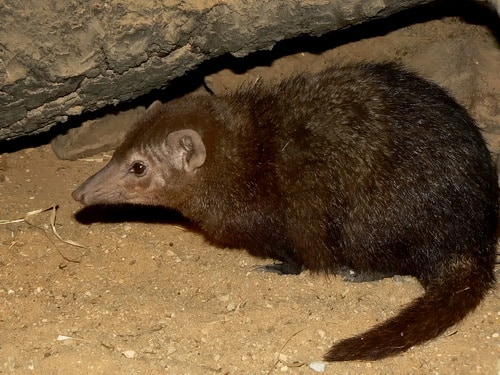
Swamplands, Forests
- Highly Social, Living In Groups of 10 To 24 Individuals.
- Groups Consist of One To Three Families, Each Made Up of A Mating Pair and Their Young.
- Diurnal, Meaning They Are Active During the Day.
- Constantly Wander Throughout Their Territories, Not Staying In One Place For Long.
- Create Temporary Shelters As They Do Not Occupy Permanent Den Sites.
- Exhibit Cooperative Care For Their Young, With Individuals Taking Turns Carrying and Feeding Them.
- Maintain Contact In Dense Undergrowth Using Constant Whistling Calls.
Whistling Calls
Insects, Larvae, Small Reptiles, Crabs
About Crossarchus
Crossarchus is a genus of mongooses, commonly known as kusimanse or dwarf mongooses. These small, highly social animals are part of the subfamily Mungotinae and are found in the swamplands and forests of central and western Africa, specifically in Ghana, Ivory Coast, Liberia, and Sierra Leone. In many areas where they live, members of the Crossarchus genus are the most numerous carnivores in the forest ecosystem.
Range and Habitat
The habitat of Crossarchus species consists of swamplands and forests. They are distributed across several West African nations, including Ghana, Ivory Coast, Liberia, and Sierra Leone.
Diet and Foraging
Kusimanse are omnivorous, feeding on a diet that includes insects, larvae, small reptiles, crabs, and berries. They are adept foragers, utilizing their claws and snouts to dig through leaf litter, under rotted trees, and around stones in search of insects and larvae. They will also venture into shallow streams to find freshwater crabs.
Behavior and Social Structure
Crossarchus are known for their complex social behavior. They live in groups typically comprising 10 to 24 individuals, with each group usually containing one to three families. A family unit consists of a mating pair and their offspring. These animals are diurnal, meaning they are active during the day, and they exhibit a nomadic lifestyle, constantly moving throughout their territories and creating temporary shelters rather than establishing permanent dens. A notable aspect of their social behavior is the cooperative care of their young; as the juveniles cannot keep pace with the adults for several weeks, group members take turns carrying them to different foraging locations and also assist in feeding them. To maintain cohesion within their social groups in the dense rainforest understory, kusimanse constantly use whistling calls while traveling.
Reproduction
Females in the genus Crossarchus are polyestrous, meaning they can have multiple estrous cycles throughout the year. If not mated, they may come into heat up to nine times annually. Litters typically range from 2 to 3 young, and multiple litters can occur per year. The young develop rapidly, opening their eyes in about twelve days, beginning to eat solid food within three weeks, and acquiring their adult coat in five weeks.
Source: Wikipedia ↗
Frequently Asked Questions
What is Crossarchus commonly known as?
Crossarchus is commonly referred to as kusimanse, cusimanse, mangue, or dwarf mongoose. In French, they are known as Mangouste brune, and in German as Dunkelkusimanse.
Where are kusimanse found?
Members of the Crossarchus genus are found in the swamplands and forests of central and western Africa. Their range includes countries such as Ghana, Ivory Coast, Liberia, and Sierra Leone.
What do kusimanse eat?
Their diet includes insects, larvae, small reptiles, crabs, and berries. They use their claws and snouts to dig for insects and larvae in leaf litter and under rotted trees and stones, and will also search for freshwater crabs in shallow streams.
How do kusimanse raise their young?
Kusimanse exhibit cooperative care for their young. Individuals within the group take turns carrying the young to different foraging spots and also help to feed them, as the young cannot keep up with the group for several weeks.
What kind of sounds do kusimanse make?
To maintain contact within the dense rainforest understory, kusimanse give constant whistling calls while traveling. This vocalization is crucial for keeping the social group together.
Related Hyenas, Civets & Mongooses

Atilax
Atilax is a genus of mongoose that currently contains one living species, the marsh mongoose. This semi-aquatic mammal is found in wetlands across Africa and is known for its solitary, nocturnal habits and a diet primarily consisting of aquatic prey.

Chasmaporthetes
Chasmaporthetes, also known as the "hunting or running hyena," was an extinct genus of hyenas that lived across Eurasia, North America, and Africa during the Pliocene and Pleistocene epochs. Unlike their "bone-crushing" relatives, these "dog-like" hyenas evolved slender limbs and were cursorial hunters, similar to modern canids. The genus likely originated from Eurasian Miocene hyenas and is notable for being the only hyena to cross into the Americas.

Crocuta
The spotted hyena (Crocuta crocuta), also known as the laughing hyena, is the largest extant member of the Hyaenidae family and is native to sub-Saharan Africa. It is distinguished by its bear-like build, spotted pelt, rounded ears, and unique female genitalia. As the most social of carnivores, it lives in complex, matriarchal clans and is a highly adaptable and opportunistic hunter and scavenger.