
Chasmaporthetes
Hyaenidae·Hypercarnivorous, with a diet primarily consisting of meat; not a specialist bone-crusher.·Extinct
Chasmaporthetes, also known as the "hunting or running hyena," was an extinct genus of hyenas that lived across Eurasia, North America, and Africa during the Pliocene and Pleistocene epochs. Unlike their "bone-crushing" relatives, these "dog-like" hyenas evolved slender limbs and were cursorial hunters, similar to modern canids. The genus likely originated from Eurasian Miocene hyenas and is notable for being the only hyena to cross into the Americas.
Key Facts
- ›Extinct genus of hyenas that lived from 4.9 million to 780,000 years ago.
- ›Distributed across Eurasia, North America, and Africa.
- ›Characterized by slender limbs and cursorial hunting adaptations, resembling modern canids.
- ›The only hyena species known to have migrated into the Americas.
- ›Likely inhabited open ground and hunted during the day.
- ›Cheek teeth were slender and sharp-edged, indicating a hypercarnivorous diet.

Open Ground
Slender Limbs, Long Limbs, Slender and Sharp-Edged Cheek Teeth
Cursorial Hunters, Daytime Hunters, Active Group Hunters
Medium-Sized Ungulates, Small Bourbon Gazelle, Chamois Antelope, Giant Marmot Paenemarmota
About Chasmaporthetes
Chasmaporthetes, often referred to as the "hunting or running hyena," is an extinct genus of the hyena family (Hyaenidae) that roamed across Eurasia, North America, and Africa during the Pliocene and Pleistocene epochs, with an existence spanning approximately 4.12 million years from 4.9 million to 780,000 years ago.
Evolutionary Adaptation
Unlike the "bone-crushing" hyenas more familiar today, Chasmaporthetes belonged to a lineage of "dog-like" hyenas, characterized by their slender, long limbs adapted for cursorial locomotion, akin to modern canids. This morphology suggests a lifestyle centered on active pursuit rather than scavenging or bone fragmentation. The genus is believed to have evolved from earlier Miocene hyenas found in Eurasia, such as Thalassictis or Lycyaena.
Geographic Distribution and Notable Species
The genus was widespread, with fossils discovered on multiple continents. A significant aspect of Chasmaporthetes' history is that C. ossifragus was the sole hyena species to successfully cross the Bering land bridge and colonize the Americas, where it lived in regions now known as Arizona and Mexico during the Blancan and early Irvingtonian Land Mammal ages.
Paleoecology and Diet
Chasmaporthetes likely inhabited open ground environments and was primarily a diurnal hunter. The European species, C. lunensis, is theorized to have been an active group hunter, potentially preying on medium-sized ungulates like the Bourbon gazelle (Gazella borbonica) and the chamois antelope (Procamptoceras brivatense). Competition likely occurred with other predators, such as the giant cheetah (Acinonyx pardinensis) in Europe and Borophagus diversidens in North America.
Anatomical studies of their teeth reveal distinct adaptations. The cheek teeth of Chasmaporthetes were slender and sharp-edged, similar to those of felines, indicating a hypercarnivorous diet. Microscopic analysis of tooth enamel further supports this, showing structures that suggest they were not specialized bone-eaters, unlike many modern hyenas. Dental microwear patterns observed in species like C. australis are comparable to those of modern lions, which rarely consume bone.
Source: Wikipedia ↗
Frequently Asked Questions
What does the name Chasmaporthetes mean?
The genus name Chasmaporthetes is derived from the Greek words "chasm" and "portheutes," meaning "destroyer" or "ravager." This name was given by Hay (1921), who speculated that the North American species, Chasmaporthetes ossifragus, might have witnessed the formation of the Grand Canyon.
What kind of hyenas were Chasmaporthetes?
Chasmaporthetes belonged to the group of "dog-like" hyenas, which are characterized by their slender limbs and adaptations for running, similar to modern canids. This contrasts with the "bone-crushing" hyenas that are more common today.
Where did Chasmaporthetes live?
Fossil evidence indicates that Chasmaporthetes was distributed across Eurasia, North America, and Africa. At least nine different species have been recognized from these regions.
What did Chasmaporthetes eat?
Analysis of their teeth suggests that Chasmaporthetes were hypercarnivorous, meaning their diet consisted primarily of meat. Their cheek teeth were slender and sharp, similar to those of felids, and their enamel microstructure indicates they were not specialists in crushing bone.
How did Chasmaporthetes hunt?
Chasmaporthetes likely inhabited open ground and were daytime hunters. The European species, C. lunensis, is thought to have been an active group hunter of medium-sized ungulates, possibly preying on small gazelles and chamois.
Related Hyenas, Civets & Mongooses

Adcrocuta
Adcrocuta was an extinct genus of large hyena that lived in Africa and Eurasia during the Miocene epoch. Fossils indicate a wide distribution across Eurasia, and its dental adaptations suggest it was capable of bone-cracking, though flesh likely also formed a significant part of its diet. Its considerable size made it effective at both scavenging and preying on medium-large animals.

Crocuta
The spotted hyena (Crocuta crocuta), also known as the laughing hyena, is the largest extant member of the Hyaenidae family and is native to sub-Saharan Africa. It is distinguished by its bear-like build, spotted pelt, rounded ears, and unique female genitalia. As the most social of carnivores, it lives in complex, matriarchal clans and is a highly adaptable and opportunistic hunter and scavenger.
Crossarchus
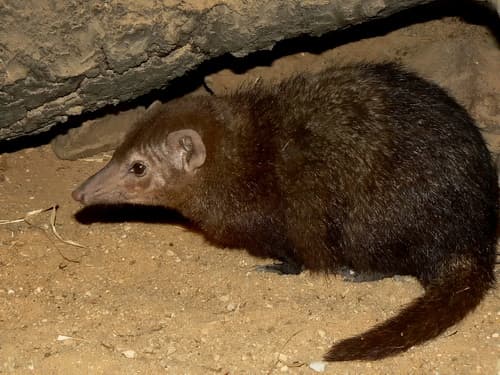
Crossarchus is a genus of small, highly social mongooses native to the swamplands and forests of central and western Africa. They are known for their distinctive whistling calls used to maintain contact in dense undergrowth and their cooperative care of young within their family groups.