
Jänisjärvi
Jänisjärvi is a lake in the Republic of Karelia, Russia, whose basin was formed by a meteorite impact approximately 700 million years ago. The impact created a circular crater with a diameter of 14 kilometers. It was once mistakenly identified as a volcanic caldera before its true impact origin was recognized.
Key Facts
- ›The Jänisjärvi crater is 14 kilometers in diameter.
- ›The impact event occurred approximately 700 million years ago.
- ›The crater formed during the Cryogenian period.
- ›It is located in the Republic of Karelia, Russia.
- ›Jänisjärvi was once believed to be a volcanic caldera.
- ›The crater is now recognized as a meteorite impact structure.

Lake LappajäRvi
About Jänisjärvi
Jänisjärvi Impact Crater
Jänisjärvi, also known as Yanisyarvi, is a lake located in the Republic of Karelia, Russia. Its prominent circular basin is the result of a significant meteorite impact that occurred approximately 700 million years ago, during the Cryogenian period. The impact created a crater with a diameter of 14 kilometers.
Historically, prior to World War II, Jänisjärvi was mistakenly identified as a volcanic caldera, similar to the nearby Lake Lappajärvi. However, subsequent scientific recognition confirmed both structures as impact craters, contributing to our understanding of Earth's impact history. The lake itself now occupies the crater's basin and drains into Lake Ladoga.
Source: Wikipedia ↗
Frequently Asked Questions
Where is Jänisjärvi located?
Jänisjärvi is located in the Republic of Karelia, Russia. It is a lake situated north of and draining to Lake Ladoga.
How old is the Jänisjärvi impact crater?
The impact event that formed the Jänisjärvi crater is estimated to have occurred approximately 700 million years ago. This places its formation during the Cryogenian period.
What is the size of the Jänisjärvi impact crater?
The basin of the somewhat circular lake, formed by the meteorite impact, has a diameter of 14 kilometers.
Was Jänisjärvi always known to be an impact crater?
No, prior to World War II, the lake and its basin were thought to be a volcanic caldera. It was later recognized as an impact crater.
Related Impact Craters
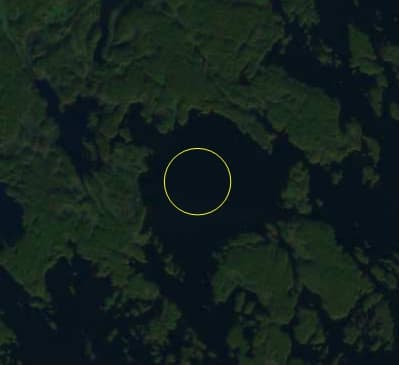
Tvaren
Tvären is a circular bay in Sweden that contains an ancient, buried impact crater. The crater, approximately 2 kilometers in diameter, was discovered using reflection seismology and is estimated to be around 455 million years old, dating back to the Late Ordovician period. An asteroid, 7771 Tvären, is named in honor of this geological feature.

Ouarkziz
Ouarkziz Crater is an impact structure located in northwestern Algeria, near the Moroccan border. This 3.5-kilometer diameter crater was formed by a meteor impact less than 70 million years ago, during the late Cretaceous Period. Despite significant erosion, its circular shape is still discernible, highlighting older sedimentary rock layers.

Kara
Kara is a heavily eroded meteorite crater located in the Yugorsky Peninsula, Nenetsia, Russia. While its current diameter is estimated at 65 kilometers, it is believed to have originally been 120 kilometers before significant erosion. The impact event occurred approximately 70.3 million years ago during the Late Cretaceous period.