
Ora Banda
Ora Banda is a locality in Western Australia known for its historical gold mining significance and a recently discovered impact crater. The name "Ora Banda" translates to "band of gold," reflecting its rich geological history and the continued mining operations in the area. The townsite itself has a history dating back to the gold rushes of the late 19th and early 20th centuries.
Key Facts
- ›Located 66 kilometers north-west of Kalgoorlie in Western Australia.
- ›The town name "Ora Banda" means "band of gold" in Spanish.
- ›Gold was discovered in the district in 1893, leading to the townsite's gazettal in 1912.
- ›An impact crater estimated to be over 100 million years old was found near Ora Banda in August 2020.
- ›The impact crater has an estimated diameter of about 5 kilometers.
About Ora Banda
Ora Banda is a locality situated in the Eastern Goldfields of Western Australia, approximately 66 kilometers northwest of Kalgoorlie. The town's name, "Ora Banda," is of Spanish origin, meaning "band of gold," a title that aptly describes the region's historical and ongoing connection to gold mining.
History and Gold Rushes
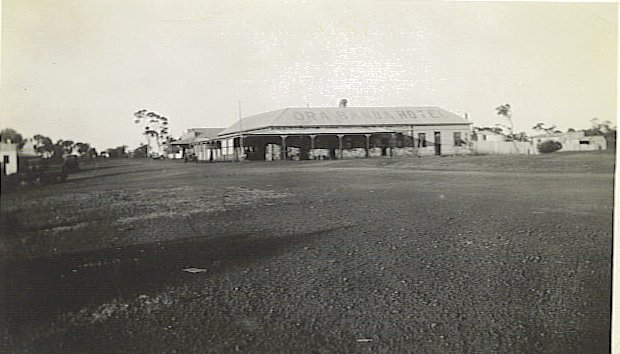
The history of Ora Banda is deeply intertwined with the gold rushes that swept through Western Australia in the late 19th and early 20th centuries. Gold was first discovered in the district in 1893, and by 1910, the area was a bustling hub with an estimated 2,000 miners and their families. The townsite was officially declared and gazetted in 1911 and 1912, respectively. At its peak, Ora Banda boasted numerous amenities, including stores, butchers, bakers, a town hall, a post office, a police station, churches, boarding houses, and even the once-famous Huntington Mills Bank, reputed to be the largest bank in the Southern Hemisphere at the time. The Ora Banda State Battery, a crucial facility for ore processing, was officially opened in 1913 and later expanded.
Modern Ora Banda and Geological Discovery
Today, Ora Banda continues to be an active mining area, with contemporary gold mining companies working the same sites discovered nearly a century ago. The Ora Banda State Battery remains in operation on the outskirts of town, still used for crushing ore. The community also holds an annual Ora Banda Race Day in September, drawing visitors to the historical Ora Banda Inn.
In a significant geological discovery announced in August 2020, an impact crater was found near Ora Banda. This meteorite crater is estimated to be over 100 million years old and has a diameter of approximately 5 kilometers, adding a new layer of scientific interest to the region's already rich geological and historical narrative.
Source: Wikipedia ↗
Frequently Asked Questions
What is Ora Banda famous for?
Ora Banda is primarily known for its historical significance as a gold mining townsite in Western Australia. It also gained recent attention with the discovery of a large impact crater nearby.
What is the meaning of the name Ora Banda?
The name Ora Banda is Spanish and translates to "band of gold," reflecting the region's rich gold deposits.
When was the impact crater discovered near Ora Banda?
The impact crater near Ora Banda was discovered and announced in August 2020.
How old is the Ora Banda impact crater?
The impact crater is estimated to be over 100 million years old.
What is the size of the Ora Banda impact crater?
The diameter of the impact crater is estimated to be approximately 5 kilometers.
Related Impact Craters

Henbury
The Henbury Meteorites Conservation Reserve in Australia's Northern Territory preserves a field of over a dozen impact craters, formed by a fragmented meteorite. It is recognized as one of the world's best-preserved small crater fields and was the earliest documented impact site in Australia, holding cultural significance for local Aboriginal peoples.
Cleanskin
The Cleanskin crater is an eroded impact structure in Australia, straddling the border between the Northern Territory and Queensland. With a diameter of 15 kilometers, its polygonal shape is attributed to pre-existing regional faults. The crater formed during the late Mesoproterozoic to Neoproterozoic eras and became eroded and buried by the Cambrian and Cretaceous periods respectively.

Connolly Basin
Connolly Basin is a 9 km-diameter impact crater situated in the remote Gibson Desert of central Western Australia. Initially mistaken for a diapir, its impact origin was identified in 1985. The crater features a distinct topographic rim and a central uplift exposing deformed bedrock, with surrounding sedimentary rocks dating from the Early Cretaceous to Paleogene and uplifted central rocks likely from the Early Permian.