
Cleanskin
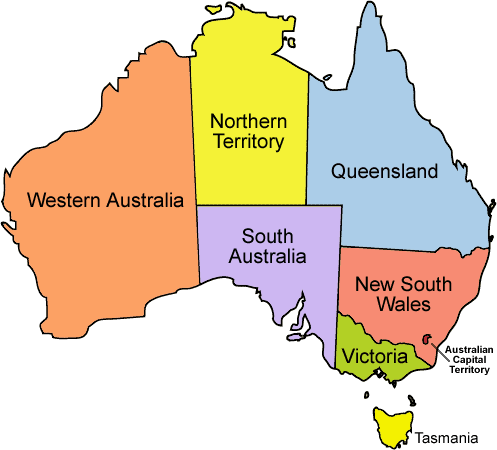
The Cleanskin crater is an eroded impact structure in Australia, straddling the border between the Northern Territory and Queensland. With a diameter of 15 kilometers, its polygonal shape is attributed to pre-existing regional faults. The crater formed during the late Mesoproterozoic to Neoproterozoic eras and became eroded and buried by the Cambrian and Cretaceous periods respectively.
Key Facts
- ›Located on the border of Northern Territory and Queensland, Australia.
- ›Diameter of 15 kilometers.
- ›Polygonal shape influenced by regional faults.
- ›Formed during the late Mesoproterozoic to Neoproterozoic eras.
- ›Eroded by the Cambrian period and buried under Cretaceous strata.
About Cleanskin
Cleanskin Crater
The Cleanskin crater is an eroded impact structure situated in Australia, specifically on the border between the Northern Territory and Queensland. This geological feature measures 15 kilometers in diameter. Its distinctive polygonal shape is a result of the influence of pre-existing regional faults.
Geological History
The impact event that formed the Cleanskin crater occurred during the late Mesoproterozoic to Neoproterozoic eras. Over time, the crater underwent significant erosion, with these processes being notable by the Cambrian period. Subsequently, the structure became buried beneath Cretaceous strata, obscuring its surface visibility.
Characteristics
The central uplift of the Cleanskin crater is characterized by a relatively shallow height of 6 kilometers. While the impact itself is confirmed, the extensive erosion and burial mean that the crater is not clearly visible on the Earth's surface today. Its geological significance lies in its formation during ancient geological periods and the influence of regional faulting on its morphology.
Source: Wikipedia ↗
Frequently Asked Questions
Where is the Cleanskin crater located?
The Cleanskin crater is located in Australia, situated on the border between the Northern Territory and Queensland.
What is the size of the Cleanskin crater?
The Cleanskin crater has a diameter of 15 kilometers. Its central uplift has a relatively shallow height of 6 kilometers.
When did the Cleanskin crater form?
The Cleanskin crater formed during the late Mesoproterozoic to Neoproterozoic eras. It became eroded by the Cambrian period and buried under Cretaceous strata.
What is the shape of the Cleanskin crater?
The Cleanskin crater is polygonal in shape. This shape is attributed to the influence of pre-existing regional faults.
Related Impact Craters

Shoemaker
The Shoemaker impact structure, formerly known as Teague Ring, is the eroded remnant of a significant impact crater located in central Western Australia. Named in honor of planetary geologist Eugene Shoemaker, its prominent ring-like feature is visible in satellite imagery and lies on the boundary of the Earaheedy Basin and the Yilgarn craton.
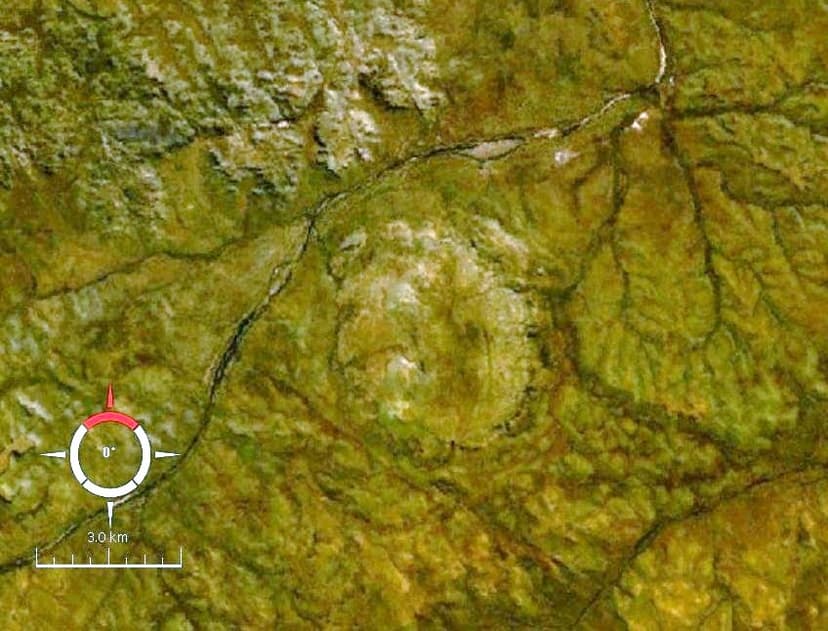
Foelsche
Foelsche is a largely buried impact structure in Australia's Northern Territory, named after the nearby Foelsche River. Its circular nature is evident on aeromagnetic images, leading to its discovery despite minimal surface exposure. The impact occurred into ancient sedimentary rocks, with remnants of the crater rim found around a Neoproterozoic sedimentary hill that partly covers the structure.
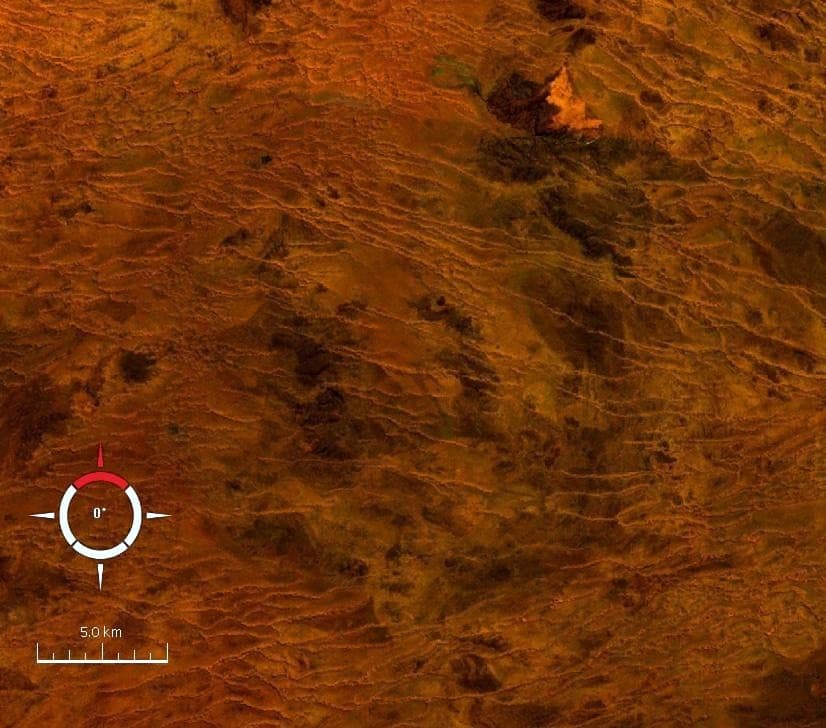
Glikson
The Glikson crater is an eroded impact structure located in the Little Sandy Desert of central Western Australia. It is characterized by a prominent 14 km diameter ring-shaped aeromagnetic anomaly, with evidence of deformation extending to 19 km, suggesting this as the original crater diameter. The confirmation of shatter cones and microscopic shock effects provides reliable evidence for its impact origin.