
Shunak
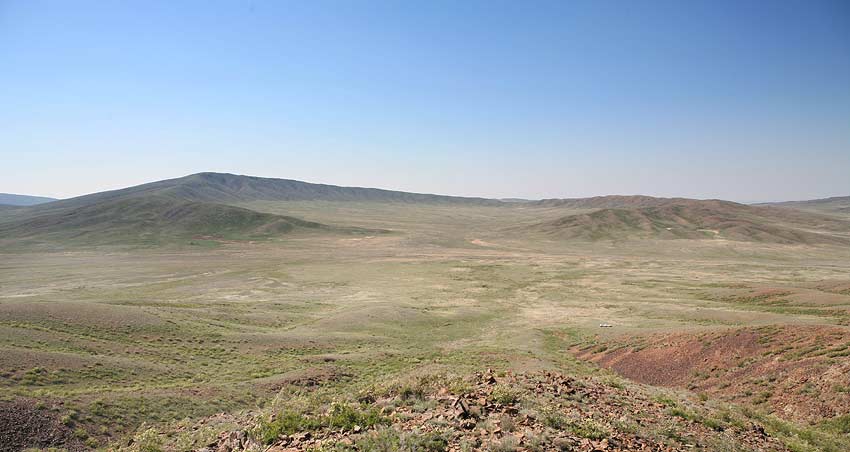
Shunak is a meteorite impact crater located in the Qaraghandy Province of Kazakhstan. With a diameter of 2.8 kilometers, its age is estimated to be between 35 and 55 million years, dating back to the Eocene epoch. The crater is currently exposed on the Earth's surface.
Key Facts
- ›Located in Qaraghandy Province, Kazakhstan.
- ›Diameter of 2.8 km (1.7 MI).
- ›Estimated age between 35 and 55 million years.
- ›Formed during the Eocene geological epoch.
- ›The crater is exposed at the surface.
About Shunak
Shunak Impact Crater
The Shunak impact crater is a geological feature located in the southeastern region of Qaraghandy Province, Kazakhstan. This crater measures approximately 2.8 kilometers (1.7 miles) in diameter. Scientific estimates place the age of the Shunak impact event between 35 and 55 million years ago, during the Eocene epoch.
One of the notable characteristics of the Shunak crater is that it remains exposed on the Earth's surface, allowing for direct observation and study of its formation. The impact event that created Shunak involved a meteorite, contributing to the geological landscape of the region.
Source: Wikipedia ↗
Frequently Asked Questions
Where is the Shunak impact crater located?
The Shunak impact crater is situated in the southeastern part of Qaraghandy Province in Kazakhstan.
How large is the Shunak impact crater?
The Shunak crater has a diameter of approximately 2.8 kilometers (1.7 miles).
When did the impact event that formed Shunak occur?
The impact event that created the Shunak crater is estimated to have occurred between 35 and 55 million years ago, during the Eocene epoch.
Is the Shunak crater visible on the surface?
Yes, the Shunak impact crater is exposed and visible on the Earth's surface.
Related Impact Craters
Chiyli
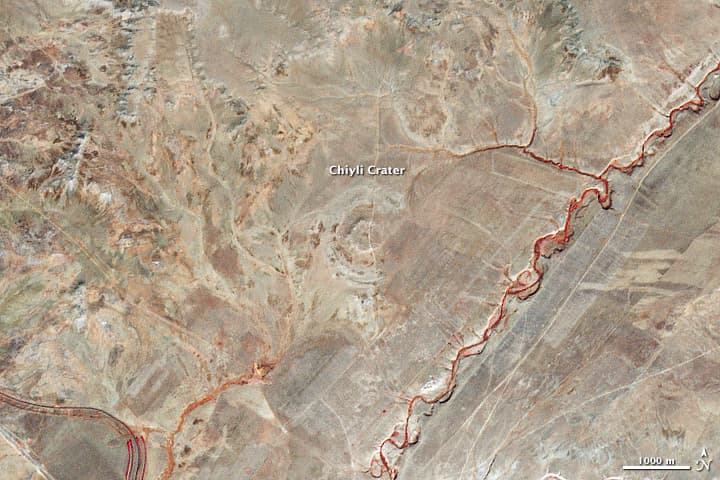
Chiyli Crater is a well-preserved impact structure located in Aktobe, Kazakhstan. With a diameter of 5.5 kilometers, its age is estimated to be around 46 million years, placing its formation in the Eocene epoch. The crater is notable for being exposed at the surface, making it accessible for geological study.

Bigach
The Bigach impact crater is located in Kazakhstan and measures 8 km in diameter. Its age is estimated to be between 2 and 8 million years, placing it in the Pliocene or Miocene epochs. The crater is currently exposed on the Earth's surface.

Zhamanshin
The Zhamanshin crater, located in Kazakhstan, is a 14-kilometer impact structure estimated to be 900,000 years old. It is considered one of the most recent large-magnitude meteorite impact events that could have produced significant global disruption, though not a mass extinction.