
Acanthodactylus scutellatus
The Acanthodactylus scutellatus, commonly known as the Nidua fringe-fingered lizard, is a small lizard species endemic to northern Africa and the Middle East. It is recognized by its unique ventral scale arrangement and its adeptness at burrowing in loose sand for shelter. This diurnal species breeds in late winter, with females laying clutches of 3-6 eggs in the spring.
Key Facts
- ›Endemic to northern Africa and the Middle East.
- ›Features ventral scales in diagonal rows, unlike the grid pattern of other species in its genus.
- ›Diurnal and an excellent burrower in loose sand.
- ›Breeding season starts in late winter, with egg-laying in spring.
- ›Juveniles hatch between June and August, measuring 7-8 cm at birth.
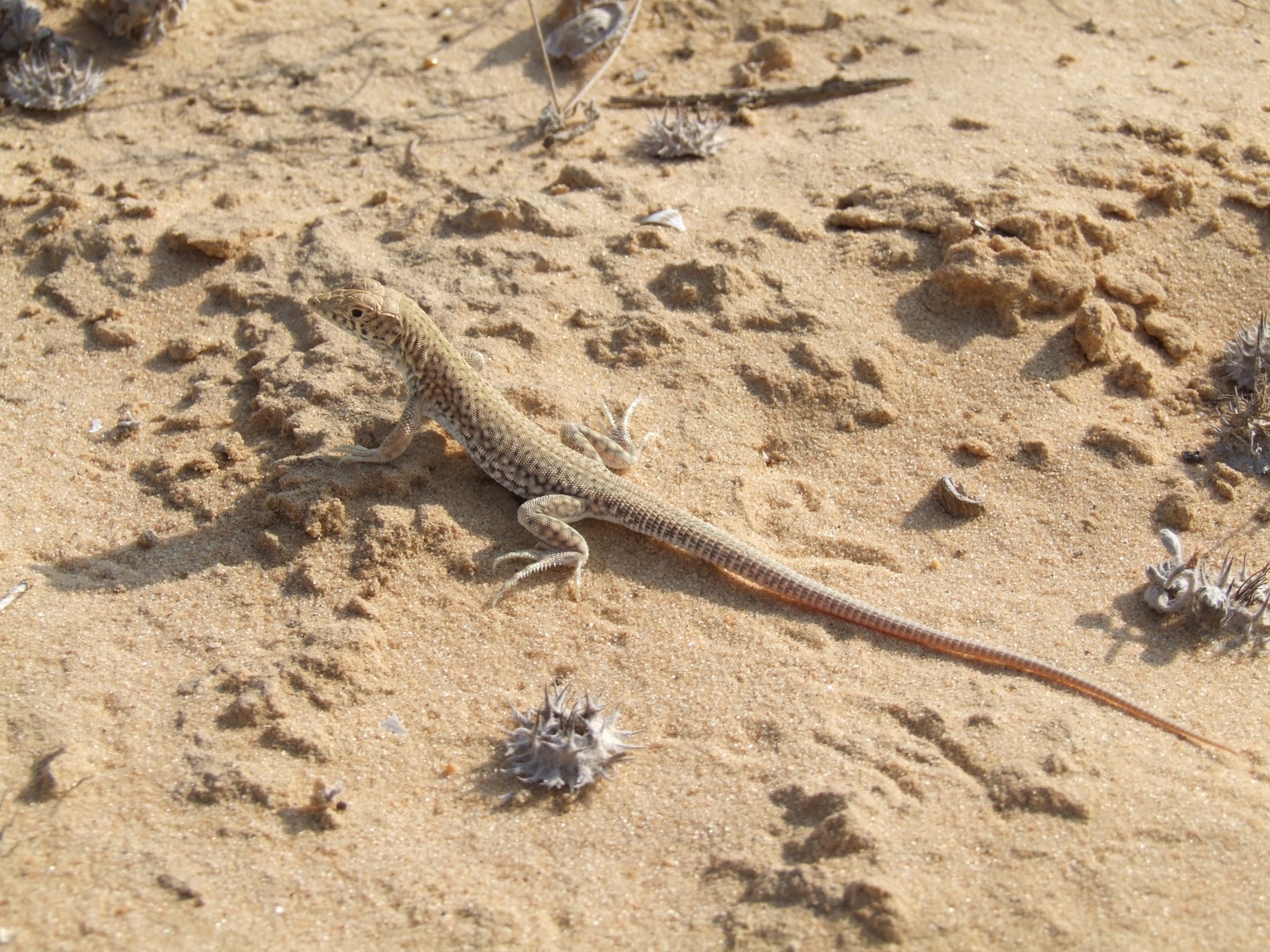
Nidua Fringe-Fingered Lizard, Nidua Fringe-Toed Lizard
Algeria, Chad, Egypt, Iraq, Israel, Jordan, Kuwait, Libya, Mali, Mauritania, Niger, Saudi Arabia, Sudan, Tunisia
- Small Size, Reaching Up To 21 cm In Total Length.
- Tail Accounts For Less Than Two-Thirds of Its Total Length.
- Weight Usually Does Not Exceed 10 g.
- Head Is Pointed At the Snout.
- Ventral Scales Are Arranged In Diagonal Rows Originating From the Center of the Belly and Extending Backward and Outward, A Distinctive Feature Within Its Genus.
Invertebrates, Insects
- Diurnal
- Highly Adept At Burrowing Into Loose Sand.
- Uses Shallow Burrows For Shelter At Night and During Hot Summer Days.
- Flees To the Nearest Available Burrow When Detecting A Predator.
- Males Defend Territories During the Breeding Season.
- Males Court Females and Drive Away Rival Males.
Predators
Urbanization, Habitat Fragmentation
About Acanthodactylus scutellatus
Acanthodactylus scutellatus, also commonly referred to as the Nidua fringe-fingered lizard or Nidua fringe-toed lizard, is a species of lizard belonging to the family Lacertidae. This species is native to northern Africa and the Middle East, inhabiting sandy environments such as shifting and semi-stabilized dunes.
Physical Characteristics and Adaptations
The Nidua fringe-fingered lizard is a small species, typically reaching up to 21 cm in total length, with its tail comprising less than two-thirds of this measurement. Its weight rarely exceeds 10 grams, and it possesses a pointed snout. A notable distinguishing feature of Acanthodactylus scutellatus is the arrangement of its ventral scales, which form diagonal rows extending backward and outward from the belly's center. This contrasts with the grid-like pattern of longitudinal and transverse rows found in other lizards of the Acanthodactylus genus.
Behavior and Reproduction
This lizard is diurnal, meaning it is active during the day. It is an exceptional burrower, adept at excavating shallow burrows in loose sand. These burrows serve as crucial shelters from predators, as well as protection from the nocturnal cold and the intense heat of summer days. When threatened, the lizard will quickly retreat into the nearest available burrow. The breeding season begins in late winter. During this period, males become territorial, defending their burrows and engaging in courtship with females while fending off rival males. In the spring, females lay clutches of 3 to 6 elongated eggs with flexible shells. The young hatch between June and August, typically measuring 7 to 8 cm in length and weighing about 0.5 grams at birth.
Source: Wikipedia ↗
Frequently Asked Questions
What are the common names for Acanthodactylus scutellatus?
Acanthodactylus scutellatus is commonly known as the Nidua fringe-fingered lizard or the Nidua fringe-toed lizard. These names highlight its distinctive physical traits.
Where is the Nidua fringe-fingered lizard found?
This species is endemic to a wide range in northern Africa and the Middle East. Countries where it is found include Algeria, Egypt, Libya, Mauritania, Sudan, and Tunisia, among others.
What makes Acanthodactylus scutellatus's scales unique?
A distinctive feature of Acanthodactylus scutellatus is its ventral scales, which are arranged in diagonal rows originating from the center of the belly. This differs from the straight, longitudinal, and transverse rows found in other species of the Acanthodactylus genus.
How does the Nidua fringe-fingered lizard use burrows?
Acanthodactylus scutellatus is highly adept at burrowing into loose sand. It uses these shallow burrows for shelter during the night and the hottest parts of summer days, and also to escape from predators.
When does the breeding season for Acanthodactylus scutellatus occur?
The breeding season for Acanthodactylus scutellatus commences in late winter. During this time, males establish territories and court females, while also defending against rival males.
How many eggs does a female Nidua fringe-fingered lizard lay?
In the spring, the female Acanthodactylus scutellatus lays a clutch of 3 to 6 elongated eggs. These eggs have flexible shells.
What is the size of Acanthodactylus scutellatus at birth?
Juveniles of Acanthodactylus scutellatus hatch between June and August. At birth, they are approximately 7 to 8 cm in length and weigh around 0.5 grams.
Related Lizards

East Canary gecko
The East Canary gecko, also known as the Canary wall gecko (Tarentola angustimentalis), is a species of lizard native to the eastern Canary Islands. This plump, dorsally flattened gecko is characterized by adhesive toe pads, small tubercles on its skin, and variable greyish-brown coloration with darker bars. It inhabits a wide range of environments, from rocky shores and shrubland to urban areas, and is commonly observed at night on walls and ceilings.

Tarentola angustimentalis
The East Canary gecko, scientifically known as Tarentola angustimentalis, is a species of lizard endemic to the eastern Canary Islands. This sturdy, plump gecko is characterized by its flattened head and body, adhesive toe pads with strong claws, and a variable greyish-brown coloration often marked with paler stripes and darker bars. It thrives in a variety of habitats, from rocky shores and shrublands to urban areas, and is commonly observed at night on outdoor walls.

Tiliqua occipitalis
The western blue-tongued lizard (Tiliqua occipitalis) is a large skink native to Australia, known for its distinctive blue tongue and brown, banded pattern. It inhabits grasslands, dunes, and shrublands, and is a diurnal hunter of insects, snails, and carrion, also foraging for plants. This species is notable for its slow-moving prey preference due to its less agile nature and powerful jaws capable of crushing shells.