
Amphisbaena neglecta
The neglected worm lizard (Amphisbaena neglecta) is a species of worm lizard endemic to Brazil. Little is known about this elusive reptile, as it has only been identified from a single specimen. Its habitat is believed to be in the Central-West Region of Brazil, an area that may also be threatened by human development.
Key Facts
- ›Known only from a single collected specimen.
- ›Endemic to Brazil.
- ›Found in the Central-West Region of Brazil.
- ›Potentially threatened by hydroelectric power reservoir construction.
- ›Its conservation status is not formally assessed but is considered highly vulnerable.

Neglected Worm Lizard
Brazil
Central-West Region of Brazil
- Belongs To the Worm Lizard Family.
- Specific Physical Characteristics Are Not Detailed Beyond Its Classification As A Worm Lizard.
- Reservoir Construction For Hydroelectric Power
About Amphisbaena neglecta
The Neglected Worm Lizard (Amphisbaena neglecta)
The neglected worm lizard, scientifically known as Amphisbaena neglecta, is a species of amphisbaenian reptile native to Brazil. This particular species is notable for its extreme rarity in scientific records, being known only from the single specimen that led to its initial description. Its limited documentation makes it one of the lesser-understood reptiles within its genus.
Geographic Range and Habitat
Amphisbaena neglecta is endemic to Brazil, with its known range confined to the Central-West Region of the country. The exact habitat type is not extensively detailed, but its discovery in this region suggests it likely inhabits environments typical for worm lizards, which often include subterranean or fossorial niches within various Brazilian ecosystems.
Conservation Status and Threats
The conservation status of Amphisbaena neglecta is a significant concern, primarily due to its scarcity. The species is thought to be threatened by the construction of a reservoir intended for hydroelectric power generation. Extensive searches conducted in the area have failed to locate any additional specimens since the first one was collected, intensifying worries about its precarious existence. While Chapada dos Guimarães National Park is situated adjacent to the reservoir, potentially offering some protection, the species' overall vulnerability remains high due to habitat alteration and the lack of confirmed sightings.
Source: Wikipedia ↗
Frequently Asked Questions
What is the scientific name of the neglected worm lizard?
The scientific name of the neglected worm lizard is Amphisbaena neglecta.
Where is the neglected worm lizard found?
This species is endemic to Brazil, specifically noted in the Central-West Region. However, it has only been identified from a single specimen collected in this area.
What are the conservation concerns for Amphisbaena neglecta?
The neglected worm lizard is believed to be threatened by the construction of a reservoir for hydroelectric power. Despite extensive searches, the species has not been located since its initial discovery, raising significant conservation concerns.
Is the neglected worm lizard well-documented?
No, the neglected worm lizard is poorly documented. It is known from only one specimen, and extensive searches have failed to find additional individuals, making detailed biological information scarce.
Related Lizards
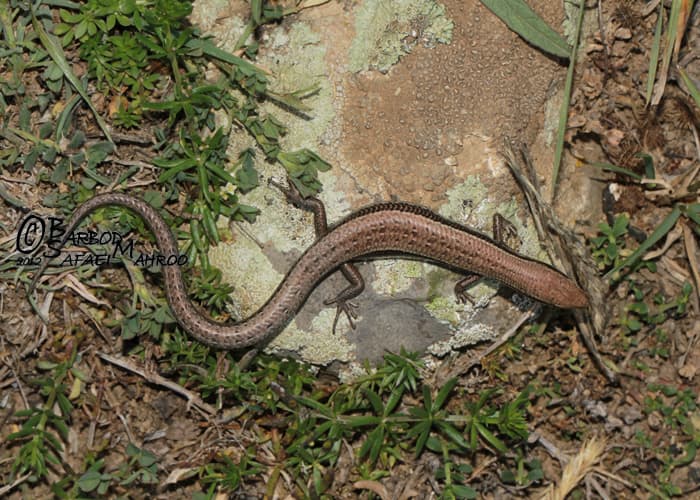
Ablepharus bivittatus
The twin-striped skink (Ablepharus bivittatus) is a species of skink found in mountainous regions of Armenia, Azerbaijan, Turkmenistan, northwestern Iran, and Turkey. It is distinguished by its habitat in high elevations, typically between 2,300 and 3,300 meters.
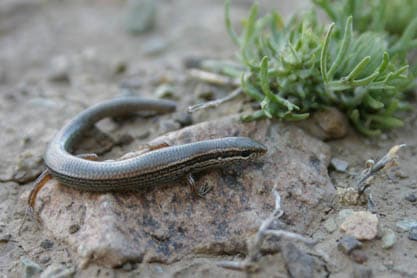
Ablepharus pannonicus
The Asian snake-eyed skink (Ablepharus pannonicus) is a species of skink native to a wide range across Asia and parts of the Middle East. It is characterized by its snake-like appearance and is found in diverse arid and semi-arid environments.

Adam's dravidogecko
Adam's dravidogecko (Dravidogecko douglasadamsi) is a species of gecko native to India. Little is documented about its specific characteristics, habitat, or behaviors, making it a relatively understudied species.